
Culver City Adult School helps push older students forward
The Adult School, which is part of Culver City Unified School District, earned the highest scores it has ever received during this year’s accreditation process


When the question of “who does the Culver City Unified School District serve?” is raised, most people would think about the children of the community. What many don’t see is the work of one of the District’s hidden gems: the Culver City Adult School. Founded in 1954, the school focuses on educating a unique segment of Culver City students.
Tucked away in a small brick building next to the Julian Dixon Library at 4909 Overland Ave., the Culver City Adult School has made major strides toward its goal of educating the oldest and least traditional students in the community. As the name suggests, Culver City Adult School provides educational services for students ages 18 and older seeking to further their education, currently serving more than 600 students.
Unlike most other schools in CCUSD, CCAS is an open-enrollment institution, allowing students to join at any point throughout the school year. It runs on a similar semester-based system to other CCUSD schools, but its hours are very different from those in traditional K-12 schools.
The Adult School is open Monday through Thursday from 8:30 a.m. to 8:30 p.m. for most of its academic services, with some classes held later in the night to accommodate students' potentially busy schedules. It is open on Fridays as well, but only for a limited number of its English as a Second Language (ESL) classes.
This system leads to a wide range of students taking classes at CCAS, though the base tends to range from 30 to 50 years old. Academic Coordinator Daniel Gomez said he has worked with students as young as 18 and has seen students as old as 95 during his time at the Adult School. Class sizes fluctuate due to the nature of enrollment, but have a capacity to handle around 30 students per class.
Classes that help students learn to read, write, and speak English are the most popular at the school. The ESL curriculum at the Adult School is divided into six levels, and students are evaluated and placed into a tier based on their proficiency. Once a student completes the track, they are celebrated in a manner similar to other students at CCUSD schools.
“We actually recognize them as a component of the academic graduation ceremony,” Gomez said of students completing the final level of the ESL course.
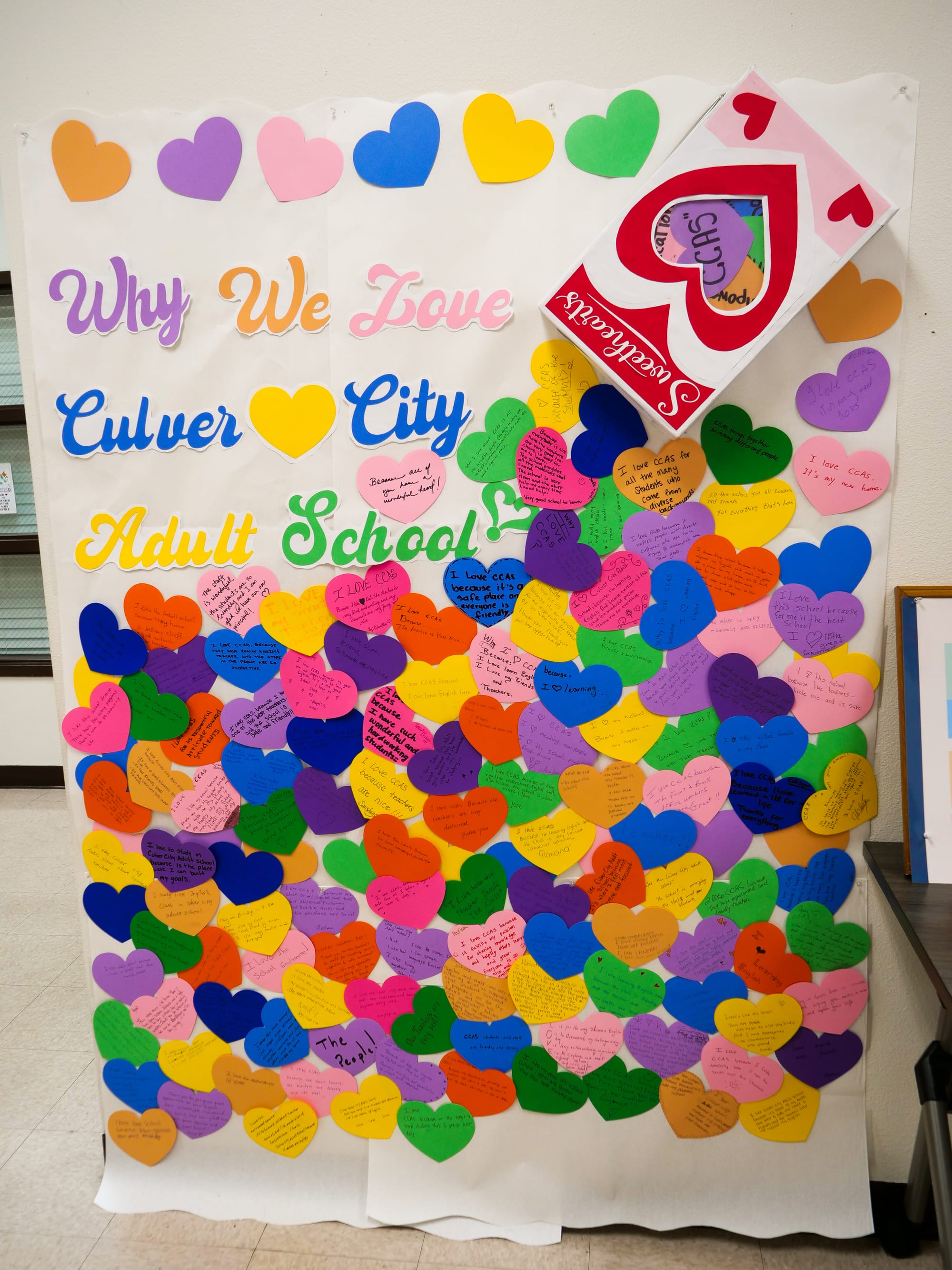
While the English Learners Program is the largest at CCAS, there is a wide range of classes for interested students to take. Students who have completed the ESL program have the option to transition into one of the Adult School’s other academic programs to complete their diplomas.
ESL classes are traditional, instructor-driven classes one would see at the K-12 level, but other academic studies at the Adult School are more self-guided. Students use a digital platform to complete the classes required for their diplomas, which is overseen by an instructor who assists when students have questions or problems.
The support that the Adult School provides goes beyond just providing a pathway to a diploma. Students can also receive more specialized education through Career Technical Education (CTE) classes at the Adult School, where they can earn specific certifications needed for employment in specialized occupations. These are a new addition to the Adult School program, starting with the first round in the 2022-23 school year, with the currently offered program helping students earn accreditation in medical coding and billing.
However, because of the nature of the English Language Learners Healthcare Pathways Grant used to fund the program, the specific subject and credential earned is fluid. After offering a class that gave students the certification needed to be a clinical medical assistant in the first round, this medical coding and billing certification course is funded by the second round of this grant.
The proposal from the Adult School, as part of its application for the third round of funding, is to roll the medical coding and billing training into a larger medical administrative assistant certification course.
Applying for the third round of funding will be a more competitive process than in the previous two rounds. Gomez describes it as more of a “winner take all” awards process, with fewer awards given out despite an increase in overall funding for the Grant. The Adult School is part of the Los Angeles Regional Adult Education Consortium (LARAEC), which was formed in 2013 to enable member districts to collaborate to provide resources and services to students.
“Culver City is part of the largest consortium in the state, but we're also the smallest district member within the consortium,” Gomez explained. “It puts us in a very unique situation.”
This grant was launched by the California Community Colleges Chancellor’s Office, the administrative body that oversees the state's 116 community colleges. While Adult Schools are not considered community colleges, this grant was specifically targeted at members of accredited California Adult Education Program consortia, such as LARAEC.
Aside from funding, another restriction holding the Adult School back from hosting more CTE pathways is a lack of facility space. Gomez called the expansion of the Adult School campus, whether that comes in the form of a move or the founding of a CCAS satellite campus, “one of our most time-sensitive and prominent issues.”
“Once we move into an additional space, we would like to offer multiple pathways simultaneously,” Gomez said. “We are actively looking for solutions to expand space.”
Some programs don’t fit the traditional mold of what the school offers, but they have been implemented because of their popularity and their success in instilling skills important for life success. One of those classes is the Basic Computer Skills class, where Gomez worked with a 95-year-old student.
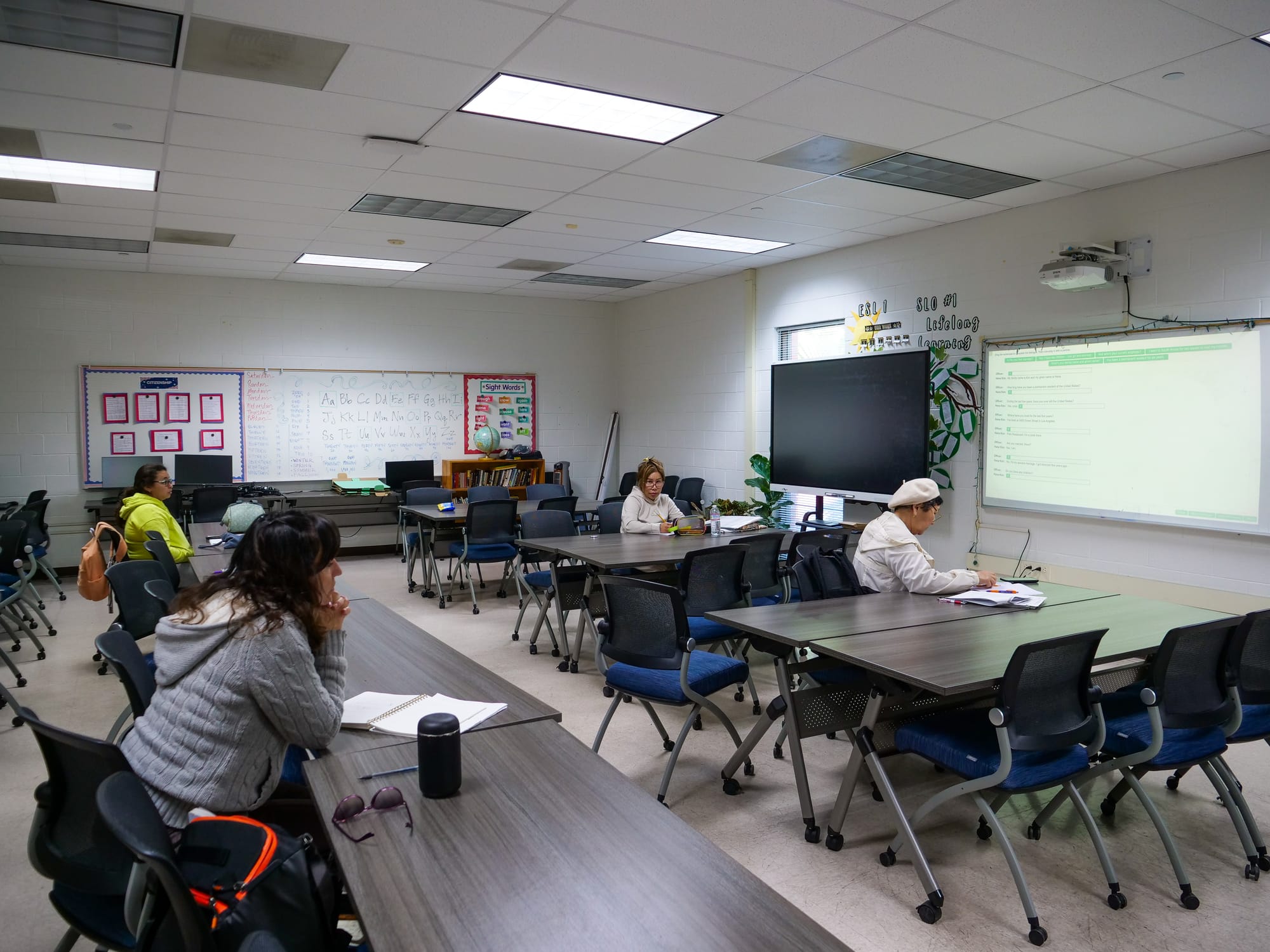
Originally a pilot, the need for foundational computer skills education for students became clear, and this program has since become a valuable part of CCAS.
“This was implemented as a result of identifying a digital literacy gap in some of our students,” Gomez said.
Recent strides at the school have led to a recognizable achievement, a nearly perfect evaluation as part of the school’s accreditation process. Adult schools in the state are evaluated every six years by the Western Association of Schools and Colleges (WASC), and the school received its highest scores to date in the 2026 evaluation.
Outside educators were brought into Culver City from January 26 to 28 for an examination of the school, rating it based on criteria such as school culture and mission, organization and governance, community partnerships, student resources, and others. These criteria are scored based on whether the school is highly effective, effective, somewhat effective, or ineffective in the eyes of the WASC-appointed evaluators.
“We had people who were in administration, people who were program coordinators, and instructors as well,” Gomez, who also serves as the WASC Coordinator at CCAS, said of the 2026 group of evaluators. “So you get a mix of different educational backgrounds.”
CCAS passed the accreditation with flying colors, earning the highest possible score on all criteria except one: student support services. The school already has a Student Council, where representatives from each class can provide input on what could be improved at the school, along with other resources for its students, leading to an “Effective” rating in that category.
Even though its student support services are robust and the school met expectations for these services, Gomez said the school is already looking at new ways to continue improving in this area. In particular, the school will work to improve its support for graduates after they finish at CCAS.
“What we want to do is expand and strengthen the services that come after a student graduates, whether that's connecting them to a community college, a four-year college, or employers,” Gomez said.
Services are an important piece of the puzzle that CCAS continues to work on, but the Adult School's future is focused on something else: expansion. The school has already been working on expanding its virtual offerings, but the true goal is a physical expansion.
“We're going to continue expanding our virtual programs and offerings,” Gomez said, “but we also look forward to expanding our physical space within the city so that we can serve more of our community members and expand the impact that the school is able to make.”
Comments ()