
Culver City establishes JPA: What You Need to Know
The newly established Culver City Public Finance Authority will allow the city to issue bonds to raise funds needed to address financial issues and fund city improvements
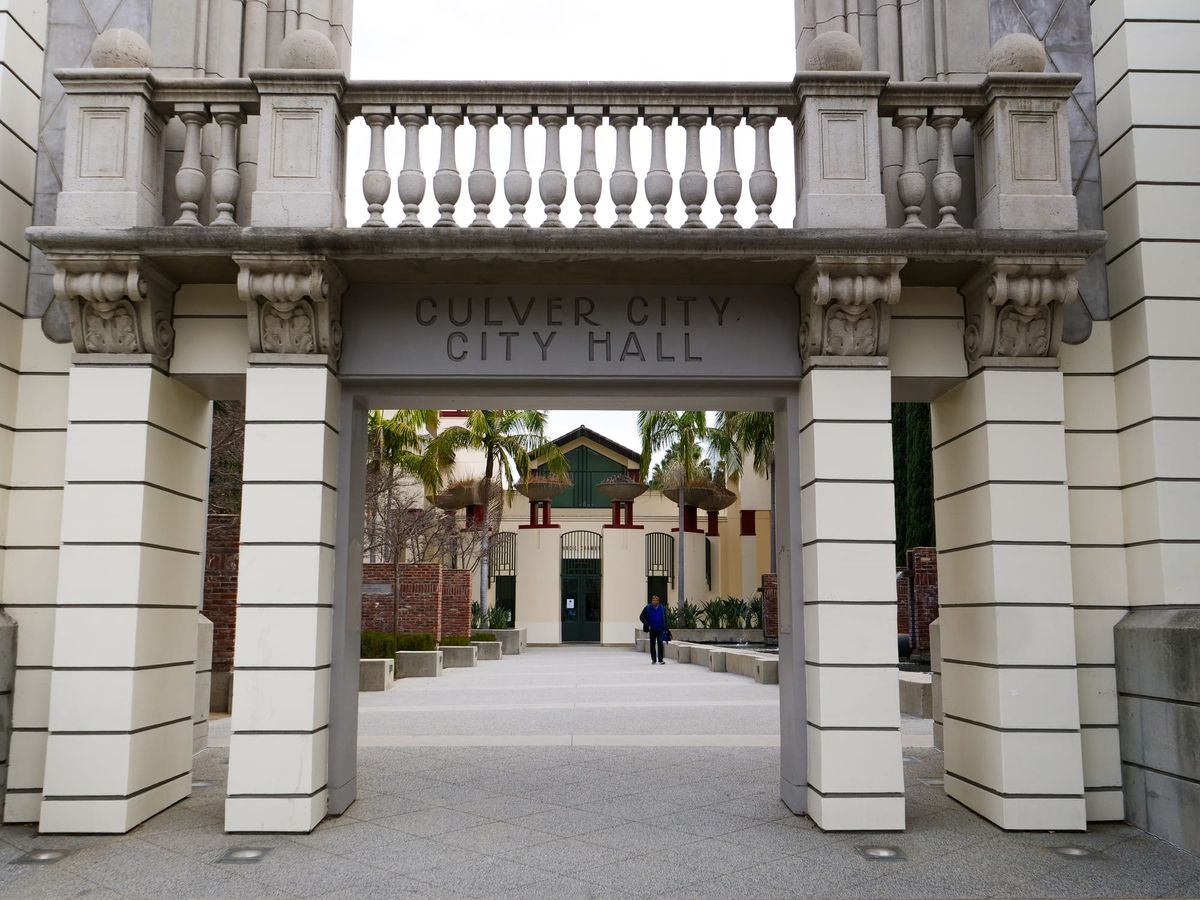
Culver City officially approved the formation of a Joint Powers Authority (JPA) at its meeting on April 13 as part of efforts to balance the city’s budget. This agreement involves the creation of a new entity within the city’s existing structure, the Culver City Public Finance Authority (PFA), that has the authority to issue bonds to support a wide range of city functions.
The move is part of new City Manager Odis Jones’ plan to address the city’s current financial troubles. Costs connected to one project seen as a major contributor to the unbalanced budget, the Jubilo Village affordable housing development, will be funded by money from the $35,850,000 raised by issuing lease revenue bonds through the PFA, with the rest going to Economic Development and Capital Improvement Projects in the city.
What are Bonds?
Bonds function similarly to loans that are repaid over a long period. They allow entities like Culver City to quickly raise funds needed to finance a variety of needs.
When an entity buys a bond from another, they pay the issuer the face value of the bond under the condition that debt payments will be made over a set time frame. The full amount of the bond, also referred to as the principal, is not due for years after it is purchased, but the issuer makes annual interest payments to the purchaser until the principal is due.
This gives city governments an avenue to quickly raise funds while mitigating the short-term burden on the city's budget through manageable payments spread over a long period. City financial consultants proposed issuing 30-year bonds with the final principal payment due at full maturity in 2057.
These bonds are issued at a set interest rate determined by the bond terms, which are finalized only two days prior to closing. Entities can pay off certain bonds before they reach full maturity, but any early repayment must include the additional interest that would have accrued over the remaining term.
Whether the bond is paid off early or reaches full maturity, the issuer must also repay the purchaser the full principal amount, though a slight discount may be applied to early bond repayments based on yields from similar bonds issued by the U.S. Government.
Provisions that allow bonds to be repaid at any time before full maturity are referred to as “make whole call” provisions, and these comprise the majority of the bonds that city consultants proposed issuing last Monday night.
These bonds are to be purchased directly from Barclays rather than put on the open market, which also incurs a direct purchase premium of approximately 0.30% – 0.40%, according to a report from PFM, one of the city’s financial advisors.
However, the numbers presented are preliminary, with interest rates being finalized two days before closing the bonds. Based on the structure of the bonds presented by PFM at the April 13 meeting, the bond repayment could unfold as follows, assuming the highest projected interest rates are applied:
- Culver City issues $27,540,000 in taxable bonds with 5.87% interest and $8,310,000 in tax-exempt bonds with 5% interest, both over 30 years starting January 1, 2027, which are purchased by Barclays.
- Culver City receives $35,850,000 in liquid funds from Barclays but must repay them, with interest, over a 30-year period.
- Culver City makes annual bond payments starting in 2027, calculated by applying the interest rate to the bonds' face value. Annual payments for the taxable bonds are $1,616,598 (5.87% of $27,540,000), and payments for tax-exempt bonds are $415,500 (5% of $8,310,000).
- The Final Payment will be made in 2057 and shall include the yearly bond payment, along with a repayment of the initial principal, totaling $29,156,598 ($1,616,598 + $27,540,000) for the taxable bonds and $8,725,500 ($415,500 + $8,310,000) for the tax-exempt bonds.
- The bond is completely paid off, with the city having paid a total of $76,037,940 ($1,616,598 x 30 years + $27,540,000) for the taxable bonds and $20,775,000 ($415,500 x 30 years + $8,310,000) for the tax-exempt bonds, for a combined total of $96,812,940 ($76,037,940 + $20,775,000) from 2027 to 2057.
Taxable and non-taxable bonds are also treated differently because of the implications taxes have on the overall payout. This tax is not applied to the issuance of the bond, so the city would not have to change its payment amount or structure. It would instead tax bond repayments, leading to higher interest rates than for taxable bonds to compensate for that loss.
Taxable bonds are recommended for the majority of Barclays' issuance because the proceeds will be used to reimburse costs associated with the Jubilo Village project, which is a tax-exempt purpose.
Why a Joint Powers Authority?
To handle these bond transactions, the City Council moved to execute a Joint Powers Authority agreement that establishes the Culver City Public Finance Authority as a new entity within the city’s bureaucratic structure.
As its name suggests, a JPA establishes an entity composed of multiple entities with the same powers, allowing them to jointly exercise those powers and to receive additional authority to issue bonds granted by the Joint Exercise of Powers Act (Government Code Sections 6500 through 6599.3).
In this case, it is an agreement between the City of Culver City and the Culver City Housing Authority to execute bonds to support the city. The latter is an entity created following the dissolution of California’s Redevelopment Agency Program in 2012 to handle the former duties and liabilities of these Redevelopment Agencies, which oversaw development subsidized by tax increment financing (TIF).
The City Council serves as the successor agency to the Culver City Housing Authority Board, effectively making the council decision-makers for the Housing Authority.
The Culver City Public Finance Authority will be required to hold a meeting at least once per year, and those meetings are to be held “on the same date, at the same time, and at the same location as the regular meetings of the City Council.” It has five officers — Chair, Vice Chair, Executive Director, Secretary, and Treasurer — and these positions will be filled as follows:
- Chair: Mayor (currently Freddy Puza)
- Vice Chair: Vice Mayor (currently Bubba Fish)
- Executive Director: City Manager (currently Odis Jones)
- Treasurer: CFO (currently Stephen J. Agostini)
- Secretary: City Manager or person designated by City Manager
As separate entities, the city and the PFA would need to reach an initial agreement on how to handle the bonds, which are expected to be lease-revenue bonds. As currently proposed, the city would enter a Ground Lease agreement with the PFA to lease the land on which its parking lots are located.
Under a ground lease, the city will retain ownership of the land, while the PFA will be responsible for the improvements on that land — including the parking lots — as well as all property taxes, insurance, and operating expenses.
A separate lease would then be established in which the PFA leases the parking lot facilities back to the city, with the lease payments covering the city’s bond obligations. By establishing the PFA and tying its bond debts to the entity, the city can bypass the California Constitution's limits on city debt. Under the lease arrangement between the two legally distinct entities, the city's lease payments to the PFA are classified as an operating expense, even though they are used to pay off debts.
JPAs have been used by California cities for similar purposes since the 1970’s, and the validity of JPAs and the use of lease revenue bonds has been reinforced by the California Supreme Court in Rider v. City of San Diego (1998).
It also creates an entity that can be utilized for future financial needs. The city has had a JPA in the past — the Culver City Redevelopment Authority — but its powers are limited to the TIF projects overseen by past Redevelopment Agencies. Creating a broader entity will allow the city to pursue bonds as an option for city funding should it become necessary beyond the city’s current fiscal dilemma.



Comments ()