
Dear Culver City: Jubilo Village, The Financial Tool
EDITOR'S NOTE: This piece was submitted by a source unaffiliated with Culver Crescent and should not be interpreted as reflecting or confirming the opinion of The Crescent or its writers.

EDITOR'S NOTE: This piece was submitted by a source unaffiliated with Culver Crescent and should not be interpreted as reflecting or confirming the opinion of The Crescent or its writers. Click here to view the full Dear Culver City disclaimer
By Thomas Aujero Small
One thing I learned from my first term on the Culver City Council is that affordable housing projects are a long-term investment in our community, and the short-term impact isn’t always clear before the project goes up. I’ve gotten a lot of questions about Jubilo Village on the campaign trail so I wanted to put into concrete words what this particular development will bring to Culver City.
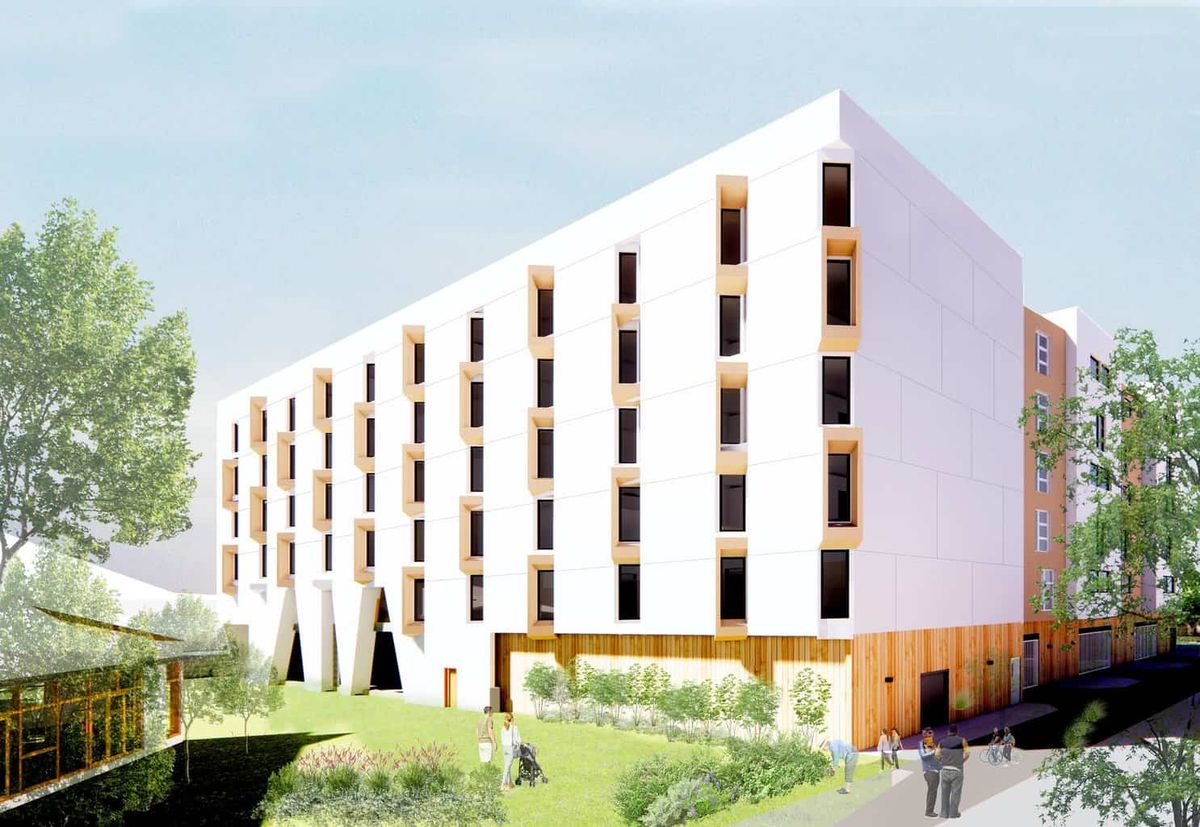
If you’re not familiar with Jubilo Village, it’s a planned 95-unit 100% affordable housing project developed in partnership with the Culver-Palms Methodist Church and the Community Corporation of Santa Monica. This is the only project of its kind here in Culver City, with wraparound services and the capacity to house up to 218 adults. These units are reserved for renters earning low incomes and people coming out of homelessness, finally getting into stability.
The project sometimes draws criticism because of the $20 million municipal loan it received from our city, a contribution that was required in order to trigger matching state tax credits. Municipal bonding is a standard governance tool, and this project would not have happened without that financial support. But does Culver City benefit from loaning that money to build affordable housing?
The answer is yes. I’ll admit that I wasn’t sure where I stood on Jubilo Village for a long time, though I’ve supported it in my time on the City Council and on the campaign trail. I wanted to quantify what kind of impact it would actually have on our community, so I worked with local housing policy research analyst Drea Younes to conduct a thorough Cost-Benefit Analysis.
We found that the long-term benefits of this project far outweigh the loan.
Although the $20,000,000 price tag of the loan may give some residents sticker shock, the reality is that over 25 years, the project’s value will exceed $30,000,000 due to a $13,000,000 savings on public services spending on residents living there, a $10,000,000 increase in city revenue from the job opportunities brought to each adult resident, and a nearly $10,000,000 increase in the purchasing power of residents who live there.
Considering original municipal loan costs, Culver City will see an overall surplus of $13,000,000 over 25 years due to its investment in affordable housing. Despite the initial price tag, Culver City will likely break even on its Jubilo Village investment in about 15 years from its original investment in 2022 — and that’s a somewhat conservative estimate.
I jumped into this race because I believe Culver City can be the best-managed city in this county. That starts with looking ahead and thinking about where we want to see the city in five, ten, or even 15 years rather than reacting to problems as they come up. I applaud the current Culver City Council for seeing this project through, and for having the long-term vision to look past the initial price tag and aim high in steering our city.
Thomas Aujero Small is the Former Mayor of Culver City and served as a Culver City Councilmember from 2016 to 2020. Small is currently a candidate for Culver City Council and previously served as Commissioner of Cultural Affairs. He has a background as a writer and consultant in urban planning and holds degrees and fellowships from Yale, Columbia, and the University of Paris. His recently published book, Music and Architecture in Harmony, is inspired by his lifelong passion for music, architecture, history, and civic life. For more information: smallforculvercity.com

Comments ()