
Dear Culver City: There Is Another Path
EDITOR'S NOTE: This piece was submitted by a source unaffiliated with Culver Crescent and does not represent the opinion of The Crescent or its writers.
EDITOR'S NOTE: This piece and others in the "Dear Culver City" series are editorial pieces submitted by sources unaffiliated with Culver Crescent. The sentiments expressed in these articles do not represent or confirm the stance or opinions of Culver Crescent or any of its writers. Culver Crescent has not verified statements of fact made in these pieces. Any claims made in Dear Culver City pieces should not be taken as fact unless corroborated by independent research or data.
By Anthony Rizzo
In 2024, Culver City said yes to their schools twice. 83% of voters approved Measure O in November. Earlier that year, they approved a $358 million bond.
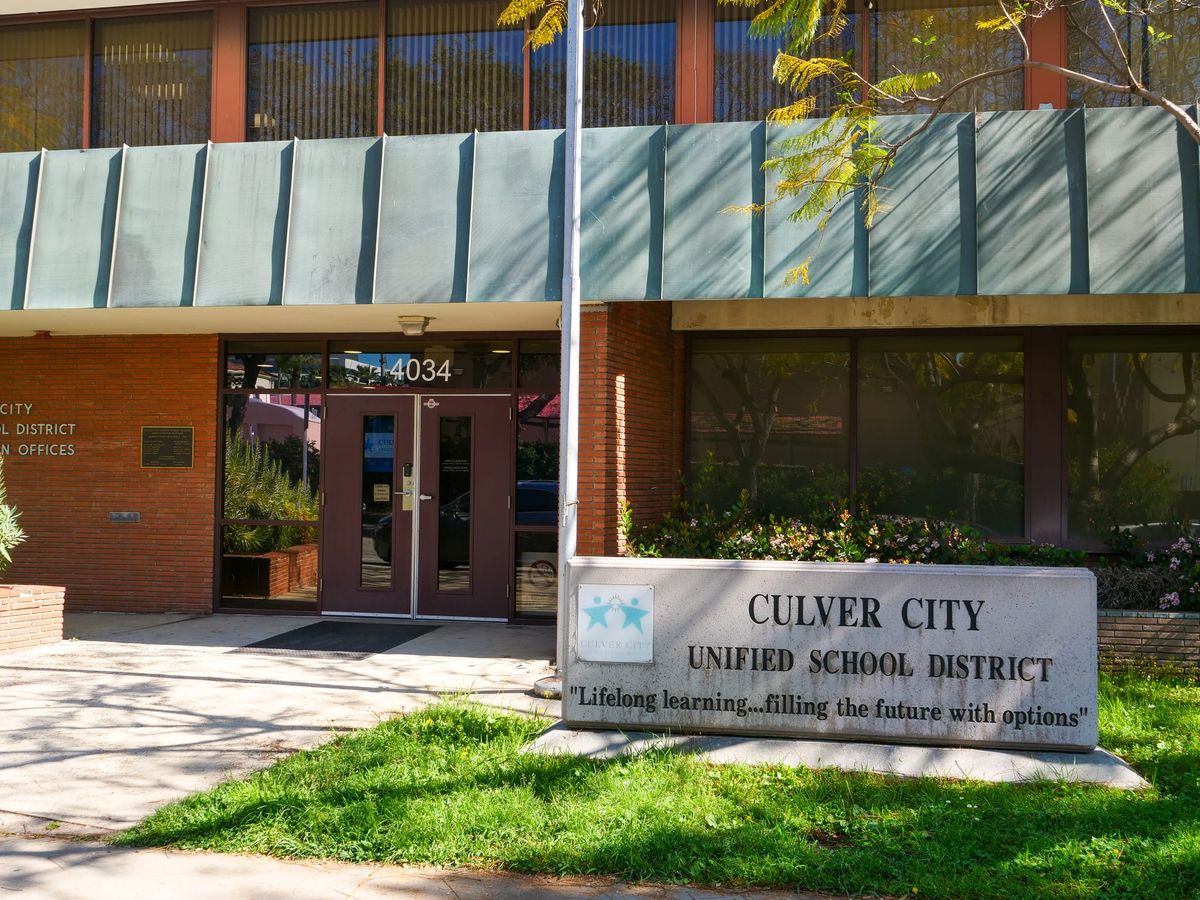
Just one year later, the Culver City Unified School District is carrying a structural deficit of nearly $10 million, with reserves falling below state requirements. To close that deficit, the district is currently taking the cuts-only path — and those cuts will continue for two more years before parcel tax money arrives.
Another path substitutes structural work for those cuts: permit reform, facility alignment, and bringing resident families back. That path earns a parcel tax that rebuilds the trust that makes Culver City worth investing in.
The residents who said yes get to decide which story gets told.
Every Child Deserves a Stable District
Culver City Unified is carrying a structural deficit of nearly $10 million. Reserves are falling below state requirements. Cuts are already underway — and more are coming.
When a District makes cuts under financial pressure, programs don’t survive based on educational priority. They survive based on which ones have organized voices behind them. Financial instability doesn’t just cut programs. It replaces educational judgment with political pressure.
Structural alignment changes that. A District that right-sizes its cost structure, understands why resident families left, and brings them back — builds something stable enough to actually serve every child in it.
Equity that isn’t sustainable isn’t equity.
How We Got Here — Four Decisions
Think of CCUSD as a household. About $114 million comes in each year. About $118 million goes out. Four decisions brought this household to where it is.
- We built for a family size we no longer have. Of CCUSD’s 6,589 students, only 4,864 are Culver City residents — the families paying the property taxes that fund these schools. The District’s demographic consultant projects resident enrollment falling to 4,066 by 2034 — nearly 800 fewer Culver City children over the next decade. The system was built for a population it no longer has. [MGT Consulting Student Population Forecast Report, April 22, 2025]
- We made permanent commitments with temporary money. COVID-19 relief funds gave the District a window of federal money. When those funds expired, every commitment remained — and new ones emerged. Personnel costs rose by $4.68 million in a single cycle. The District’s financial standing dropped to its lowest rating in years — one step above state intervention. The bridge funding currently keeping the budget balanced has always had a known end date. [Second Interim Report, March 10, 2026]
- We asked our parents for help. Our parents were also struggling. The District went to the City of Culver City for emergency help. The City gave $2.5 million — but had to defer capital improvement projects to do it. The City itself is carrying a $22.1 million structural deficit with no capacity for new commitments. [City of Culver City Staff Report, File #25-1339, July 14, 2025]
- The permit strategy made sense on paper — until the numbers didn’t. As resident enrollment declined, permits filled seats. Permits were meant to provide opportunity and revenue. At the middle and high school level, where seats are genuinely empty, they do both — non-resident students fill seats that would otherwise go unused, and the District collects state revenue for every one of them. [MGT Consulting, Table 3 and Section 4]
At the elementary level, something different happened. When El Marino became a choice school, residents chose it over their neighborhood schools — and permits filled the seats they left behind. The building looked full. But it was no longer full of the neighborhood it was built to serve.
The District’s own demographic consultant documented the scale of that shift in April 2025. One elementary building is running at 65% resident utilization — the only neighborhood elementary that cannot fill its seats with the neighborhood it was built to serve. The district is paying to keep a building open that the neighborhood it was built to serve is no longer filling. [MGT Consulting, Table 3 and Section 4]
Two Paths to 2028
The District will not be taken over. A negative certification triggers LACOE intervention, in which the county, not the District, controls the budget. The approved cuts already prevent that. The gap is being closed — through cuts. The question is what gets cut to close it, and what kind of district exists when the parcel tax arrives in 2028.
The Board’s own Assistant Superintendent of Business Services, Santha Rajiv, confirmed at the March 10 Board Meeting that even if a parcel tax passes in November, revenue doesn’t arrive until 2028. Cuts will continue in 2026-27 and 2027-28 regardless of how residents vote. [Board Meeting, March 10, 2026]
The permit program needs to work as designed. Apply the same GPA, attendance, and behavior standards every neighboring district already uses. New elementary permits should stop where resident enrollment doesn’t justify the building. Middle and high school permits should do what they were designed to do — fill genuinely empty seats and generate real revenue. [AR 5117 policy comparison; MGT Consulting]
The facility conversation needs to start. The District’s own demographic consultant identified one elementary building running at 65% resident utilization — the only neighborhood elementary that cannot fill its seats with the neighborhood it was built to serve. Without permits, resident utilization drops to 54%. That data has been available since April 2025. The path forward starts with an honest conversation about what it means. [MGT Consulting, Section 4]
Resident enrollment needs attention. Middle and high schools are running at 60% resident enrollment and declining. Understanding why families leave — and what it would take to bring them back — is work that costs nothing to begin and shapes everything that follows. [MGT Consulting]
These three actions define the structural path. Here is what each path looks like year by year.
A yes vote in November determines what kind of district receives the money in 2028 — not whether the District survives.
Revenue for the Long Haul
The structural path leads to a parcel tax worth voting for. Before signing any petition or casting any vote, three questions are worth asking about any measure on the November ballot. These are not novel standards. They are features of the strongest parcel tax measures already operating in California.
Did it require a two-thirds supermajority? California law sets the default threshold for school parcel taxes at two-thirds for a reason. That threshold ensures a genuine mandate — not a simple majority. A measure that routes around that threshold by different legal means is a measure that chose an easier path. Culver City residents who fund these schools deserve to know which standard applied when they were asked to say yes.
Does it specify percentages — or just categories? The strongest measures allocate percentages to categories such as instruction (66%), enrichment programs (27%), and student support (7%) — written into the measure text, verified annually by an independent auditor. Before voting yes, it is worth asking: does every spending commitment in this measure have a number behind it — or just a promise?
Does accountability happen at multiple levels — or does every decision flow through the board? The strongest measures distribute authority across a district-wide oversight committee, school-level councils that direct per-pupil funds before the board touches them, and an independent audit review. Before voting yes, it is worth asking: Does the measure you are being asked to support have that structure?
A parcel tax designed this way doesn’t just fund schools. It rebuilds the trust that makes Culver City worth investing in — and gives residents a reason to say yes again when the term ends.
The Road Less Traveled
Robert Frost didn’t write about a better path. He wrote about a choice between two paths that looked similar — and about the story we tell ourselves afterward about why the one we chose mattered.
Culver City has that choice right now. The residents who voted yes to fund these schools get to decide. One path passes a parcel tax before the structural work is done. The other does the work first — and earns a parcel tax worth passing.
The residents who said yes before will decide again. Choose the path worth telling.
Anthony Rizzo is a Culver City homeowner of 20 years. He raised two children here — both attended El Marino Language School’s Japanese immersion program and graduated from Culver City High School.
Comments ()