
"Flock Off": Culver City to halt ALPR camera operations
Recent incidents of data misuse and intense immigration sweeps prompted a cessation of the city's relationship with camera provider
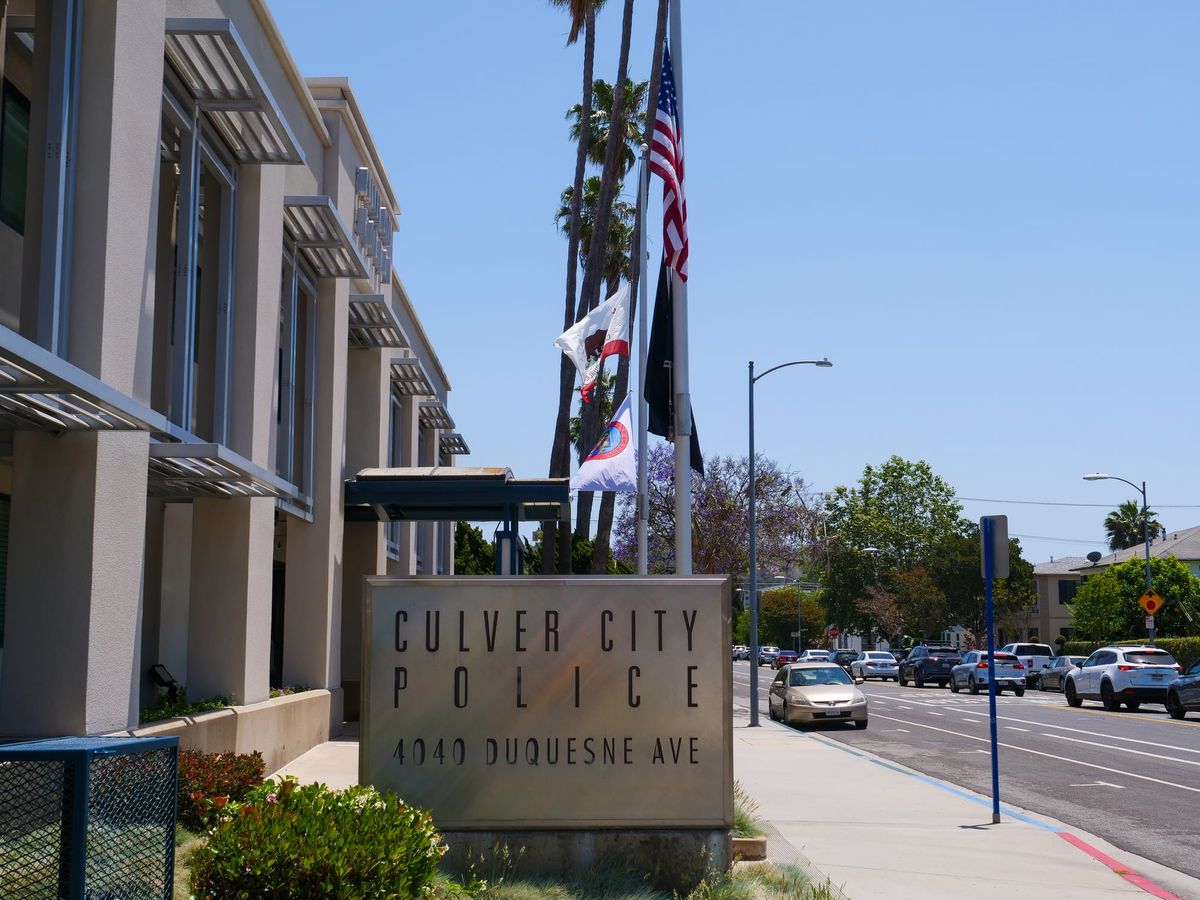

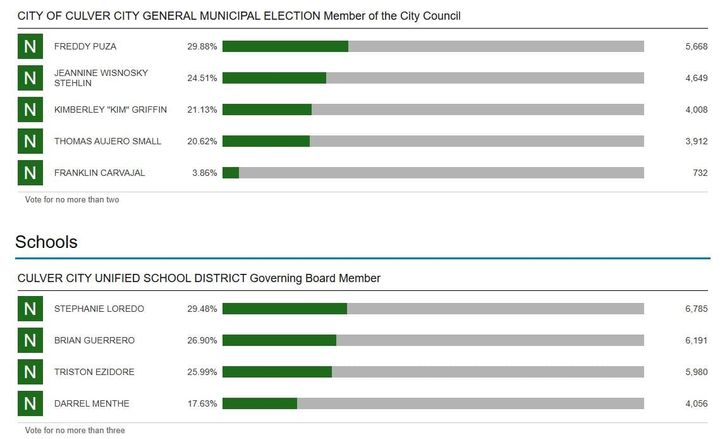
Culver City will work to cancel its contract with Flock Safety, the controversial provider of Automated License Plate Reader Cameras (ALPR), after a 3-2 vote at Monday night’s City Council meeting, the last meeting before the expiration of Councilmember Dan O’Brien’s term and the swearing-in of incoming Councilmember Jeannine Wisnosky Stehlin.
The city is not hesitating to move to completely cut off the use of these cameras, directing the Public Works Department to immediately begin work to remove cameras if permitted by law and delegating to Flock if legally appropriate. Only data used in active legal cases will be retained; the rest will be deleted.
ALPRs have received significant national attention mainly tied to cases where the technology has been exploited. About 1.5 million vehicles are captured monthly by Culver City’s 52 ALPR cameras at 27 intersections, which photograph rear license plates to help identify criminal suspects driving in the city.
In Culver City, there have been benefits to their use, according to Culver City Police Department (CCPD) Assistant Chief Andrew Bellante, who presented the CCPD’s position on ALPR cameras to the council Monday night. Some of the statistics CCPD cited as beneficial results of the Department’s contract with Flock include:
- An overall 19.8% reduction in overall crime from 2023 to 2025, including an approximate 38% decrease in motor vehicle theft, an approximate 23% reduction in theft, an approximate 32% reduction in burglary, an approximate 17% decrease in aggravated assault, and an approximately 6% decrease in robbery
- 180 arrests of suspects driving vehicles that were reported stolen
- Over 100 arrests of individuals driving vehicles entering the City that were utilized in felony crimes, including violent crimes such as murder, armed robbery, armed carjacking, and assault with a deadly weapon
- Numerous arrests of suspects found in possession of illegal items, including loaded Ghost guns (12 guns recovered directly related to ALPR notifications), narcotics, identity theft materials, stolen property, and burglary tools
- Identification of approximately 300 vehicles and suspects (110 year-to-date in 2026) involved in crimes committed in Culver City directly related to ALPR notifications, leading to their apprehension
- An approximately 15% enhancement to property and violent crime case clearance rates from 2023 to 2025
While there were some concerns about the camera’s effectiveness, the core of the community’s issue with Flock cameras stems from surveillance and data privacy concerns. Not every CCPD officer has access to the data, and any access to the database is logged through unique identifiers attached to officers who are allowed access. Bellante also explained that a robust confirmation process is in place, and that ALPR camera hits are not the only factor in whether police continue to look into a vehicle or its driver.
In addition to local regulations, which multiple sources have praised as among the most robust in the state, statewide laws further regulate the collection, handling, and distribution of data. The California law that allows ALPRs to operate legally, 2015’s Senate Bill 34, includes several requirements focused on data protection and privacy, such as mandating “reasonable security to protect the data from unauthorized access, use or disclosure” and that “a public agency may not sell, share or transfer the data, except to another public agency, and only as otherwise permitted by law.”
Councilmember Albert Vera asked whether outside agencies, including Flock itself, had access to data taken by Culver City’s Flock ALPR cameras. Bellante reiterated that the Department policy dictates that CCPD will not share its ALPR data with any outside agency.
But these policies did not fundamentally address the primary concerns of many residents: the power of corruption to circumvent laws and policies when larger powers flex their influence, paired with the frayed trust that a sizable portion of the community has in the current structure, approach, and philosophy of public safety and law enforcement agencies nationwide.
Internal policies established by the CCPD do not quell these concerns, nor did they calm the philosophical resistance to increased public surveillance. Additionally, opponents of the Flock contract argued that the evidence presented was not numerous enough to establish a pattern demonstrating ALPR cameras contributed to lower crime rates as the CCPD contends, with Culver City Planning Commissioner Jeanne Black arguing the positive results could just as easily be the result of a nationwide crime drop as it is due to the presence of Flock cameras.
“[ALPR camera] do help identify and recover stolen vehicles, but the research beyond that is extremely thin,” Culver City Planning Commissioner Jeanne Black, who spoke as an individual resident of Culver City, said Monday night. “There have been few rigorous evaluations using appropriate comparison groups, and most studies have not consistently demonstrated reduction in crimes or improvement in clearance rates.”
Alongside the CCPD presentations were ones from the American Civil Liberties Union (ACLU) and the Electronic Frontier Foundation (EFF), which questioned the reasons behind using ALPR cameras. The ACLU contended that a 2026 Automated License Plate Readers, Vehicle Theft, and Clearance study that Flock uses to support its position on its ALPR cameras did not have the proper peer-review process or the controls in place to be used as evidence.
Many of the fears around ALPRs stem from the cutthroat nature of recent federal Immigration and Customs Enforcement (ICE) activity in Culver City and beyond. Stories of ICE agents receiving information from these cameras to make arrests led Culver City to implement its data privacy policy.
However, cases like an ICE detainment in front of CCPD’s headquarters in March were presented by skeptics as evidence that policies, even robust ones like CCPD’s, do not stop outside agencies from using local data to target individuals.
According to Bellante, the information ICE needed to make the arrest was present in the Los Angeles County Regional Identification System (LACRIS) after CCPD arrested that detainee for an unrelated violation. Bellante said that CCPD discovered that ICE had placed CCPD headquarters under surveillance for several hours as part of their efforts to find and detain the individual.
“We don’t contact ICE, we don’t go to the detainers, we don’t do anything to cooperate with ICE whatsoever.” Bellante explained. “When he was released per the law, ICE came and detained him.”
However, Bellante also noted that when an individual is brought to a jail facility and booked for any reason, they are photographed and fingerprinted, and their data is run through LACRIS. This has caused similar incidents where ICE has monitored police departments or jail facilities upon learning a target has been detained for an unrelated reason.
“This is an unfortunate, common theme that we have seen across the region,” “ICE is notified about somebody being in custody, [and] they’ll come set up surveillance outside of the police department, and take them into custody once they are released.”
Drawing on his experience cohosting a “What the Flock” town hall held in conjunction with Our Culver last week, Vice Mayor Bubba Fish said he viewed the issue through the lens of what public safety requires versus what it costs. He also pointed out that public outcry and resistance to ALPR cameras began before widespread concerns hit the national stage, as residents spoke out against an early iteration of the ALPR contract with Vigilant Solutions as early as 2018.
“We are not deciding whether to try reform," Fish said. "We are having the full conversation about whether this technology, even reformed, fits our values as a community.”
ALPR has three major differences from other technologies the city uses which should be considered, Fish argued. First, he pointed out that there was no way for people in the community to “opt out” of ALPR surveillance, arguing that even phones have an off switch and controllable privacy settings.
Secondly, it tracks both criminals and those simply trying to live their lives. Fish noted that the cameras used to enforce bus lane infractions only activate and capture footage when someone is impeding a bus in violation of the bus lane regulations. However, Bellante told Mayor Freddy Puza that the cameras used to enforce bus lane infractions are consistently recording when the bus is operating.
Giving law enforcement access to private information without a warrant or subpoena was the third critical aspect of ALPR cameras which Fish said required unique consideration. He referenced a lawsuit in San Jose filed by the ACLU and EFF on behalf of the California chapter of the Council on American Islamic Relations (CAIR-CA) and the Services, Immigrant Rights and Education Network (SIREN) that alleged warrantless searches of ALPR camera data violated the 4th Amendment of the United States Constitution and its protections against “unreasonable searches and seizures.”
That lawsuit was dismissed by a Santa Clara County judge in October, a decision that came less than a month after a San Jose police officer was fired for allegedly misusing ALPR camera data to track a victim who levied domestic violence allegations against one of the officer’s family members.
Councilmember Dan O’Brien argued that the time saved by the information was a crucial tool that allows CCPD to respond quickly and effectively, as residents have praised them for. He specifically highlighted how ALPR data enabled CCPD to quickly track a felony hit-and-run suspect who was actively looking for victims to strike with his vehicle, and the importance that second saved in capturing him was.
"Catching these people [in a timely manner] is really critical to stopping other people from being victims out there," O'Brien said.
He acknowledged concerns about surveillance but pointed out that there was no local precedent. He argued that the city and its residents hold its police department to a higher standard, and the city shouldn’t make decisions out of fear based on what happens outside of the city. He also pointed out that, while Los Angeles has yet to renew its Flock contract after it expired in July, most neighboring jurisdictions have both ALPR cameras and a live crime center to enable true real-time surveillance.
“If we are the only jurisdiction in a 20-mile radius that doesn’t have them, the criminals will know,” he said. “I do think the value of these cameras outweighs the fears; I don’t see our police department doing the things bad actors in other police departments are doing.”
Vera wanted to make sure a system was in place to identify the kinds of “bad actors” who would use these policies, and Interim Police Chief Troy Dunlap argued that CCPD's preventative policies are as robust as, if not more robust than, those in any other part of the country. He also shared that anyone caught trying to access ALPR and other data without authorization is immediately fired, and charges are pressed when applicable.
Mischaracterizations of vehicle status are also a concern, with Fish pointing out that a key factor in LA’s decision not to renew the cameras was its Inspector General finding that nearly a third of the stolen vehicle alerts from ALPRs in the city were wrong.
Bellante attributed these misses to human error rather than a camera malfunction or systemic error. Situations like people not informing authorities of a returned vehicle can cause innocent vehicles to keep showing flags in Flock’s system.
But Fish argued that the points made in support of ALPR cameras, while valid in their own right, do not resonate on the same wavelength as community concerns. The fears do not stem as much from local problems as they do from the greater influences beyond Culver City’s borders.
“I have no reason to doubt that CCPD takes its responsibility to safeguard this data seriously, and that we have some of the best safeguards that exist,” Fish said. “But it’s about a system our officers don’t control.”
Councilmember Yasmine-Imani McMorrin expanded on this, arguing that implementing new technologies doesn’t always go as planned, citing a recent nationwide ground stop as an example. McMorrin reiterated concerns that ALPR cameras analyze the vehicles of innocent drivers, unlike other city tools that generally capture only active violations.
“To me, the bottom line is that this technology and this tool can be misused,” McMorrin said.
Future consideration of ALPR technologies may be conducted following the appointment of a new Chief of Police at CCPD.


Comments ()