
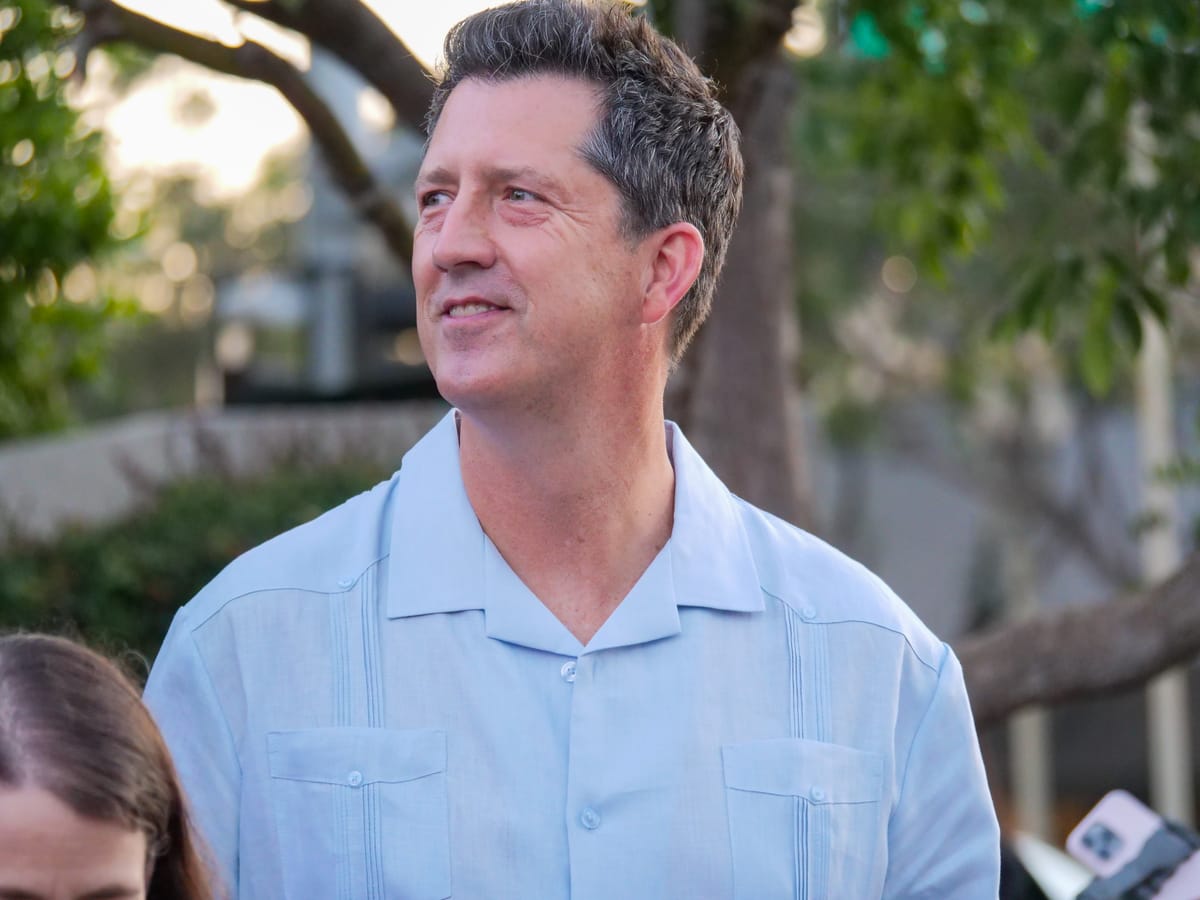
With his time as Mayor set to end Monday, Dan O'Brien sat down with Culver Crescent to reflect on his tenure and the work he believes still needs to be done.
Culver City Mayor Dan O'Brien will conclude his year-long tenure as Mayor of Culver City at the final regularly scheduled City Council meeting of the year on Monday, Dec. 8.
Culver Crescent Publisher Christian May-Suzuki sat down with the Mayor to reflect on his tenure.
(EN: This transcript has been edited for clarity and readability)
CC: What has being the Mayor of Culver City meant to you?
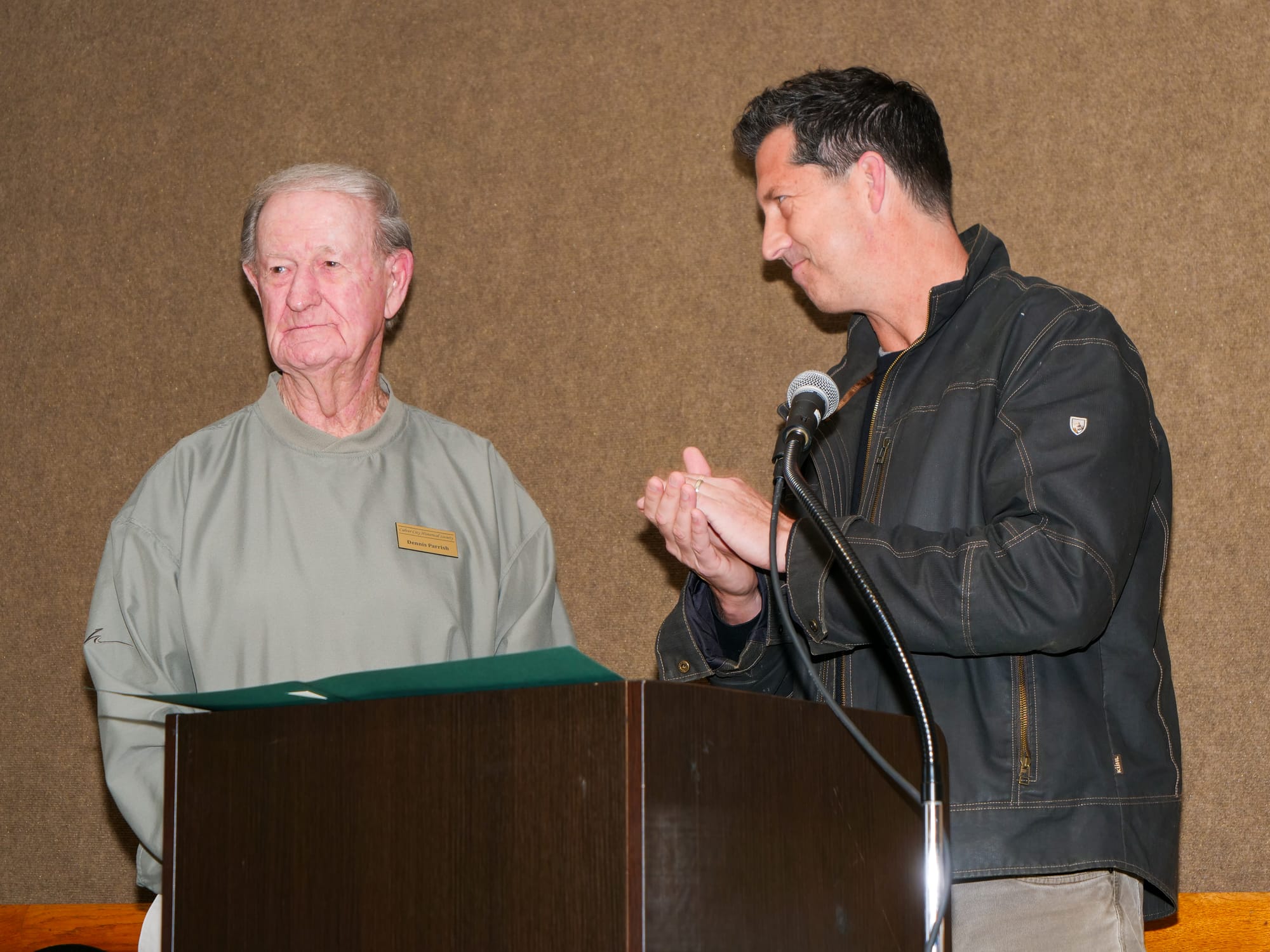
O'Brien: I don’t think most people realize the Mayor is largely a symbolic position in Culver City and in most California cities. My vote carries the same weight as my colleagues on council, so on a practical level, losing the title won’t change my work on a policy-level.
But people value the title of mayor, and you feel it. Before I became mayor, and I would introduce myself as vice mayor or councilman, people didn’t go “Oh wow.” When I am mayor, they definitely say, “Oh my gosh, you are the mayor.”
I knew it was a ceremonial role going into it, but I don’t think I realized the value that others placed on this. So, it was really important for me to be present at every ribbon cutting, every speaking engagement, every...everything.
People really value when the Mayor shows up. Whenever humanly possible, I make sure that whoever or whatever organization it is that I am meeting with or speaking in front of, they know I am accessible and I care.
I’m extremely proud of Culver City and our reputation in the region. So, being mayor was just a great honor.
CC: Culver City's place in the 2028 Olympics is something you have taken pride in. Why is that so important to you, and what does the city still need to do?
"The Olympics are a great opportunity to show Culver City to the world...I am very excited for New Zealand being here, and I feel I had a big part in that."
O'Brien: Going back to when I was elected as a city council member, I entered a really unique world at the time because the Olympics were coming to L.A. in four years.
I took that opportunity in a way that I don’t think my other colleagues would have, and I really went after it. We were the first non-event city to form an Olympics-focused committee — and I asked my colleagues to support that, which they did.
The Olympics are a great opportunity to show Culver City to the world, and that matters. It opens opportunities for cultural exchange, new business, and tourism. I am very excited for New Zealand being here, and I feel I had a big part in that.
I began conversations with New Zealand in my first year as a council member when I met with Australia and a few other nations, those conversations spread to others. Word got out to one of our own Kiwi expats, Tim Dodd. He reached out to me that he was connected with their Olympic Committee and it took off from there. But it was a multi-year process.
As I talked to more and more countries, they would share what they discovered in Culver City with other nations, and it became time-consuming. I think I am up to 39 nations that I have had conversations with…actually, make that 41. Just Friday I spoke with the consuls general of Spain and Belgium.
We don’t have enough hotel rooms, and that’s arguably our biggest weakness when trying to attract nations — that and not having a beach (laughing).
We are currently engaging in a study to see how many more hotels Culver City’s market can bear, because Transient Occupancy Tax (EN: A tax paid by hotel guests) is just about the best way to generate new revenue for a city without adding new taxes.
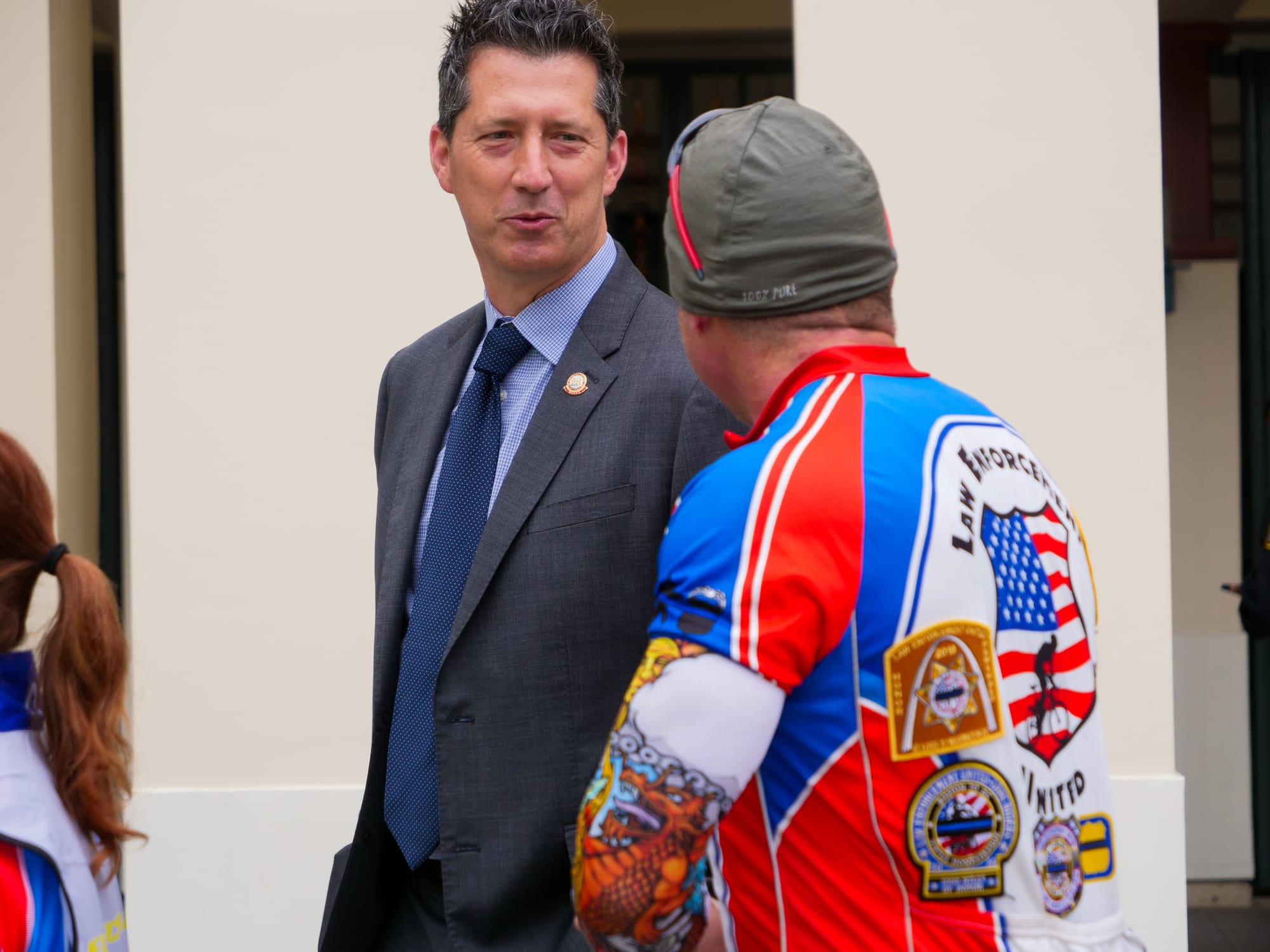
CC: Culver City's budget is perhaps the biggest issue the city faces, impacting the decisions made in other areas. What are your thoughts on the budget and the approach the city has taken?
O'Brien: We are actually much better than most California cities in terms of our budget, but we’re still in a really challenging position. Council members get a lot of criticism over how we spend the city's money, and I think that's probably the same in every city.
I am very proud of our community for getting behind the sales tax. We need to raise revenues to make this city a good place to live and do business. This means fast response times from our fire and public safety officers and our city departments, well-maintained streets and sidewalks and parks — things that make residents and visitors want to be here. The trick is to do this in a way that doesn’t continually make it more costly to live here or run a business.
There are other ways that we can raise revenues. Several residents have asked, “Why don’t you guys put billboards up?” We could generate millions of dollars, but I am against that. I do not want to have giant billboards up and down our arterials, and I don’t think our community wants that either.
What is unique to Culver City compared to most cities is how much we rely on the businesses' generation of tax revenue for our operating budget. Most cities in California — especially in L.A. County — are able to capture a greater percentage of property tax money from the state than we do. I think we’re second to last of L.A. County cities in the percentage of revenue drawn from property taxes.
This is something that's totally out of our control — it was baked in when Prop 13 passed in 1976 — so we really need to take every opportunity we can to increase our business tax base without adding more financial burden on them. We’re looking at hotels and other ways to attract new business, which will raise more revenue, which enables us to provide more quality services.
And we need to be really conscious and thoughtful when we present new policies that might impact our businesses. I think we need to do a better job bringing them into the conversation and having them be a part of the solution, instead of just placing new policies and challenges upon them.

CC: What are some of the causes you will prioritize once returning to your role as council member?
O'Brien: Parks and public infrastructure…Bill Botts needs to be fixed now. There is a $2 million plan to get it good for several years…it’s an embarrassment the way it is right now. We have thousands of kids that play Little League baseball, AYSO soccer, club soccer, softball, and it's frankly dangerous. We need to get that fixed as soon as possible.
We need to continue to work on our streets, our sidewalks, and continue to improve our public infrastructure. I really want to get the Ballona Creek Bike Path improvements done; there are plans well on their way that are mostly funded. I really want that completed before the Olympics.
We need to continue to support our small businesses and film production. I want to help get the parcel tax measure passed by the school. It’s not my duty as a council member, but I have a strong voice in the matter, and I want to be that voice like I always have been for our schools.
Nobody likes new taxes, but we have to supplement school funding and capital improvements locally, especially given the way our schools are underfunded statewide.
CC: Is there anything you regret or wish you could have done differently during your tenure as Mayor?
O'Brien: Off the top of my head, I cannot think of anything major that I would have approached differently. There are probably lots of smaller decisions I might have changed along the way.
I will say that I am very frustrated with the decision of my colleagues to move forward on Jubilo Village. Not because of the value or goals of the project, but because of the cost.
This was brought before us first as a $2 million contribution from the city, then as a $4 million contribution, then suddenly it became $20 million. That’s just too much for the city to take on, especially with our really constrained budget and the environment we are in. We’ve dipped into our reserves by a significant amount to help pay for this.
I just wish my colleagues had seen it the same way Councilmember Vera and I did. Yes, we need affordable housing, and we are in the process of producing that. But honestly, if there is another 93-unit, 100% affordable housing project that asks for $20 million, do we do it again? If there’s another one after that, do we do it again?
We can’t sustain that. And if we agree on that premise, what makes Jubilo more worthy for funding than other future projects? I know there are other affordable housing developers asking that same question.
Considering we have over 600 units of privately funded affordable housing in the pipeline, 93 units aren’t a “make or break” for us.
Now that we have committed that money, I do not see (Jubilo Village developer Community Corporation of Santa Monica) going out looking for funding to supplant our commitment. Why would they? They gave us a matrix of all these other funding options they thought they could qualify for…but guess what? None of them happened.
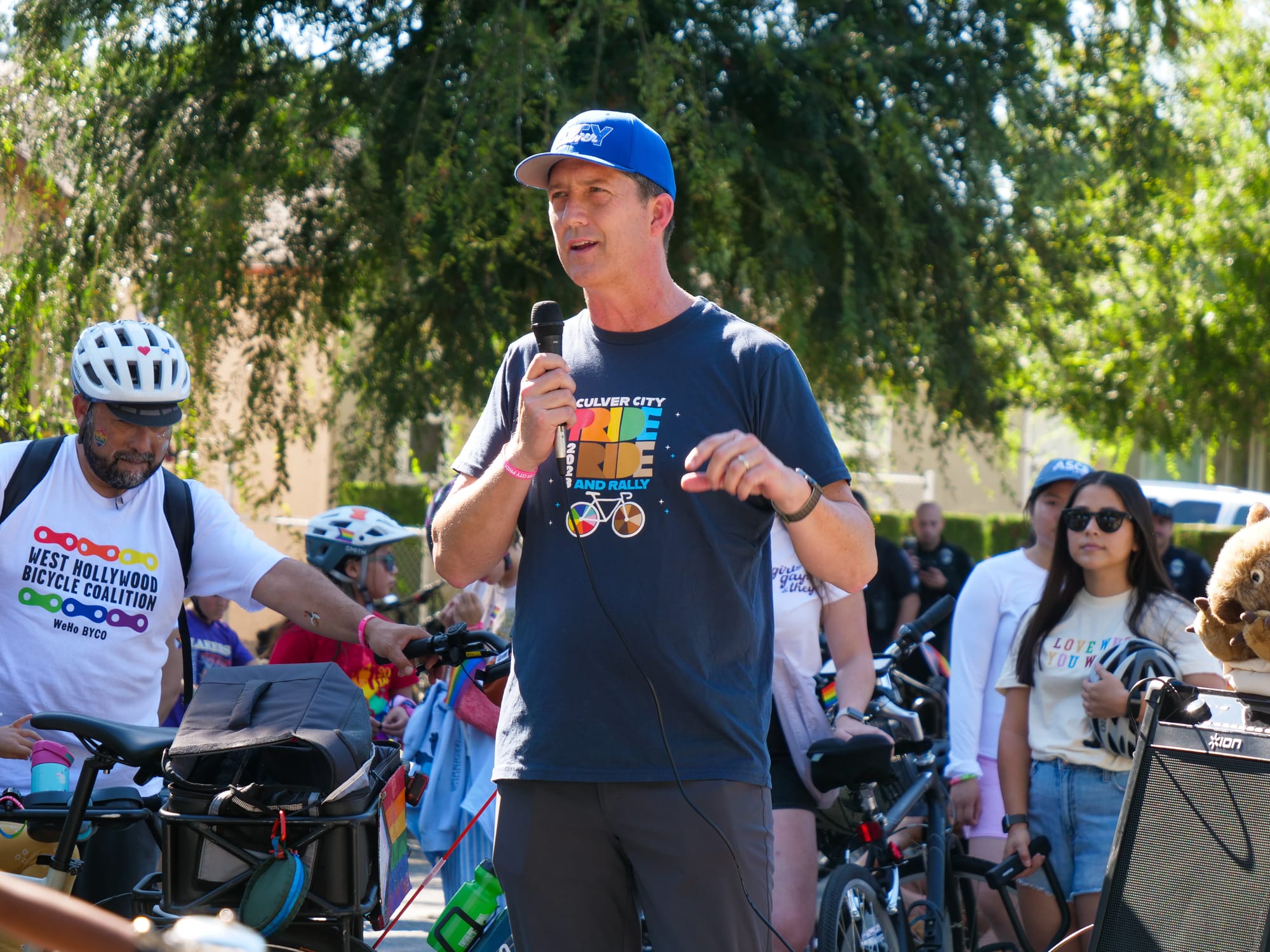
CC: Culver City has made a concerted effort to implement programs for its unhoused population in recent years. How do you feel about the way the city has moved to address its homeless population during your time on council?
O'Brien: It’s measurably different for the better and I’m very proud of this. There were large encampments at the Senior Center, Vets Park, and under the Venice and Washington overpasses. These are all within Culver City borders.
Our homeless count has gone down each year since I was elected [to the city council]. That’s because of our policies of leading with care, offering housing, providing wrap-around services, all of that.
"Our staff knows our unhoused by name, every single one."
The people who are remaining on Culver City streets are largely not from here. In 2022, there were a lot of people from Culver City or the immediate area on our streets who made Culver City their home. Now, what we have mostly are people who are dealing with severe mental health issues. There is no mechanism to compel them into care, there aren’t mental health facilities to put them into, there aren’t enough people to provide care, and those are all issues Culver City cannot solve on its own. We’re already stretched beyond our capacity.
There need to be laws at the state and federal levels put into place that enable caregivers to compel people into mental health care. If we don’t do that, this crisis will continue.
We can’t just put someone into housing if they have a mental illness or severe substance abuse issues; we can’t just stick them into housing and expect them to get better.
The public doesn’t see it, but a lot of the people we are caring for require significant management, a lot of empathy, and a lot of patience, and that’s what makes what we do here so much more effective than other cities. We have caregivers we have direct oversight over. We get a call and can have someone there in minutes. And if a person is willing to accept help, we can provide it right there.
That wasn’t the case when we contracted out through the county. It would take days for an unhoused person to see someone. That meant most people who needed help stayed on the streets.
Our staff knows our unhoused by name, every single one.
If you go on Braddock Drive under the 405 in L.A., there are at least a dozen encampments. They are not from Culver City; they are there from LA or other places. They are there because LA doesn’t have the persistence, the consistency, or make the effort that we do. And because these encampments are literally across the street from Culver City, our homeowners and renters are experiencing a lot of problems along there.
CC: Perhaps the most unique aspect of your tenure as Mayor is the ICE Raids that have occurred in Culver City. Looking back, how do you feel about the way you handled those situations?
"I don't think Enrique Lozano selling popsicles and making people happy is going to kill someone."
O'Brien: It goes back to the Mike Tyson quote: “Everyone has a plan until they get punched in the face.”
I had plans for other things to focus on. Then we had the fires… then ICE. I had no idea that was going to be something I was going to have to deal with.
There are people across the country and even in Culver City who have opinions against California being a sanctuary state and Culver City being a sanctuary city. I don't think the intent of that policy is to protect people who are truly committing crimes that harm others in society; sanctuary is to protect people trying to grab hold of the American dream and do better for themselves and their families.
You hear rhetoric like "if they just do it legally..." It's incredibly challenging and complex, especially if you are coming from a nation like Mexico, El Salvador, or any Central or South American nation that might not have access to the resources like those from Europe, China, or Southeast Asia.
It feels like our country tries to wear people down and take advantage of them because they are the cheapest labor that we have, and it's partly because of this labor force that we can enjoy affordable prices on many services that we receive.
I met Enrique Lozano's family, I met the families of the two men at the Culver City car wash, and their college-bound and college-attending daughters. I just find the detentions inhumane first, but also incredibly short-sighted and looking for a headline, rather than truly addressing the causes of undocumented residents.
I am proud of where I stand on that. I think it's the morally superior position. I encourage anyone who takes a hard line on this, like "Well, they didn't obey the law," to have a conversation with these families and weigh how exactly their minor illegal residence — being undocumented is technically not legal — how does that negatively impact you or me?
If we are going to start enforcing things on that level, we have to start questioning what things you do every day that are illegal that you feel are inconsequential, whether it's speeding or running a red light. I think there are other things that arguably have a greater consequence.
When you run a red light or text and drive, you might kill someone doing that. I don't think Enrique Lozano selling popsicles and making people happy is going to kill someone.
I am sorry for people who do not agree with my position or the city's position on this, but these are not the people the federal government should be focusing their energy on…and certainly not in this way. Why can’t they put the same energy into creating a viable pathway to citizenship. How great would that be?
CC: Do you have any advice for your successor, or any future mayors of Culver City?
If someone's really upset and is not treating you the way you want to be treated, or not seeing things the same way you're seeing things, it's because they're in a different place...it's not necessarily right or wrong."
O'Brien: Every person is going to do that job differently from the other person. Everyone's got their own leadership style, so I am not going to give any unsolicited advice. I think [Freddy Puza] will do a great job in his own way.
I started doing two things when I ran for city council: First, I binge-watched Ted Lasso. I really took to heart his empathetic, optimistic outlook on people; the way, no matter how mean someone was to him, he didn't take it personally.
If someone's really upset and is not treating you the way you want to be treated, or not seeing things the same way you're seeing things, it's because they're in a different place — they have different life experiences and see things differently because of that. It’s not necessarily right or wrong.
As a kind of a partner to that, I started reading The Daily Stoic, which is a 365-page daily devotional. You know, each day would have something to think about related to the Stoic philosophy. Its overarching principle is that you do the best you can, be authentic in the way you do it, and don't be overly concerned about what other people think about you, especially if it's not people that you are close to or love. Worry about the things you can control, and people’s feelings about you are not one of them.
They don't know what's really in your heart. It goes back to the Ted Lasso perspective, that what they're upset about might not be what they're upset about, you know? It's something else in their lives–and they project their anger, their frustrations over that onto you.
So, making sure I do the work–speaking with stakeholders, conferring with our staff, and just being an empathetic listener with constituents, and sharing my own authentic perspective and my point of view on whatever an issue is… that helped me feel I’m doing the best I can and relieved a lot of stress and anxiety over the position for me.
I still sometimes get that stress because you do get criticized a lot, so my advice would be more on a personal, mental health level, not about the way they execute the duties of the job.


Comments ()