
CCUSD awarded initial victory in New Earth suit
Nonprofit New Earth opened a lawsuit in 2024 against the District, alleging a breach of contract centered around a smaller than expected payment for services
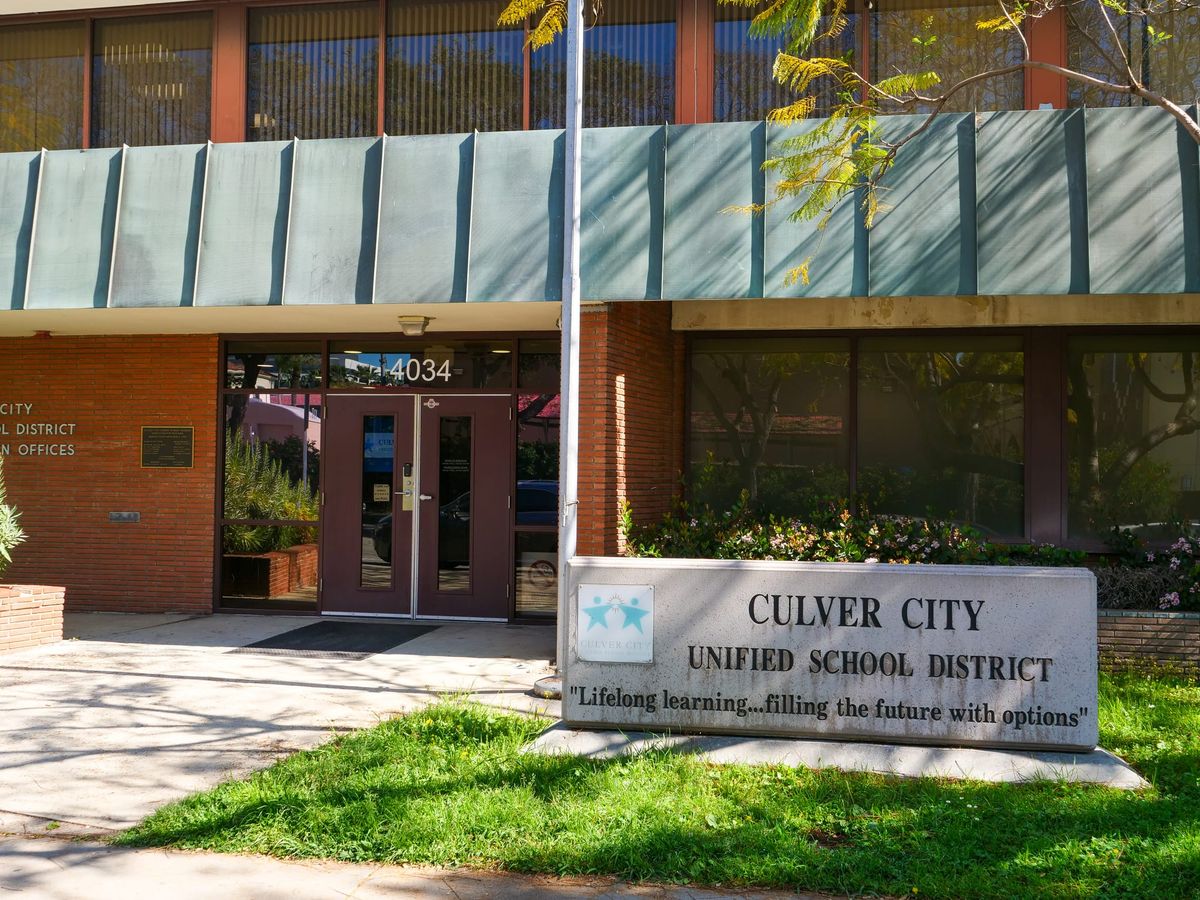

L.A. County Superior Court Judge Jeffery D. McFarland ruled in favor of the Culver City Unified School District (CCUSD) in a lawsuit filed by nonprofit New Earth over $1.5 million it believed it was entitled to under an agreement with the District for contracted services.
In the September 21 order granting the District’s request for summary judgment without a jury trial, McFarland ruled that New Earth’s claim that a contract between the nonprofit and CCUSD for services dictating a particular pay schedule was not legally valid.
The judgment centered on the terms and form of the agreement between the District and New Earth, with the latter arguing that both parties signed a legally binding contract, while the District argued that no such offer was made and that a Purchase Order issued for the services invalidated the original proposal.
CCUSD originally enlisted New Earth as an outside contractor to provide services to students facing emotional and social obstacles over several years. New Earth argued that CCUSD breached the contract by paying $600,000 of the $1.5 million it expected for a second year of services, while the District pointed to a Purchase Order approved with the revised terms as an acceptable legal standard to act on.
Judge McFarland sided with the District on several of its objections, with one in particular serving as the core of his reasoning. CCUSD argued that New Earth's claim that “a June 2, 2022 proposal that, when signed by the District, would become a binding contract” lacked merit because it did not reflect a proper legal interpretation, and McFarland sustained that objection.
“Based on the supplemental briefing submitted, the Court concludes that Plaintiff fails to raise a triable issue as to whether its proposal was a contract,” McFarland's judgment reads.
This decision played a part in Judge McFarland's final ruling: the Purchase Order, enforced after the contract was written, is legally considered a counteroffer that terminated the original proposal. The terms and conditions of the $600,000 purchase order for the second year of services, which the Board of Education approved, outlined that fact, McFarland argued.
“The Purchase Order incorporated by reference Defendant’s Standard Terms and Conditions," McFarland's order reads, "which conspicuously indicated that Plaintiff’s Proposal was an ‘offer’ and the Purchase Order an ‘acceptance.’”
The Terms and Conditions of that Purchase Order include a clause stating that the order “constitutes the entire agreement between the parties and supersedes any prior or contemporaneous written or oral understanding or agreement and any contrary provisions on packing slips, invoices, or other documents submitted by the Contractor.”
“Should any such document from Contractor contain additional or different terms than this Agreement, those terms shall be considered proposals by Contractor which are hereby rejected,” the Purchase Order reads.
To obtain summary judgment, a defendant must prove to the judge that there is “no trialable issue of material fact.” In this case, Judge McFarland did not find sufficient evidence from New Earth to substantiate its claim of a valid contract between the parties, dismissing several arguments as failing to meet the burden of proof needed to show a trialable issue.
Among the arguments McFarland scrutinized was a portion of correspondence gathered during the lawsuit discovery process that the District interpreted as a concession that the agreement was, in fact, a contract. However, McFarland noted that New Earth omitted part of that correspondence in its argument to align with that narrative, and the motion cited a ruling stating that evidence from interrogatories — the list of formal questions presented to parties to gather information during discovery — may be contradicted by later evidence.
“Plaintiff omits the preceding segment of Defendant’s response where it stated that the Proposal ‘more closely resembles a proposal by New Earth with a description of New Earth’s proposed services and estimated cost, than it resembles a formal contract,’ and identified it lacked typical terms,” McFarland’s judgment said of the offer New Earth viewed as a contract.
CCUSD Board Member Lindsay Carlson announced the decision to the public during the Board of Education meeting held September 22. Carlson lamented the financial burden of this process, pointing to the wide range of other needs CCUSD needs funding for.
“That doesn’t bring back any of the $1,200,000 the district paid them, nor the $250,000+ that we had to pay our lawyers to defend the district in the litigation,” Carlson said of McFarland’s ruling. “For as long as I sit here, I will do my best to make sure that nothing like this happens ever again.”
In a statement to Culver Crescent, CCUSD Superintendent Alfonso Jiménez said the District was pleased with the initial result but declined to comment further until the appeal period has concluded.
“Our focus remains on serving our students and supporting the needs of our school community,” Jiménez's statement reads.
While the motion was granted on September 18, the 60-day appeal period does not start until the date a notice that the judgment is filed is published, which is currently undetermined. The next step in the case is a review of the judgment scheduled for October 14.
New Earth did not respond to a request for comment at the time of publication.


Comments ()