
Council outlines priorities at Strategic Planning Retreat
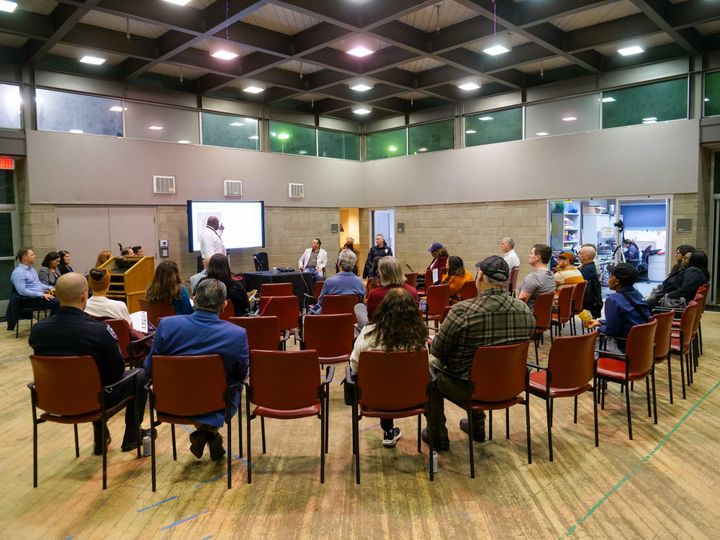
City staff and the city council met at One Culver for a Strategic Planning Retreat to set priorities and measurable goals guiding this year’s budget process.
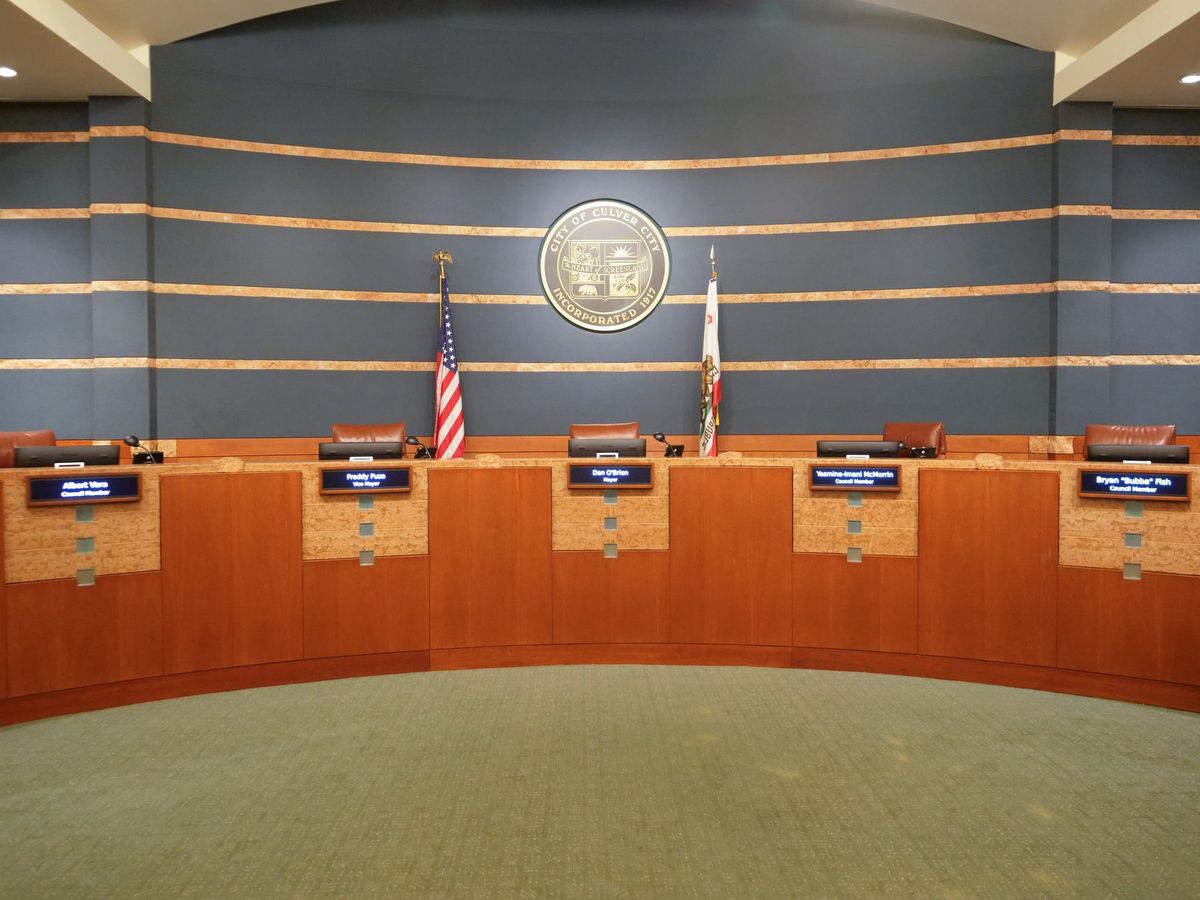
Culver City’s decision-makers spent their Valentine's Day this year taking the first steps toward shaping the city's direction for the upcoming fiscal year.
As part of the city’s first Priority-Driven process to create the 2026-27 Fiscal Year budget, a new Strategic Planning Retreat was held this past Saturday, during which larger goals were prioritized and measurable metrics tied to their success.
The primary purpose of this retreat was to organize city priorities ahead of the new budget process being implemented by City Manager Odis Jones. These priorities will be applied to create a budget that may be considerably different from the previous year’s budget, which was formulated through the more traditional incremental budgeting process.
City council priorities have been established in the past; a separate Strategic Plan outlines them every few years. Jones and the consultants enlisted in this process used six priorities presented to the new city manager when he was hired following John Nachbar’s retirement last December.
The six priorities, also part of the 2024-2029 Strategic Plan, are:
- Strengthen Long-Term Financial Stability
- Invest in Public Space and Infrastructure
- Enhance Housing and Homelessness
- Deliver High Quality Public Services
- Promote Diversity, Equity, and Inclusion
- Deepen Community Engagement
Councilmembers were asked by consultants to label three of these goals with different stickers to order the priorities and determine which needed to be addressed immediately during one of the exercises conducted on Saturday. As part of the retreat, several outside consultants — including Ernst & Young and Gorman Partners LLC — were present to guide the discussion and work with the city council through exercises that focused the discussion.
One sticker indicated that the particular priority was foundational, or a broader idea to be implemented across all city operations and policies. Another indicated a true priority — one that needed to be addressed immediately. The final sticker indicated a priority that could be seen as secondary, continuing to grow and be considered, but not standing at the forefront of the city’s operations.
The council identified the three priorities as the most urgent and assigned Key Performance Indicators (KPIs) to measure progress toward achieving them. KPIs are specific, measurable values set to track progress toward each goal. Two types were proposed: one tracks a quantifiable statistic, and the other marks completion of a definite task during the fiscal year.
Having a budget surplus in 2033 when the tax revenue from Measure CC is set to expire was proposed as an indicator of Financial Stability, and placing the city in a position where it can afford to lower its 10.75% sales tax takes that a step further. This will be made more difficult by the need to supplement the city’s Contingency Reserve fund, as a significant portion of it was restricted for the Jubilo Village project loan.
City Council Policy 5002 dictates that a replenishment plan must be established when money from the city’s General Fund Contingency Reserves is committed or used.
Creating a five-year financial plan and an Economic Development Plan will also be among the KPIs used to measure the city’s financial success. Jones said Saturday that correcting the cash flow was only the first step in repairing the budget and that it was important to set the city up to continue operating efficiently.
Sidewalk conditions are a common complaint amongst Culver City residents, so raising the city’s Pavement Condition Index (PCI) was one of the measurable goals set as part of its larger priority to Invest in Public Spaces and Infrastructure.
PCI is a metric established by ASTM International (formerly the American Society for Testing and Materials) that grades the condition of pavement sections on a scale of 1-100. A recent LA Times article reported that Culver City’s PCI is 74, lower than cities like Santa Monica and West Hollywood, but noticeably better off than the projected 56 in the city of Los Angeles in 2026.
The goal to raise that number to 80 was established as a KPI of success in Public Spaces and Infrastructure. Similarly, the council set a goal to increase “playground playability” to 80%. There are several scales that have been established, including the ParkScore index from the Trust for Public Land, which assesses a city’s park conditions, and the Play Space Audit Tool (PSAT) published in the November 2019 edition of the Journal of Physical Activity and Health, which focuses on individual parks and has been applied in academic research on park spaces, but no particular tool was proposed Saturday.
While sidewalks received some emphasis, the overall health of the public right-of-way was considered. The council also established that the assessment of each component of the right-of-way, including sidewalks, roads, green structures, and traffic flow, should be conducted as a KPI. An assessment of building conditions across the city was also proposed as an indicator of success.
Jones also mentioned his desire to implement a traditional Capital Improvement Plan, an idea Puza proposed last year. The city’s current Capital Improvement Plan details specific projects underway and in the pipeline, but does not outline the guiding principles for future projects, as other Planning Documents, such as the General Plan or the Urban Forest Master Plan, do for their respective fields.
 Press Release
KPIs associated with the Enhancing Housing and Homelessness were skewed toward achieving specific statistical goals for serving the unhoused in Culver City. Some of the metrics proposed include food insecurity data, numbers of unhoused people, data on people the city prevented from falling into homelessness and placed in permanent housing, and transit and mobility ridership in the city.
For the other three priorities, discussions were more about defining what it meant to embody those traits in the policies the council sets. While the immediate priorities had tangible, measurable goals attached to them, these three foundational or growth priorities were broken down into what they specifically meant for the council members.
Ideas like engaging in established city spaces and groups they haven’t before to deepen community engagement, and considering how procedures and processes impact DEI citywide, were brought up by council members to further guide the budget process.
The full Strategic Planning Retreat can be viewed here.
Comments ()