
Culver City cuts ribbon for MOVE Culver City East
The project forms a bike lane connection between the Downtown Corridor and existing bike lanes on Adams Boulevard that creates a 4.5-mile stretch of continuous biking infrastructure between Culver City and South Los Angeles.
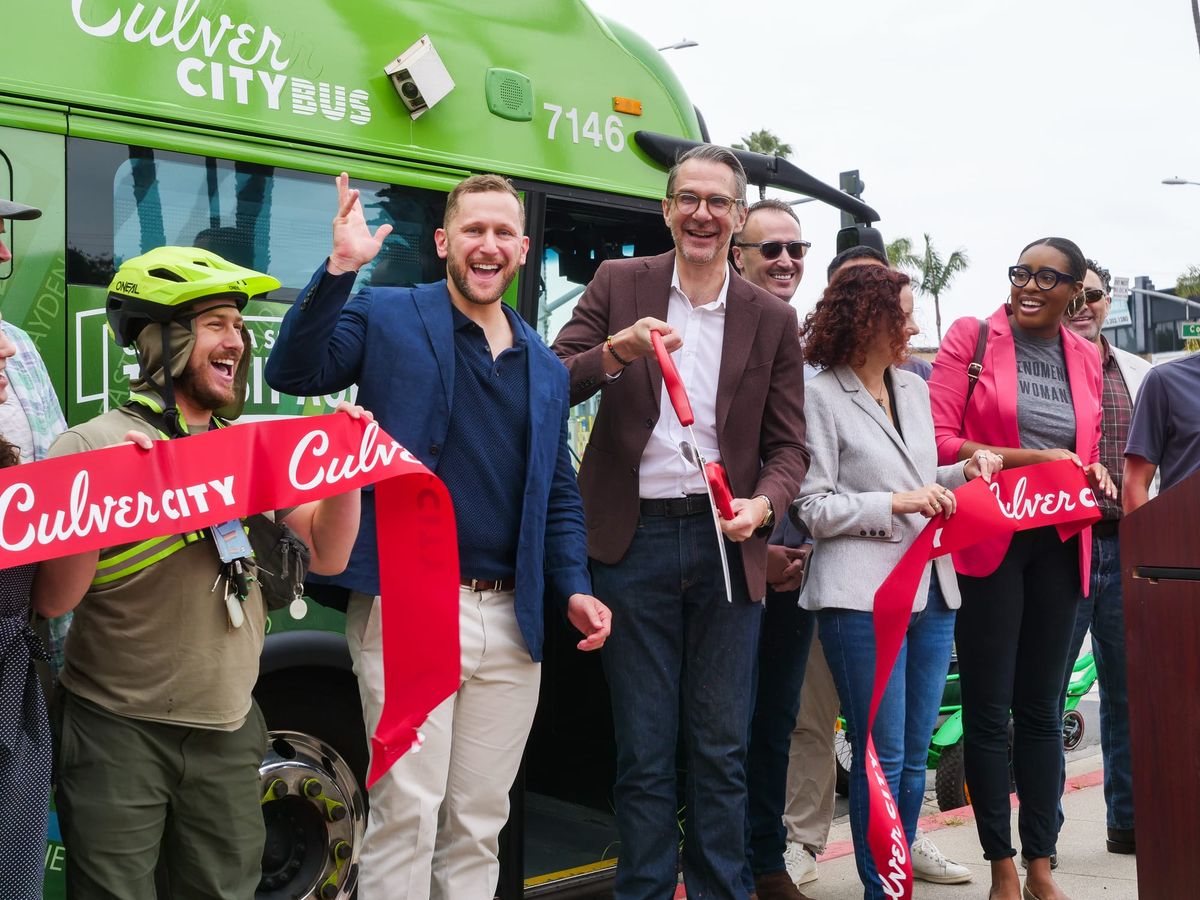

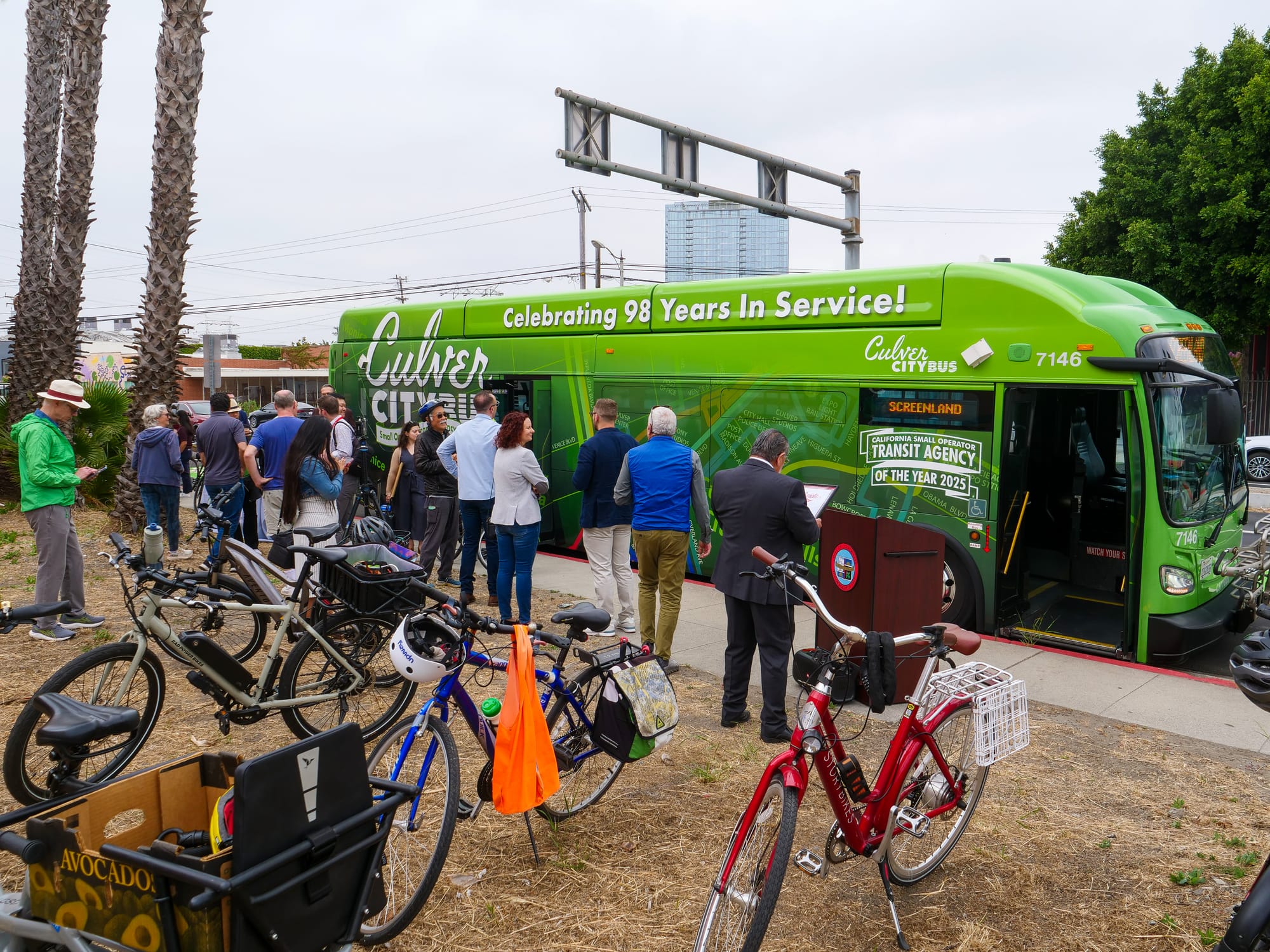
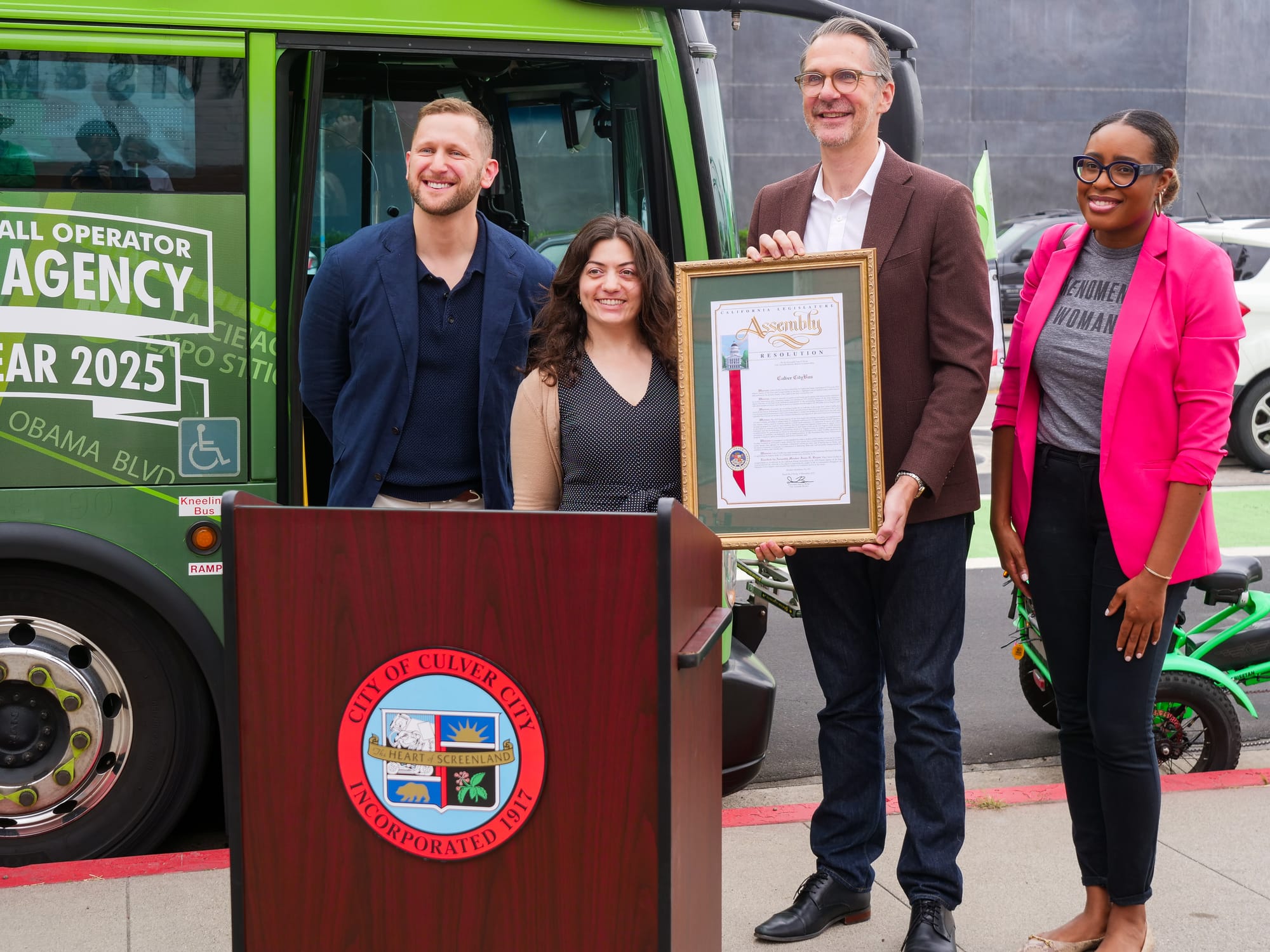
Culver City staff, local officials, and community members gathered at the corner of Washington Boulevard and Adams Boulevard on Friday morning to celebrate the ceremonial opening of the eastern segment of the MOVE Culver City project.
This segment extends bus and bike lanes 1,500 feet east to the City boundary at Washington Boulevard and Fairfax Avenue, and also forms a bike lane connection between the Downtown Corridor and existing bike lanes on Adams Boulevard that creates a 4.5-mile stretch of continuous biking infrastructure between Downtown Culver City and West Adams in South Los Angeles.
The project is an extension of the MOVE Culver City project, which installed a protected bike and bus lane in Downtown Culver City as a pilot project in 2021, reducing the corridor to a single motor vehicle lane. The move drew both praise and vitriol from the Culver City community and beyond, and the city council scaled the project back to a single shared bike and bus lane to make room for an additional motor vehicle traffic lane in 2024, as it is currently configured.
Friday morning’s ceremony featured not only Culver City figures, but also those part of the greater political ecosystem in which the city exists. Representatives from the offices of State Assemblymember Issac Bryan, L.A. County Board Supervisor Holly Mitchell, and U.S. Representative Sydney Kamlager-Dove were also in attendance on Friday, some to present the city with official commendations for efforts to improve Los Angeles' transit and micromobility network.
“We wanted to celebrate as much as we could,” Michelle Persoff, who serves as District Director for Bryan, said. “It’s a big deal, and that’s certainly shown here with the excitement we have here.
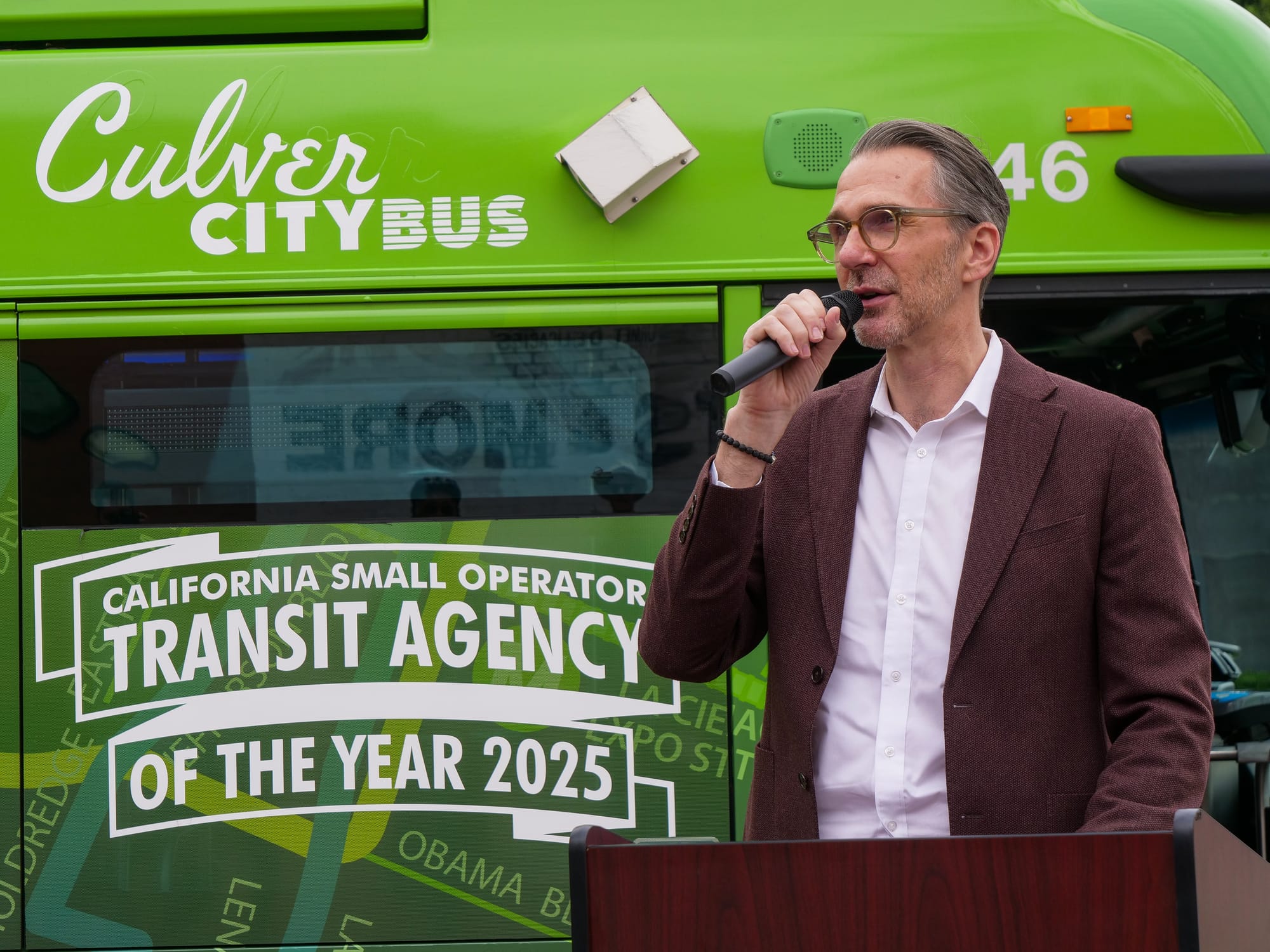
Culver City Mayor Freddy Puza explained the importance of implementing diverse transit infrastructure that “goes where people need to go,” and stressed the need to close gaps in micromobility infrastructure to maximize safety and accessibility for those traveling through the community outside of motor vehicles.
“The true heart of the MOVE Culver City project is simple,” Puza said at Friday’s ceremony. “It’s about giving people choices and creating a city where everyone can get where they need to go safely, reliably, and comfortably, no matter how they choose to travel.”
Vice Mayor Bubba Fish emphasized the importance of being able to travel around Culver City safely, pointing out that the mandate was so great that the voters of Los Angeles County passed a sales tax increase through 2016’s Measure M to help fund this pursuit. Measure M, which passed with 71.15% support, includes a specific provision requiring 3% of the funds raised to be allocated to local transit projects, including MOVE Culver City.
“We are incredibly lucky that L.A. County decided to do that,” Fish said, “and as a result, we get incredibly transformational projects like the MOVE Culver City East Extension.”
Both Puza and Fish also credited the work of city staff involved in the project, including those from the Public Works and Transportation Departments. They also thanked advocates like former Mayor Thomas Small and community partners like Walk ‘n Rollers and Bike Culver City for their continued efforts to improve bicycle infrastructure.
“We have an incredible group of folks in Culver City," Fish said, "that are really engaged and want to make sure folks can get around safely.”


Comments ()