Dear Culver City: The Story of Measure AA
EDITOR'S NOTE: This piece was submitted by a source unaffiliated with Culver Crescent and should not be interpreted as reflecting or confirming the opinion of The Crescent or its writers.

EDITOR'S NOTE: This piece was submitted by a source unaffiliated with Culver Crescent and should not be interpreted as reflecting or confirming the opinion of The Crescent or its writers. Click here to view the full Dear Culver City disclaimer
By Darrel Menthe
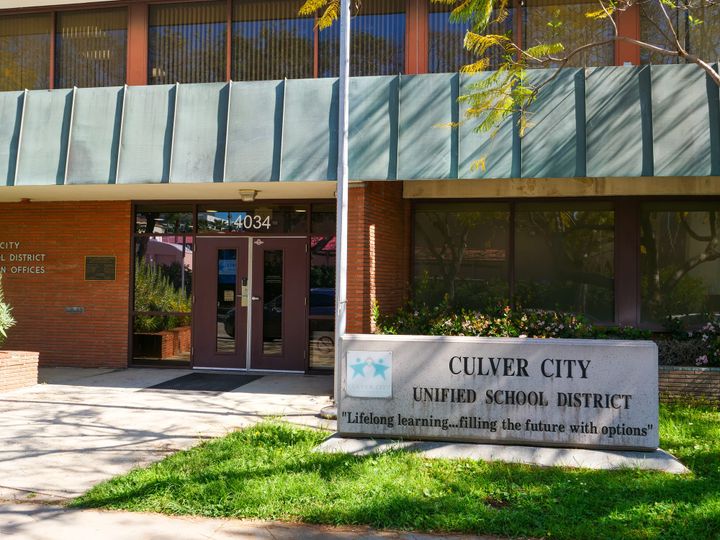
Culver City voters approved Measure AA, a new parcel tax for Culver City public schools, on November 3, 2026. As explained below, it will take public involvement for the measure to succeed as intended. But this is also an important story about what it takes for citizens to make change happen in California, and why it matters when communities can work together.
It would have been hard to tell this tale well before knowing the outcome. Now that it has a happy ending, I hope voters will find this a story worth knowing.
Changing the Law
In the late spring of 2025, I was touring colleges in Northern California with my daughter, and we kept driving past Berkeley High School. It is an impressive campus that occupies several city blocks. I became eager to learn how Berkeley could have such great public schools when ours were struggling.
When I got home, I spent a lot of time researching Berkeley Unified’s budget and funding. Out of that investigation came my proposal for a new parcel tax in Culver City. What I discovered is that Berkeley had enacted a special kind of parcel tax, one that taxed the square footage of a building. Berkeley adopted that per-square-foot tax in the 1980s, and the voters have renewed it multiple times.
Berkeley is a larger jurisdiction than Culver City, but it gets about $44 million each year from its parcel tax out of a budget of approximately $200 million. Culver City Unified School District has about a $110 million budget. I hoped we could bring in a proportionate amount for our schools.
For a citizen group to do this in Culver City would not be easy, however. Such a proposal here would break new ground legally and politically in three major ways.
First, this would be the first per-square-foot school parcel tax in Southern California. The current school parcel tax charges the same amount for Sony Studios as it does for a 1-bedroom condominium ($189 per year). The only sliding-scale school parcel taxes in California are in the Bay Area, around Berkeley. Southern California voters are not used to this.
Second, enacting a tax by citizen initiative is almost unheard of. Virtually all parcel tax measures are placed on the ballot by the government and require a two-thirds vote. Recent California Supreme Court precedent permits a citizen initiative to pass by simple majority vote, but powerful forces oppose such initiatives. Proposition 43, also on the November ballot, would have eliminated the people's power to propose and enact their own legislation by simple majority vote.
Third, for technical reasons I will explain later, it became clear that any citizen initiative would need to be addressed to the city rather than the school district. I learned this in part from a flat tax of $1,095 per parcel for Manhattan Beach Unified School District that was proposed to the city of Manhattan Beach and voted down in 2022. This inter-jurisdictional issue was probably the trickiest part of all.
In addition, there is no manual for any of this. There is no “how to frame an initiative” guide available. For those of us who did it, this was like getting on a horse for the first time and riding at full gallop. As a lawyer, I spent time examining the legal precedents on this kind of taxation under the California Constitution.
I also researched the details of the citizen initiative process and the recent precedents that, since the 2017 Upland decision, have permitted voters to put tax measures on the ballot for a simple majority vote.
While I was satisfied that the law would permit us to proceed, I knew it would be a challenge to persuade others. It is hard to get institutions to experiment even on a single axis of innovation, never mind three simultaneously.
Parents Come Together
Later that summer, I spoke with CCUSD Board Member Lindsay Carlson about a citizen initiative to better fund our public schools. Earlier that summer, the City gave the district $2.5 million to help fill a shortfall but required the school district to present a new parcel tax proposal to voters. A citizen initiative was also an option under that short-term agreement, however, and we knew that it had a lower threshold for passage.
I was not the only one interested in discussing an initiative measure. Carlson connected me with Dan Selz, who had independently expressed interest in a citizen initiative and is a self-described “democracy nerd.” Dan invited many parents he knew, mostly at Farragut Elementary. Others who expressed interest to school board members were invited.
Soon, we were able to put together a working group to discuss the matter. Our working group began meeting every other week at my offices starting in September 2025.
From the statutes, I understood that the timeline for citizen initiatives was relatively short. Getting a measure on the November 2026 ballot would require a final proposal by January 2026. We had a lot of issues to tackle, and I wanted our group to adopt a proposal that, as noted, was different from the usual small, flat parcel taxes.
As a group, we had to accomplish several things quickly:
- Form a coherent picture of the financial need and goals for a measure.
- Understand the legal and practical avenues for citizens to address that need.
- Agree on what to do.
- Commit to doing it.
For that, we needed to become a team. Our early agendas focused on education about the district and team-building. We had some good times with my eclectic PowerPoint presentations, including excerpts and pictures from a 1960s dissertation on the Culver City Unified School District.
We also needed to make sure the district realized what we were doing. Superintendent Jiménez was invited to a meeting early on. We explained the options we were considering. He assured us that the proposals we were discussing would, in fact, help the district.
I also connected with Ray Long, the President of the Culver City Federation of Teachers, and we discussed the initiative process and the role the union could play. He was very supportive and became a major ally in the campaign that ultimately followed.
We ended up with a core group of seven, whom I list alphabetically: Ji Young Denick, Amy Hee Kim, Anna Kosoff, Darrel Menthe, Ross Piro, Dan Selz, and Paul Zagala. Each of us brought different gifts. I can't fully characterize these gifts, but I can say each person brought something to the table that nobody else could.
Ji Young Denick is tenacious and tireless. Amy Hee Kim is well-organized and knows how to keep a group focused. Anna Kosoff is enthusiastic and views no task as impossible. Ross Piro is passionate and matches that with a willingness to work. Dan Selz is a visionary with the unexpected complementary trait of selflessness. Paul Zagala is detail-oriented and a glutton for hard work.
All are fun people to spend time with and made our work feel like it wasn't work at all.
I frequently found myself wondering how it was possible that I had met six such talented and dedicated people who never shrank from any obstacle. Whenever something needed to happen, many would volunteer, then go well beyond what was required. This was a true group project, and I do not believe it would have succeeded if any one of these seven were not there.
Since a group needs a name, we decided to call ourselves “Excellence for Culver City Schools.” Critically, we knew we were unelected and had no authority to speak for the community. So, while we debated as a group about the tax amount and how the measure should be structured, we wanted more public buy-in. Ji Young Denick built the website for www.efccs.org, and we became public.
At Dan Selz’s urging, we organized a “Town Hall” in November 2025 to invite the public to weigh in on a possible tax of about 55 cents per square foot. The reaction was surprisingly warm given the size of the potential ask. We were satisfied that we were engaging our fellow citizens as best we could.
As we entered December, our working group agreed on the three-fold experimental ballot measure I outlined above. What remained was to finalize the numbers and draft the actual legislation. We also had to overcome institutional skepticism. I assure you, I was told more than once that our proposal was not possible.
We had to do our work without active participation by the school district. In fact, the school district went its own way, polling various options to place its own measure on the ballot should our initiative fail to qualify. However, none of the district's polling showed any substantial tax exceeding the two-thirds threshold the district would need, although many seemed to get close to 60%.
We did our best to distill a proper course of action by looking holistically at the district's needs, the limited polling data available, and prior electoral results. We had different ideas about what that meant. Ross Piro strongly believed we should leave nothing on the table. Others were concerned about public reactions to numbers over 50 cents. We debated all the arguments we had heard from other parents.
We were conscious of many things at once: the district's needs, our status as an unelected parent group, and the time pressure imposed by the California Elections Code. Ultimately, we agreed as a group on 48 cents per square foot.
From Ideas to Legislation
My role at this point was one of the least visible, but I think it is important for the public to understand. I had to draft the measure's text and take us through the process of qualifying it for the ballot. This was a complex process, and a few key points should elucidate why.
The first significant issue was also the least obvious. While we all casually talked about a citizen initiative, there was a legal barrier. Under California law, residents of a school district do not, in fact, have the power to place a citizen initiative on the ballot. A school board can put a measure on a ballot, but school district voters have no such power as a body politic.
This was such an in-the-weeds issue, and unexpected given the general framework of the California Constitution, that the LA County Registrar of Voters had to research it with me in December. I then worked with the office of the City Attorney of Culver City in early January so we could all agree on the same legal conclusion: we would propose a municipal tax initiative that the city would collect and then turn over to the school district.
This inter-jurisdictional tax mechanism lacked clear precedent, however. I will note that time was short and there was no money to hire additional legal counsel beyond what I could provide. It is also unlawful to change a measure once it is proposed. We had one shot to get it right and very little time. There was no choice but for city counsel and me to talk this through as best we could.
I am grateful that the city attorney took the same pragmatic view I did: we needed a measure that would function more or less as intended. A significant practical result of our discussions was that the measure requires an implementation agreement to be finalized between the district and the city before the measure takes effect. This mechanism gives the two jurisdictions some leeway to ensure this new legislation works properly.
To be clear, what we were attempting as citizens is rare anywhere in the United States. Dan Selz and I argued about democratic theory many times, because we had radically different views of the legitimacy of our actions. Among other things, I was loath to restrict the power of elected officials, while Dan was comfortable doing so in novel ways. We both agreed that including citizen initiative power in the California Constitution endorses at least a limited form of direct democracy.
I think the animating concept in the California Constitution can be stated like this. When voters draft and enact legislation through the initiative process, elected officials are duty-bound to carry out the people’s will. That trust is vital to the success of this measure.
This measure is more than just a tax. The text sets forth legislative purposes, spending priorities, spending limitations, and proactive oversight. I urge you all to read it in detail to understand the power the people of Culver City now have over how Measure AA money is spent.
The oversight committees you may be familiar with have no power to make policy, and rarely permit more than a cursory review of the legality of expenditures after the money has already been spent. Our measure — our law now — provides for the creation of a different kind of Planning and Oversight Committee. The Planning and Oversight Committee will have significant input on policy.
The Committee will adopt a spending plan each year and present it to the school district prior to the district’s budget being adopted. The money can be spent on brand-new programs or to strengthen existing programs, whatever is deemed best. While the elected school board retains final authority over budget decisions, the district must provide a written report explaining any significant deviations from the Committee’s plan. This puts powerful agenda-setting tools directly in the hands of parents and residents.
In keeping with this new citizen power, the selection of Committee members is also removed from the school board. The Committee will include one parent/guardian from each elementary school, two from the middle school, three from the high school, one from each of the two employee unions, one from the City of Culver City, and three city residents at large. Members of the public will apply by category, but members will be selected at random from their respective categories.
What we put before the voters was not just a new kind of tax, then, but a new kind of citizen involvement in school district spending.
Petition and Signatures
Now we moved on to the most aggressive and difficult phase: collecting signatures on the petition. Once a petition is drafted, the citizens proposing it have a maximum of 180 days to collect signatures from 10% of the registered voters. After signatures are collected and turned in, the county must then certify that the signatures are valid and sufficient in number.
A significant issue we faced was that, working backward from the dates in the regulations and the time required by various institutions to do their jobs, our “drop dead” date for turning in signatures was the first week of June, and we could not just start when we were ready.
Before circulating the petition, we also had to:
- Finalize the exact text of the measure.
- Obtain an official summary of the ballot measure from the city attorney.
- Publish a notice of intention to circulate a petition with the summary in a newspaper;
- Create a petition form that includes the notice of intention, full text, and official summary.
- Present evidence of all this to the City Clerk.
By the time this was accomplished on February 25, 2026, only 100 days remained to gather signatures.
As an aside, the municipal initiative petition must be formally proposed by no more than three persons, legally known as the “proponents,” before they may gather voter signatures. For a variety of trivial reasons, the three named proponents of the measure are Darrel Menthe, Dan Selz, and Ross Piro. But all seven of us were there in spirit.
We needed 2,913 valid voter signatures to qualify for the ballot. That meant, in practice, collecting at least 4,000 signatures to account for duplicates and invalid signatures.
The law also makes the gathering of signatures unwieldy. The city attorney’s summary of the proposed measure must appear on every single signature page. That summary leaves barely room for two signatures per page. Fortunately, courts allow use of the back of the page as well, but we could still fit only eight signature lines per double-sided page.
To obtain 4,000 signatures this way requires a massive amount of paper. No digital or electronic signatures could be accepted; only wet ink, with each voter providing a signature, printed name, and home address.
We got to work. Very quickly, many others joined our coalition. We agreed to set aside other political issues and work together to pass the first-ever progressive parcel tax in Southern California. Ultimately, we persuaded every school board member and all city council members (save one) to sign and support our petition.
Paul Zagala single-handedly kept all the data and cross-checked all the signatures with PDI (voter data) to ensure we had both a public count of raw signatures and a private count of “verified” signatures that we kept buttoned up, usually to just the two of us. Amy Hee Kim and Dan Selz kept us on track. Anna Kosoff spearheaded the door-to-door signature gathering.
As the volunteer operation grew, Dan Selz and Mira Moraga-Holz stepped in to organize it, while Ross Piro kept the “Sign-Up Genius” up to date. We now held weekly hybrid meetings to keep everything moving. Jon Dilworth joined us then and became our social media director. Everything you have seen on social media about Measure AA pretty much came from him alone. Jon brought his many gifts and became our public voice.
After Spring Break, in mid-April, we faced a kind of crisis. We thought we had until late June to get signatures, but there was a risk it would be moved back to May due to factors out of our control. We realized we had to increase our daily signature quota dramatically to meet our goal. Soon, we had an army of more than 60 people from across Culver City political life gathering signatures.
CCFT members and the Association of Classified Employees (ACE) president helped canvas for signatures. The “Our Culver” group joined us in gathering signatures. Culver City Neighbors United joined in. Members of the Chamber of Commerce did. Everyone worked together in a way we haven't had the opportunity to experience in Culver City lately. All of those who worked on this will agree with me, I am sure, that this was an extraordinary effort.
Many names stand out as legends who gathered hundreds of signatures, including Anna Kosoff, Mila Moraga-Holz, and Amy Hee Kim. But none stands out more than Ji Young Denick, who tirelessly gathered over 1,400 signatures by herself. She spent countless hours at schools, grocery stores, and anywhere else she could think of, each time with an iron determination to ask everyone to sign, no matter how furtively they sought to slip by.
We succeeded in part because all the rest of us were determined not to let her down. I think it is fair to say that if we had known in advance how much work it would be, we might never have attempted it. Nonetheless, it worked.
Over Memorial Day weekend, we sorted and scanned all the petition pages to have a record of the work. On June 4, we submitted over 4,200 signatures to the City of Culver City. The city clerk’s office meticulously confirmed the raw count and sent our mass of paper to the County for voter verification.
At one point, I recall City Clerk Jeremy Bocchino jokingly asking me to sit down, since I had been pacing up and down the room for something like twenty minutes by then… and it ended up lasting more than two hours. The result of our efforts was a one-page receipt. I took the official receipt and laminated it. That night we celebrated with a party at my house, the first time we had allowed ourselves to relax in months.
From Petition to Campaign
In early July 2026, the L.A. County Registrar of Voters confirmed that our citizen petition had sufficient valid signatures to qualify for the ballot. This would be the first citizen initiative in Culver City in many years, and the first, to my knowledge, to qualify as an all-volunteer effort. On July 13, the City Council received the verified petition and the county certification.
As required by Elections Code section 9118, the City Council accepted the certification and ordered an election on the measure. Under the Elections Code, the named proponents of the measure are empowered to request a proposed letter for the ballot and may submit the arguments in favor of the measure for the sample ballot. The County assigned us the title Measure AA.
We faced another quick time crunch in the first two weeks of August to draft and sign ballot arguments and rebuttals, but we got it all done. Now we had to begin the final phase: the political campaign for the measure to secure a majority of votes.
As we got into September 2026, we worked to transition the political campaign to others so I wouldn't be torn in more than one direction by my own campaign. Ray Long of CCFT stepped up to help, drawing on his considerable political experience. We made most decisions by majority vote.
Ray helped obtain many endorsements, as did our allies in OurCulver. I presented Measure AA to the L.A. County Democratic Party and obtained their formal endorsement. I also presented the measure to the L.A. County Federation of Labor and, with Ray’s guidance and support, obtained their endorsement.
Our coalition continued to grow as the list of endorsements grew. This soon included all current school board members and school board candidates, four of five current city council members, and all city council candidates. The list of endorsements was, in the end, almost the entire engaged city.
Crucially, too, there was little organized opposition to the measure. All campaigned for Measure AA. Anna Kosoff and Ji Young Denick spearheaded the canvassing at voter doors. Paul Zagala worked the voter data for the campaign, a technical skill he had taught himself. Ray Long and CCFT were there almost every weekend in late September and October.
The public saw Jon Dilworth’s social media posts every day. Amy Hee Kim did key work in raising money, which we desperately needed to fund social media and actual mailers (it is not easy to find people willing to pay money to impose a tax on themselves).
What unfolded before the public from Labor Day to Election Day was a full-scale political campaign managed primarily by a set of parents who had never run a political campaign before. I suspect that our core group does not yet understand how astonishing that truly is.
The Fruits of Labor
With more than 95% of the votes counted, we already know that Culver City voters have made history. Measure AA is passing at 64% — well above the simple majority threshold required for a citizen initiative, but short of the 66.7% required for a district-authored measure. The results will be certified November 27, 2026.
I hope my fellow Excellence for Culver City Schools colleagues, campaigners, and others will forgive what no doubt are many glaring omissions from my story.
I wanted to tell this story, however, because it is important for the people of Culver City to understand that Measure AA was not easy. The public may have seen the political campaign and the petition drive, but Measure AA was a complex practical, legal, political, and electoral effort that took a dedicated group of parents more than a year of hard work to accomplish.
I am not sure when I will see Berkeley High School again. I know that Culver City cannot match its grand setting, from which you can sometimes see the Golden Gate enrobed in fog.
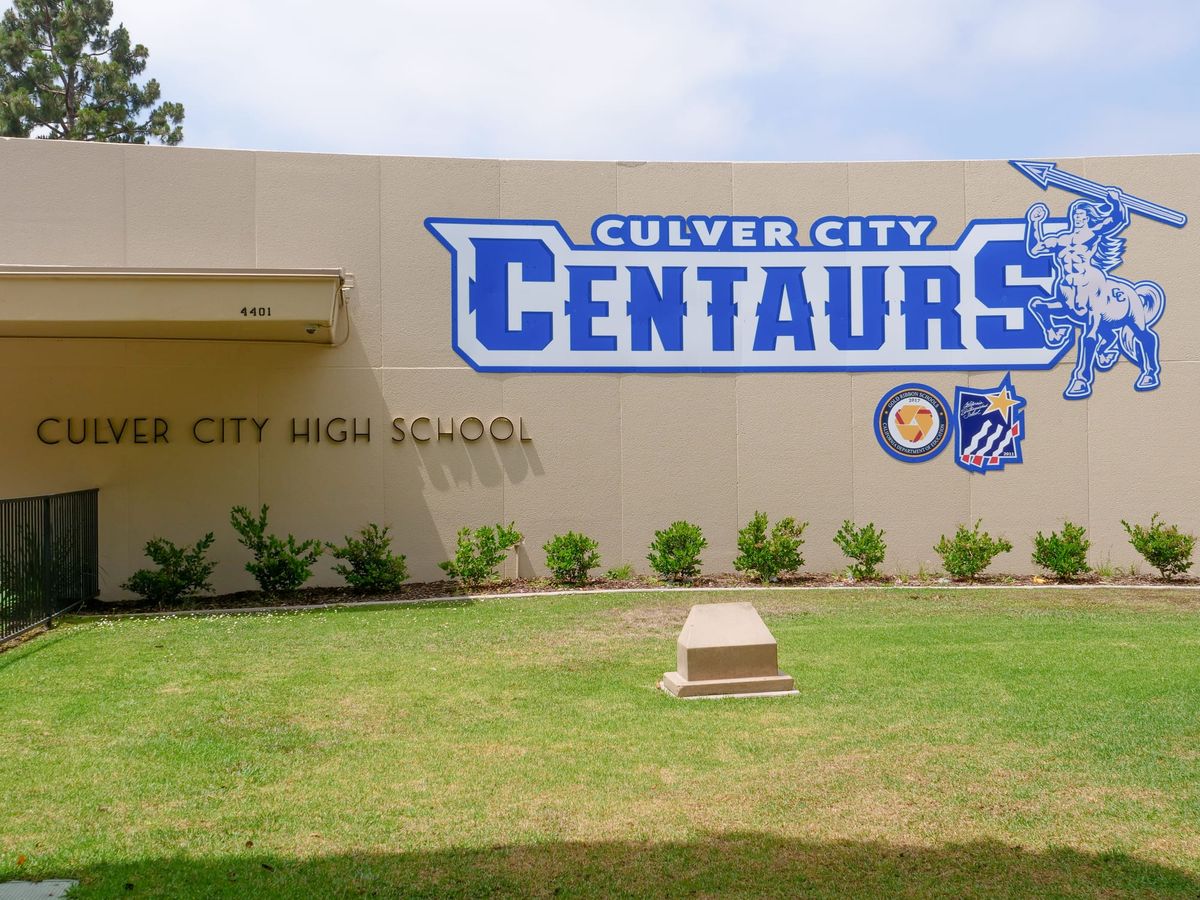
But I believe that soon, parents driving past Culver City High may start to wonder how Culver City can have such amazing schools. And they may start asking how they might bring our experience home with them.
Darrel Menthe is the Executive Director for the Culver City Downtown Business Association and was involved in Excellence for Culver City Schools, the group behind the citizens' initiative which eventually became 2026's Measure AA

Comments ()