
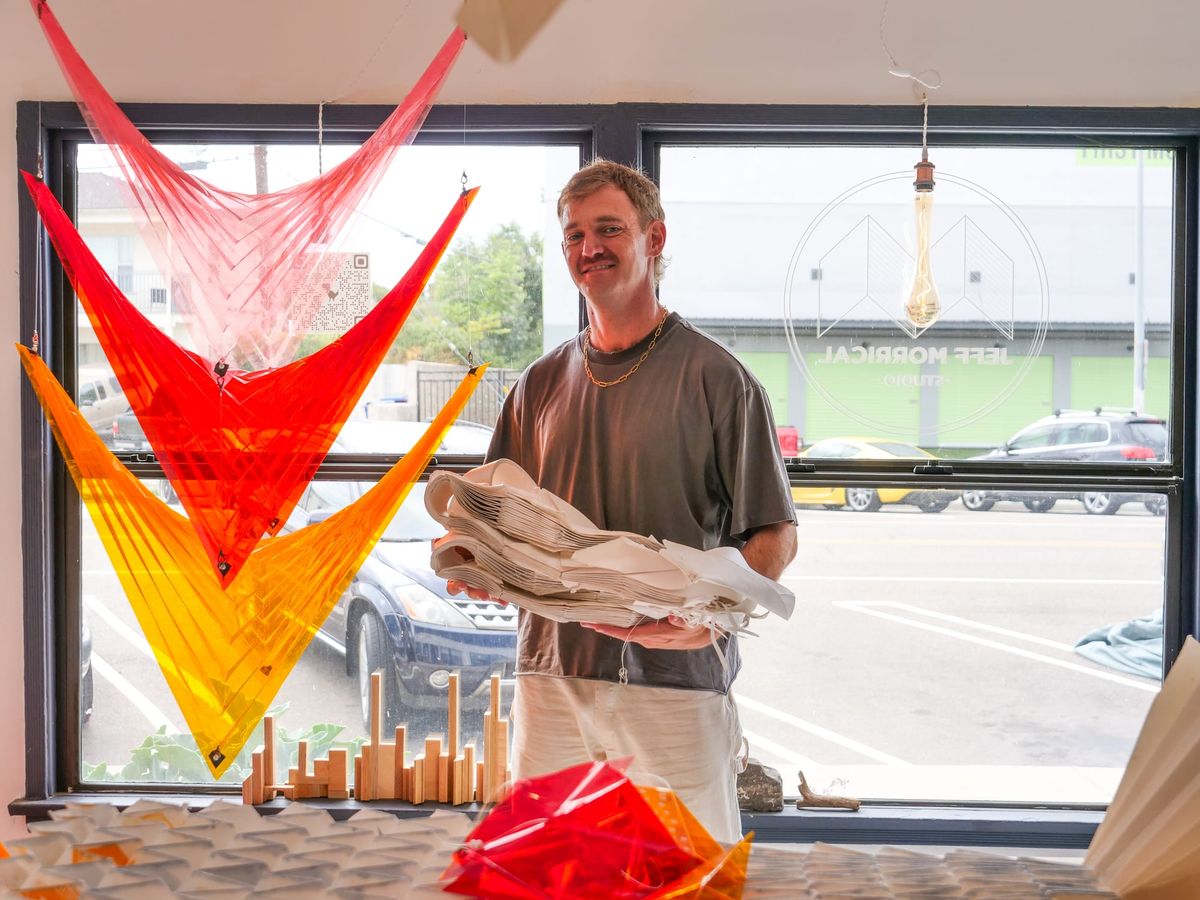
This Culver-based artist, formerly an architect, folds paper using patterns called Miura-ori to create artwork that bends and folds with gravity.
In the heart of the Culver City Arts District, there is a small art studio nestled under tightly packed apartment units. Down La Cienega Avenue, large sidewalks guide you past storage units, apartments, auto body businesses, and older buildings with decorative iron window guards. If you walk too fast, you might miss the translucent red and orange artwork spinning behind a window.
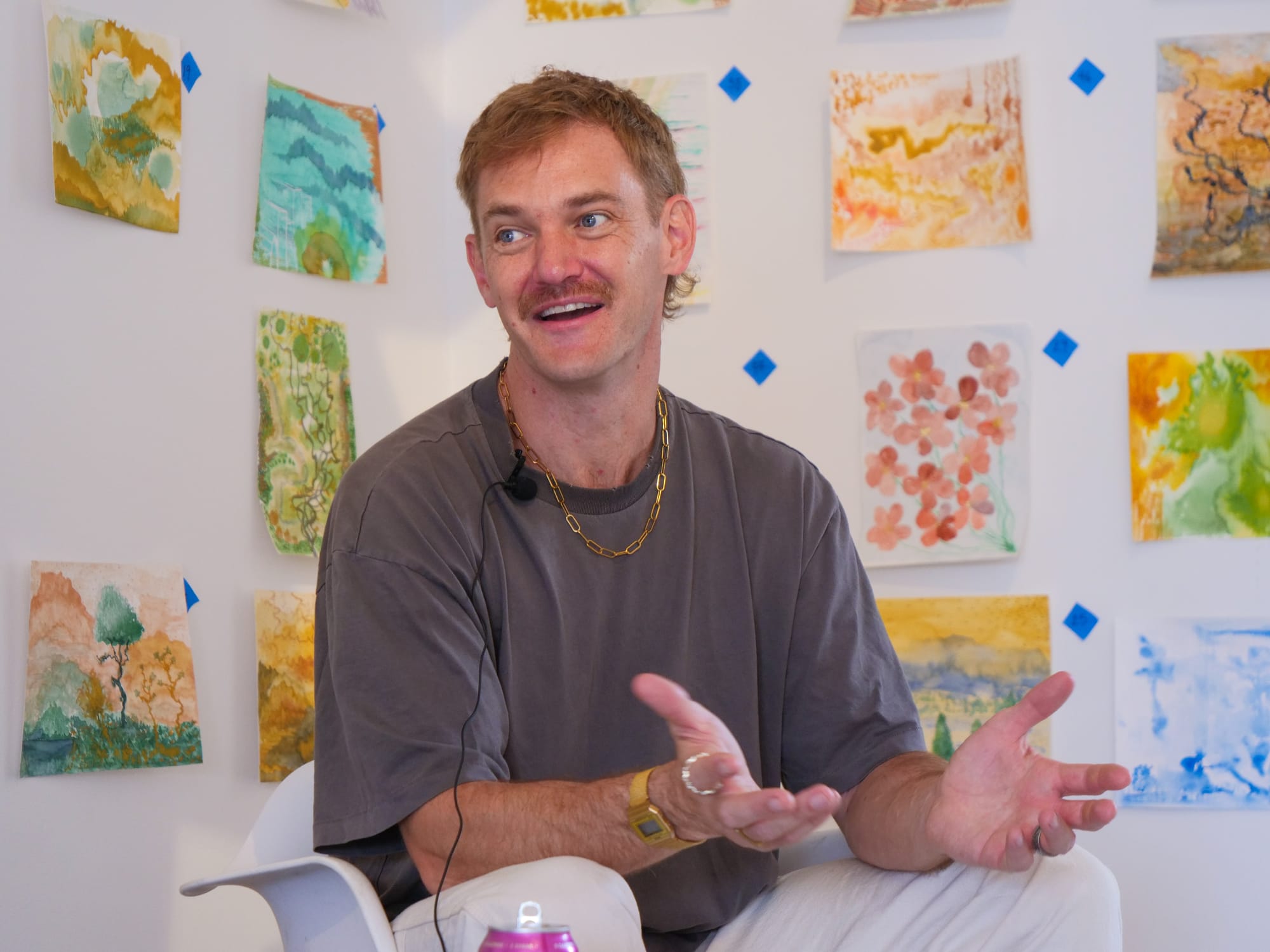
Stepping into this studio is like finding an oasis of art — a place with hardly any space for anything other than creativity. A pair of 4-by-8 foot tables covered in pieces of art that range from t-shirts to decorated paper sculptures stand in the middle of the studio, leaving just enough room to walk around it. The walls are covered in watercolor paintings taped to the wall, hanging folded paper patterns overflowing out of wooden frames, and pictures of folded paper used as masks, on trees, and in the desert.
A large window at the front faces west at a perfect angle to let the evening sun filter through and light the varied artwork of Jeff Morrical, a cheerful 43-year-old easily mistaken for someone at least a decade younger. Morrical’s artwork is unique; he specializes in artwork with Miura folds — a type of origami in which the creases in the paper create a dynamic pattern of parallelograms, with alternating mountain and valley folds.
For Morrical, folding paper was something that he had always done from a young age. He was about seven years old living in the suburbs of Orlando, Florida, when a Japanese exchange student hosted by his neighbors introduced him to origami.
“I think I was fascinated from the start,” Morrical reflected. “I just kind of loved the idea that you could take this material that’s all around us all the time and turn it from something that’s 2D into something that’s 3D and there was something you could carry with you everywhere you went.”
Morrical was always making things like paper cranes and boxes as a kid, but by the time high school came, art took a backseat in favor of academics. Morrical first started Clemson University in South Carolina, pursuing a degree in English, only to discover it was not for him.
“During freshman year, I started looking at departments that were good at that school,” he told Culver Crescent. “They had graphic design, they had architecture, they had something like packaged design and I had a short list of other possible ways I might go.”
Once exploring architecture, Morrical was immediately hooked, especially by their method of educating students. Studying in architecture school meant that Morrical was in a studio with a desk and workspace rather than a classroom. This structure cultivated a culture of camaraderie — one that Morrical still seems to live and invite in others.
Not long after graduating from Clemson University in 2004, Morrical had the opportunity to work in Shanghai as a designer. He was only 22 years old at the time and was given a lot of responsibility as an authority on Western architecture. Despite the creative freedom, Morrical felt the disconnect between the land and the architecture style requested.
“They would say, ‘I want it to look like a French château,’ but this site would be in maybe rural Anhui [a Chinese] province,” said Morrical. “I think architecture is most interesting when it’s a reflection of the place where it is, not a carbon copy of another place.”
Morrical stayed there for eight months, soaking up the culture and language before returning to the States.
In 2009, Morrical received a Masters from the Southern California Institute of Architecture (SCI-Arc), where he fell in love with Los Angeles despite his East Coast mentality. Phil Olson, his now-husband he met in his last semester, helped Morrical decide to stay on the West Coast.
For about six years, Morrical worked solely as an architect. He joined a firm in Venice and even started his own architecture studio in addition to the firm. Yet, he was starting to feel disconnected from his projects.
“I was starting to get kind of stir crazy with architecture because there was so much time behind the computer [with] phone calls, emails,” Morrical said, “And I was getting further and further away from ever actually making anything with my hands.”
A simple book about folding techniques for designers became a turning point for Morrical — he discovered the art of Miura.
Transition to Miura
As Morrical and I sat in his studio on a late afternoon discussing his career, we were interrupted by a gaggle of children. They were out on their weekly walk when artwork hanging in front of the window by the entrance of Morrical’s studio caught their attention. With the door wide open, we could hear the children shouting their delight at seeing the folded sheets of red and orange lighting gels swirling in the sunlight.
Morrical didn’t hesitate to greet them, grabbing what looked like a foot-long stack of white folded paper as he went. Pinching one end of the paper, gravity did the rest of the work, letting the folds fall open and extend into a shape akin to a sea creature almost the same size as the children. A chorus of “whoas” rose up in response.
“It kind of looks like a fish,” Morrical commented, waving the Miura sculpture back and forth so it looked as if it were swimming in the air.
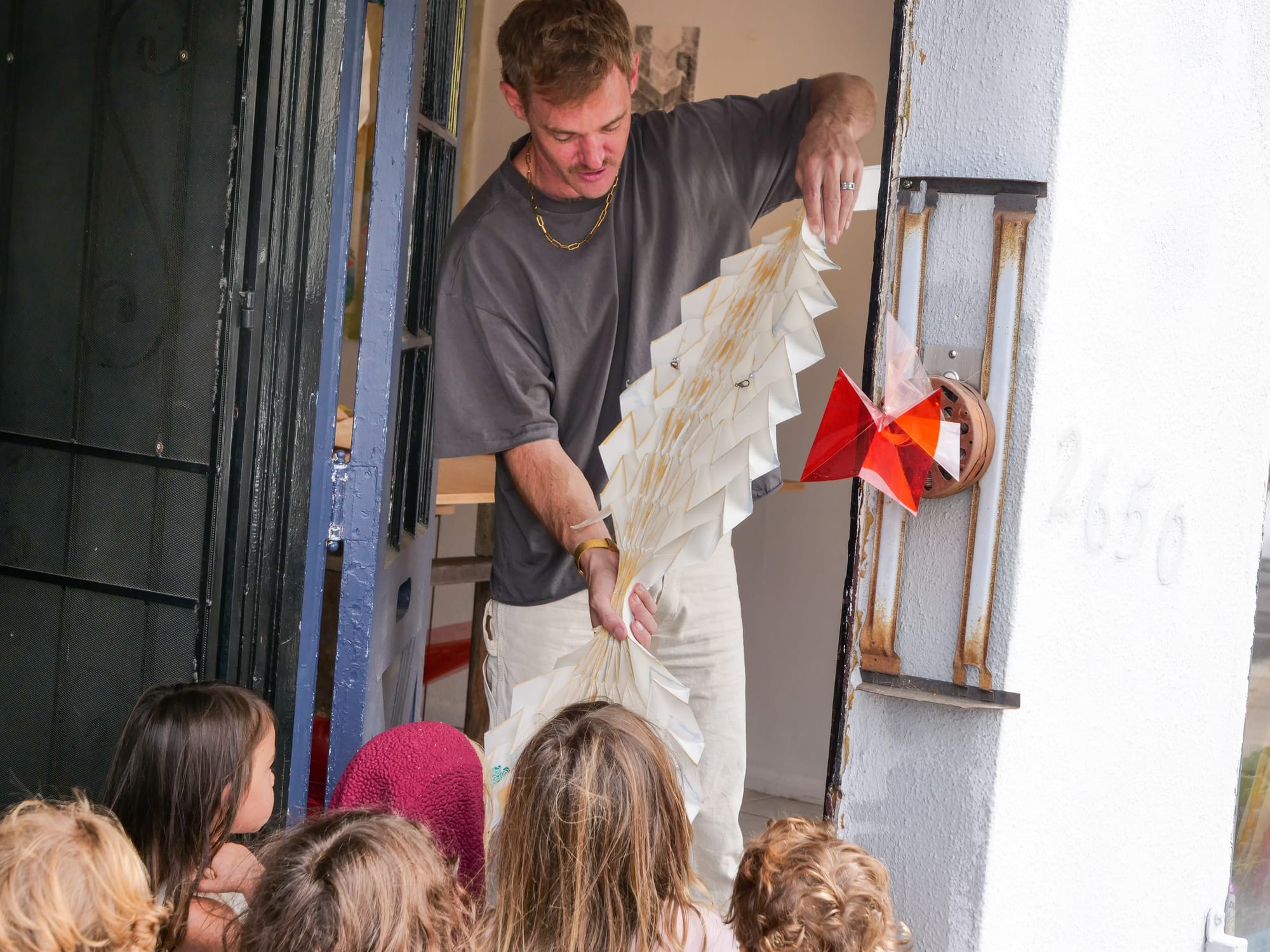
The patterns expanded, exposing more geometric shapes.
“This kind of looks like a spiderweb too,” he pointed at the folded paper. “Do you like spiders? I think they’re awesome.”
“No,” mumbled a little boy. “I like Spiderman, though.”
“I like that one!” Another kid cried out, although it was hard to see which piece of art he was pointing at. He could have been impressed by everything in the studio.
The children were unrestrained in their excitement and their enthusiasm was matched by Morrical, who ran back inside the studio to give them paper designed to fold into the Miura pattern. Before they left, Morrical gave the teacher his card with promises to do something with the kids in the future.
Morrical’s first discovery of Miura was similar — the thrill of turning a flat sheet of paper into shapes that seemed to live and breathe captured his interest. Morrical’s approach to it through the mind of an architect resulted in a great discovery best said in his own words: “This thing is cool when it’s big!”
The Miura fold, or Miura-ori, is named after Japanese astrophysicist Koryo Miura, who proposed using this fold for satellite deployment in 1985, and later put into effect for the Japanese satellite Space Flyer Unit, launched in 1995. The pattern of this fold allows for the expansion and compression of the sheet in one continuous motion without disturbing the surface of each parallelogram. In the years since, the Miura fold has been used in fashion, architecture, robotics, and more.
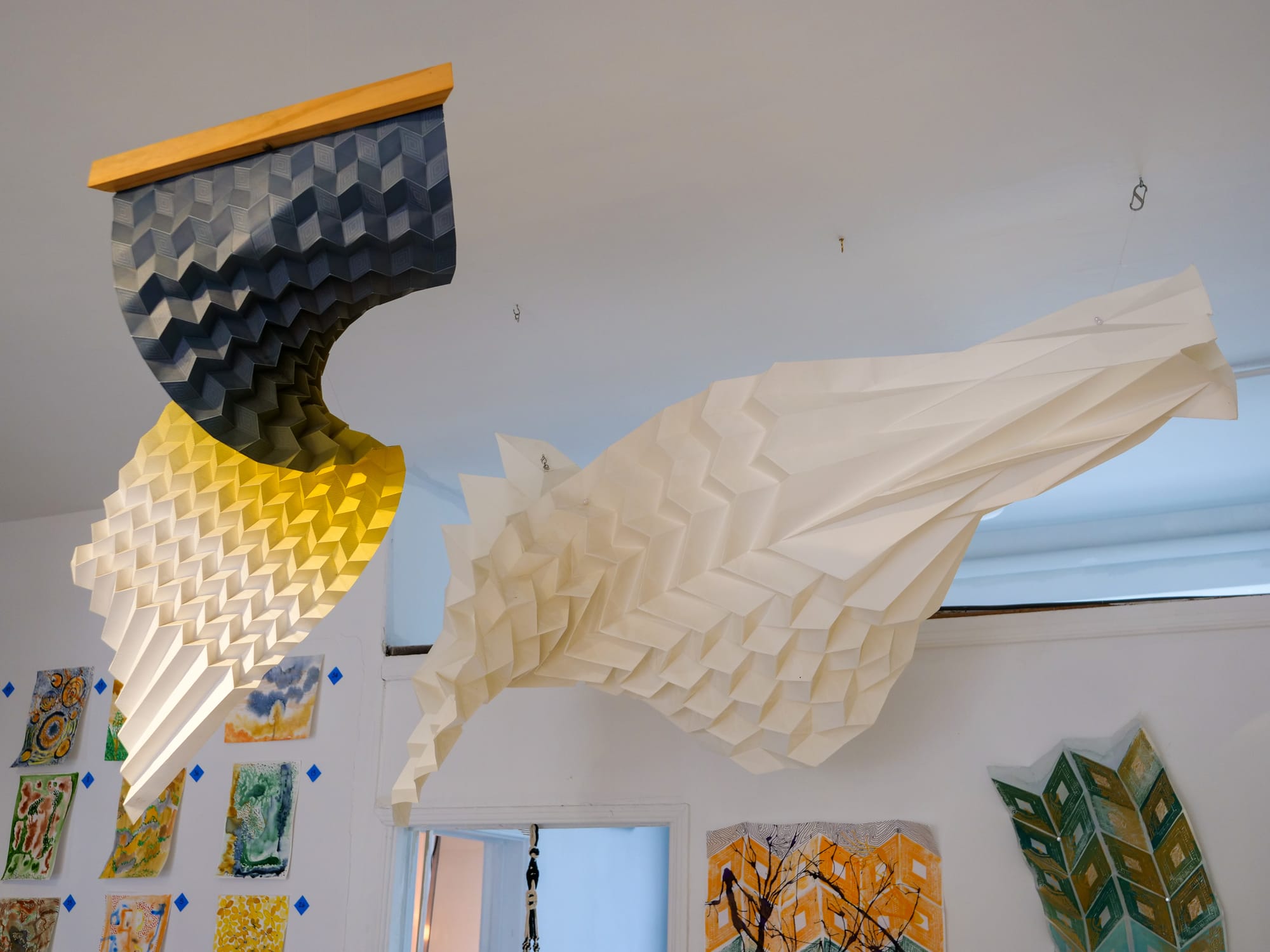
In making dynamic art pieces on earth, Morrical found that when he makes large Miura sculptures, gravity plays a larger part in the finished product.
“Until I hang it up and decide where to pick it up from, it can fall into different shapes,” Morrical said. “It’s almost like they’re bodies in a way that have joints that will allow them to move in different directions.”
He demonstrated, letting his sculpture hang from different angles so that it squiggled around.
“You can do so much with paper,” he continued. “You can print onto it, you can paint onto it, you can crumple it, you can tear it, you can burn it, you can destroy it.”
With the versatility of paper, Morrical has folded masks and costumes. He has hung sculptures from the ceiling, or coming out of frames; and on one occasion, brought sculptures out to Joshua Tree National Park to experiment with the desert environment. Some folded papers have been painted on, have been block printed, or come in all kinds of colors. In every piece, the Miura pattern adds an element of movement, even when the folds remain still.
Morrical’s gradual transition into art was a series of collaborations and finding opportunities through friends. In 2015, a friend of his from architecture school was opening an office at 3377 S La Cienega Blvd., and wanted to do an opening event for the new space. When he asked Morrical if he wanted to do an installation for the event, there was no reason to refuse.
“I made five or six sculptures for that, and we hung them up in the [office] space and we made a geodesic dome thing in the middle,” Morrical recalled.
“I was like ‘Oh cool, I made an art show kind of by accident.’ I wasn’t thinking ‘Oh, I’m gonna be an artist’ even when I did that.”
For about eight years, Morrical continued his career as an architect while opportunities to present his work as an artist came his way. Another friend from architecture school put on an art show and invited Morrical to collaborate as part of their Design Matters Gallery. A photographer friend of his told him about an opportunity to be an artist in residence at Row in Downtown Los Angeles. For six months, Morrical juggled his time between the architecture firm in Venice, his own architecture studio in downtown Los Angeles, and his residency at Row.
One day, the principal of Hawthorne High School wandered into Morrical’s studio in Row and after learning about his artwork, invited Morrical to hold a workshop for students in their engineering program. This turned out to be the first of many workshops.
“Opportunities came up and I was like ‘That’d be cool, I could do this for that group, I could do that for that group,’” Morrical said. “Over a number of years, it just opened up doors to these other opportunities.”
These opportunities have since led Morrical to host workshops at middle and high schools, architecture students at Woodbury University, fashion students at Otis College, staff and faculty at Caltech and more. Other opportunities came in the form of the annual music festival Lightning in a Bottle, where Morrical installed an art piece titled Sunset Kaleidoscope. He has taken part in multiple Culver City Art Walks and in the 2018 Art Walk, he created an art installation consisting of a series of sculptures hanging above Helms Avenue.
An Artist in the Community
The first time I met Morrical, I was attending a monthly Artist Meetup organized by the Culver City Arts Foundation. Guests eager to learn how to fold Miura were arriving at his studio while Morrical maneuvered around, warmly greeting strangers and friends while offering snacks and drinks.
Once everyone had arrived, Morrical led an icebreaker.
“I’d like you all to talk to someone new,” Morrical began, “Just get to know them. Ask them what art they’ve been working on or what project they’re excited to work on in the future. Then, once we come together, introduce them to the group.”
And without a pause, he turned to a man to his left and began talking.
Morrical’s abruptness left us in stunned silence. With nothing else to do, we followed his lead and hesitantly found someone to talk to. A quiet murmur of conversation started up.
By the time ten minutes had passed, Morrical struggled to reign everyone in to start the introductions. Our professions ranged from performers and creative professionals to educators and healers — information that left us eager to plan future collaborations.
Morrical later explained to me that he always felt there was something missing in these Meetups.
“I would go [to the Meetups] and I would get into conversations with people, but then other people [I] wouldn’t have time to get into a full conversation with,” he told me. “But I would wonder ‘Who were these people? What kind of cool art things are they doing?’”
Morrical has been renting a space in Culver City's Arts District for close to two years now, turning Jeff Morrical Studio from an architecture studio into a studio dedicated to his art. He had been living in Culver City for a little over a decade by then, and wanted a place near his home to store and experiment with larger pieces of work.
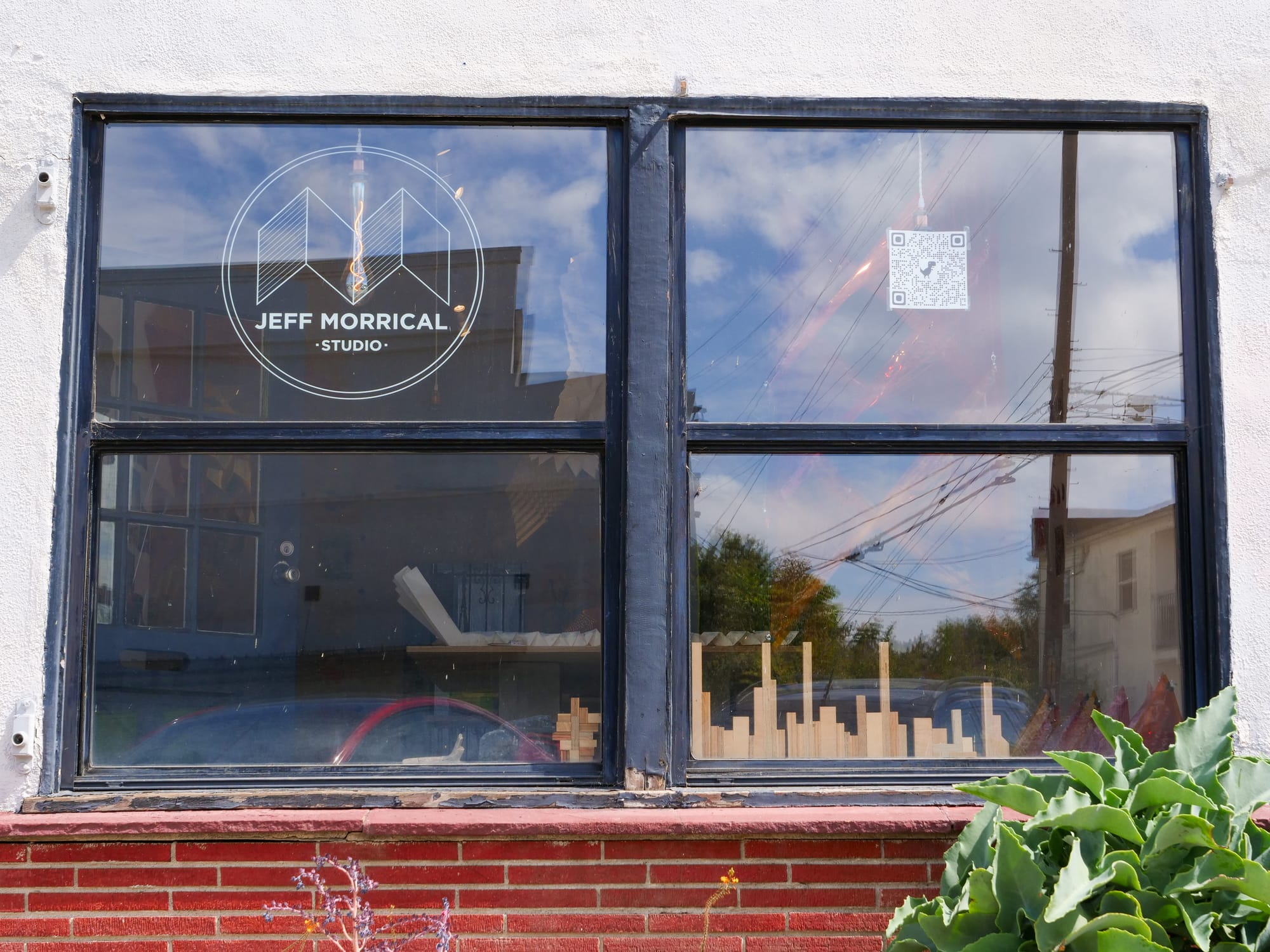
The new space afforded Morrical to finally shift his mindset. Morrical explained his change in approach, saying, “I’m not necessarily pursuing architecture jobs anymore, I’m going to pursue art jobs and see what kind of roads I can make happen for myself in that.”
Making new roads is a habit Morrical seems to have built up over the years — whether it’s exploring English and finding architecture instead, or looking at design techniques only to focus on Miura patterns and expanding it further. Most recently, he has experimented with adding block prints shaped like the parallelograms in Miura folds. Other endeavors Morrical has dabbled in include watercolor painting and sketching, both pursuits that rekindle passion in letting art take over.
“I had been making folded paper for eight years and I think I was just looking for some other art outlet,” Morrical said as he motioned towards the block prints and leaves he had displayed on the walls of his studio.
“It was nice to see this other way of art start to come out of me.”
From joining the board of the Business Improvement District with the Culver City Arts District, his involvement with Culver City Arts Foundation, and having his artwork featured in the Culver City Art Walk, Morrical has become enmeshed with the community.
“I feel such a sense of responsibility and belonging to this neighborhood in particular,” Morrical said.
“I love having the studio. I love the idea that it is in a place that people can continue to come here and see it change and grow and evolve.”
To learn more about Jeff Morrical, visit his Instagram page.

Comments ()