
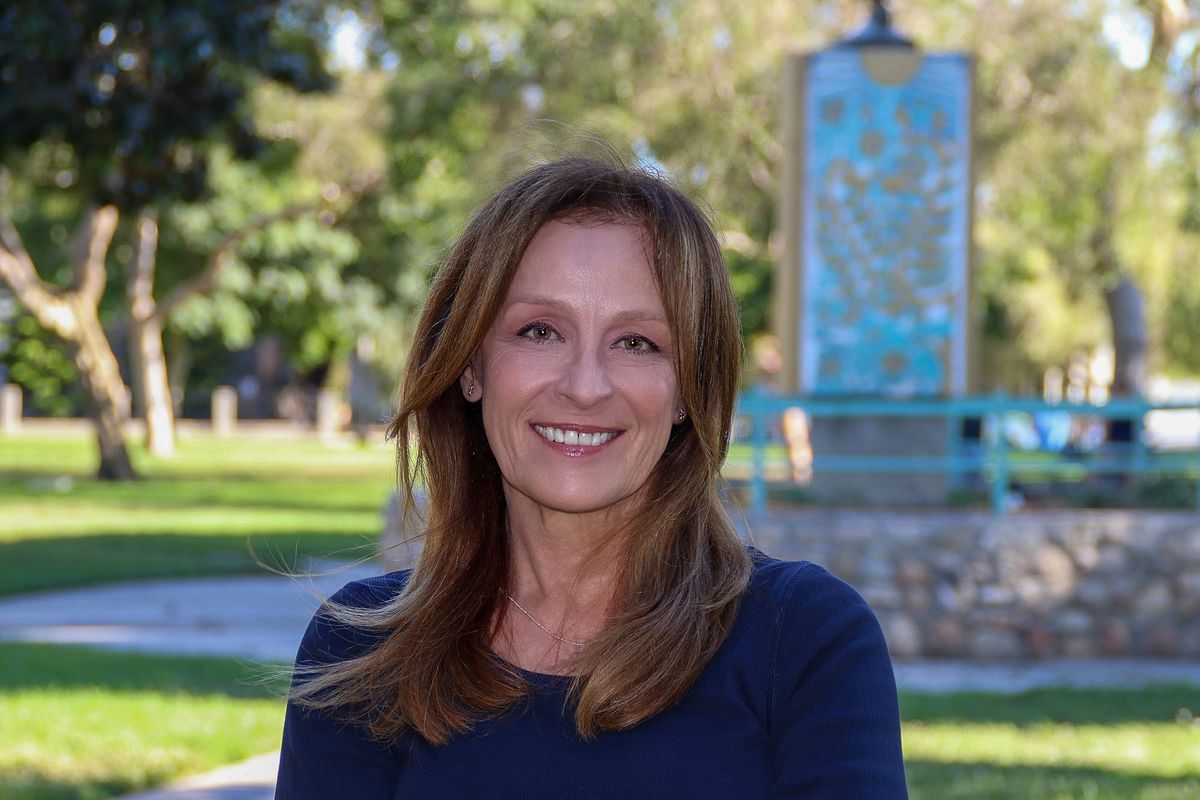
City Council Candidate Jeannine Wisnosky Stehlin sat down with Culver Crescent Publisher Christian May-Suzuki to discuss her policies and positions for voters ahead of the 2026 General Election
The 2026 Culver Crescent Candidate Series is a key feature of our Voters’ Guide for Culver City residents for the November 3, 2026 General Election. As part of this series, candidates running for public office in Culver City sat down with Culver Crescent Publisher Christian May-Suzuki to share their thoughts and positions on the issues on residents' minds.
An edited transcript of these roughly one-hour interviews appears below. The length of these interviews was intentional, allowing candidates to contextualize their points and positions for residents less familiar with the scope of questions facing Culver City and CCUSD. For those more familiar with Culver City politics, key points and positions are highlighted throughout the transcript.
Jeannine Wisnosky Stehlin, Small Business Owner
We should approach every decision knowing it affects everyone: small businesses, families, and neighborhoods. Our city government is at its best when we have leaders who listen.
Biography
Occupation
- Small business owner: Nonprofit consultant and theatre producer
Hometown
- I lived in four states and two countries before the age of 16. Culver City is the longest place I’ve lived, and it’s where I raised my family.
Time Living in Culver City
- 26 years
Why You Came to Culver City
Tree-lined streets, thriving local businesses, schools, and strong sense of community.
City Involvement
- Cultural Affairs Commissioner (2016–2024), two years as chair
- Chair and President (2 years), Culver City Cultural Affairs Foundation (before it became its own nonprofit, Culver Arts)
- Advisory Board, Culver Arts Foundation (current)
- Co-founder, Culver City Parks Foundation
- Culver City Unified School District Citizens’ Bond Oversight Committee (Measure CC)
- CCHS Career Technical Education (CTE) Pathways Committee
- Culver City Unified School District – District Community Arts Team
- Culver City Unified School District – District-wide Arts Plan
- Culver City Unified School District – Language Immersion Expansion Committee (this is how we got immersion into La Ballona!)
- Language Immersion 40th Anniversary Event Planning Committee
- Advocates for Language Learning El Marino (ALLEM)
- Culver City High School Booster Club – Board Member
- Culver City Middle School Panther Partners – Board Member
- Culver City Little League Softball – Team Parent
- Culver City Centennial Celebration Heart of Screenland 5K – Volunteer
Other Notable Involvement (Outside Culver City):
- Co-founder, Heart of L.A. Democratic Club, the first feminist Democratic club in Los Angeles County
- Elected California Democratic Party Delegate (Assembly District 55) – current
- Elected California Democratic Party Executive Board – current
- Elected Los Angeles County Democratic Party Central Committee – current
- SAG-AFTRA – Government Affairs and Public Policy Committee (2 years)
- SAG-AFTRA – Women’s Committee (current, 3rd term)
- Member, Theatre Producers League of Southern California
- Member, Moms Demand Action
One Thing You Wish More People Knew About You
I moved through four states and two countries before I turned 16, so I never really had a hometown growing up. Culver City is the first place that has truly felt like home. That's why I care so much about it, and why I've spent 26 years showing up for it..
Favorite Thing to Do in Culver City
I love walking my neighborhood and seeing how alive our parks are, with kids learning to ride bikes, toddlers at soccer, guitar circles, and families picnicking on blankets. In the summer, you’ll find me downtown at the Summer Sunset Concert Series.
Notable Endorsements (Full List Here)
Culver City
- Culver City Councilmember Dan O’Brien
- Culver City Councilmember Albert Vera
- Culver City Unified School District Board of Education Member Lindsay Carlson
- Former Culver City Mayor Jim Clarke
- Former Culver City Mayor Ed Wolkowitz
- Former Culver City Mayor Andrew Weissman
- Former Culver City Mayor Sandi Levin
- Former Culver City Mayor Jeff Cooper
- Former Culver City Mayor Alan Corlin
- Former Culver City Mayor Goran Eriksson
- Former Culver City Mayor Steve Gurley
- Former Culver City Mayor Scott Malsin
- Former Culver City Mayor Paul Jacobs
- Former Culver City Mayor Micheal (Mehaul) O'Leary
- Former CCUSD Board of Education Member Anne Allaire
- Former CCUSD Board of Education Member Kathy Paspalis
- Former CCUSD Board of Education Member Dr. Robert Knopf
- Former CCUSD Board of Education Member Steve Levin
- Former CCUSD Board of Education Member Sue Robins
- Former CCUSD Board of Education Member Marla Wolkowitz
- Former Culver City Artist Laureate Alexey Steele
- Culver City Democrats United
- Culver City Neighbors United
- Culver City Chamber of Commerce
- Culver City Observer
Los Angeles
- California Assemblymember Rick Chavez Zbur
- Heart of L.A. Democratic Club
- L.A. County Federation of Labor
- Unite Here! Local 11
- IBEW Local 11
- IBEW Local 40
- LiUNA! Local 300
- BizFedPac
California
- California Lieutenant Governor Eleni Kounalakis
- California State Treasurer Fiona Ma
- California State Senator Ben Allen
National
- United States Congresswoman Judy Chu
- United States Congressman George Whitesides
Campaign Website: https://jeannine4culvercity.com/
Opening Statement
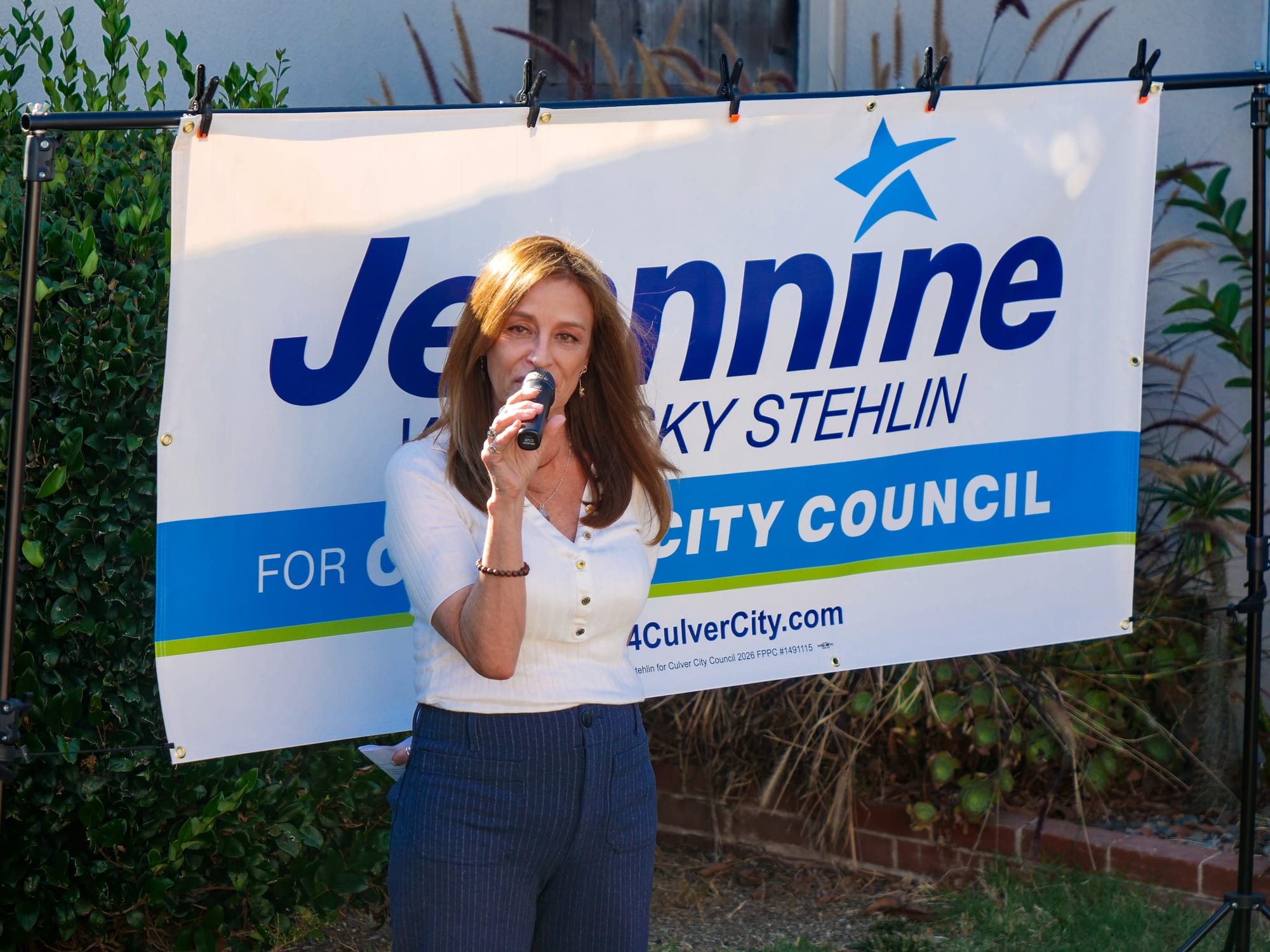
My name is Jeannine Wisnosky Stehlin, and I’ve called Culver City home for 26 and a half years. My husband and I raised our three daughters here, and they went through Culver City schools from kindergarten through 12th grade. In that time, and still today, I’ve been an active participant in this community, both as a private citizen and in public service.
On the school side, I served on the Citizens’ Bond Oversight Committee for the $106 million Measure CC bond, and I did all the things a mom of young kids does. I was a room parent and served on booster clubs and PTAs. I was a sports mom, a cheer mom, and a YMCA Youth and Government mom. My kids were really active, and I loved that time.
On the city side, I served eight years on the Cultural Affairs Commission, two of them as chair. Among other things, we granted a million dollars to nonprofits for public performances. I also helped create the Culver City Artist Laureate program and advised on the relaunch of the Summer Sunset Concert Series.
Professionally, I’m a small business owner in the nonprofit world, including nonprofit theater, which is part of why I served on the Cultural Affairs Commission. I also advise nonprofits on fundraising and operations.
I’m a proud fourth-generation union member as well. Through all of this, as a volunteer and advocate in the city and the schools, I’ve seen firsthand how city decisions affect every part of community life. I’ve also seen what residents can accomplish. Sometimes it’s tangible, like the new four-way stop we just got at Motor and Braddock.
In Culver City, we think of ourselves as one community, not the schools over here and the city over there. When we serve, we should approach every decision knowing it affects everyone: small businesses, families, and neighborhoods. Our city government is at its best when we have leaders who listen.
On Culver City’s Fiscal Position
We need to be thoughtful about Culver City’s fiscal position and, more importantly, look beyond a single budget year. Every year, the city council and city staff are responsible for creating the budget for the next fiscal year.
As Cultural Affairs Commissioners, we also reviewed the Cultural Affairs Department budget, so I’m very familiar with advocating for what people want to fund, protecting those things, and understanding that we can’t do everything, everywhere, all at once.
We have tremendous economic assets in Culver City, but we also have significant long-term obligations and infrastructure needs. Our parks, streets, sidewalks, and public facilities need investment, and every new commitment we make has a cost beyond the year we make it.
Let me put it this way: I’m a small business owner with an MBA, and I know what it’s like to make payroll and keep the doors open. When you’re making those decisions, you can’t just look at what’s in the bank. You have to know what’s coming tomorrow, which is why I want us to maintain healthy reserves.
I want to distinguish between one-time expenditures and ongoing commitments, carefully evaluate major investments, and make sure taxpayers are getting results for the money we spend. Simply put, we’re not spending other people’s money. We’re spending our money, and we have to be really mindful of how we spend it.
For me, fiscal responsibility also means paying attention to revenue. We need to support our local businesses and our entertainment and creative economy, which is huge here in Culver City, and make sure they stay here. The employers who contribute so much to our tax base are part of our community too.
Again, it’s about weighing priorities, investing wisely, and making sure we can keep the commitments we make. I disagree with some of the financial decisions our current council majority has made, like Jubilo Village and other expenditures. When we’re elected to mind the store, so to speak, we shouldn’t start selling things the store was never supposed to sell. To me, pet projects are a danger to fiscal health.
I’d like us to get back to fiscal basics. The city borrowed money to cover things we couldn’t pay for. There are a lot of costs the city can’t avoid, like employee pensions and health benefits, and there are things we always have to pay for: our current employees, police, fire, trash pickup, our parks, and so on.
But we also have to make sure we aren’t funding pet projects we can’t afford. Fiscal responsibility and our fiscal health are extremely important, and I will be focused on all of that if I’m honored to be elected.
On Priorities for Improving Culver City
You know what I hear at the doors? People want a better relationship between the school district and the city. They want to prioritize our shared facilities and help each other where we need it, and that is really important to me too, as a person who is so involved in our schools and so involved in the city.
For instance, we've got park facilities that are owned by the city, and park facilities that are owned by the school community. We've got performance facilities owned by the school, but the city may want to use them. We've got a school district that is having a hard time financially, and our city is not rich beyond our years. But it should not be hard to have conversations between the city and the school district.
It’s been a fraught relationship, and we need to stop thinking of the city and the school district as separate entities, even though technically they are, because we’re one community.
For instance, our school district asked the city for financial help last year, and the city didn’t make it easy. It attached all kinds of rules and obligations: “We’ll give you the money only if you do A, B, C, D, E, F,” and so on down the alphabet. I think that was a mistake.
Yes, they gave the money, but it wasn’t done in a collaborative way, and it felt wrong, especially when the council was funding a pet project at the same time. They budgeted up to $230,000 for a contractor to run a civic assembly, when we already have community engagement through people attending council meetings. Maybe not enough people are coming, but I didn’t think that was a good use of our money.
People also talk about wanting park improvements. They tell me the way our parks look doesn’t live up to who we are as a modern community. I agree: our parks need help.
And it’s not just parks. I’ve talked to a lot of seniors who have shown me photos of themselves with black eyes, broken arms, and broken legs because they tripped and fell on our sidewalks, getting from their car to the curb, or over tree branches. Those are bread-and-butter, nuts-and-bolts priorities that we must pay attention to.
I mentioned crosswalks and better infrastructure earlier because I’m especially concerned about the safety of kids going to and from school. What we’re doing is not good enough. Our crosswalks aren’t clear, and they’re not marked well enough.
Every single day, cars blow through stop signs and red lights or don’t come to a full stop when children are present. I would like to see improvements on every corner of Culver City. We may not be able to afford it all at once, but we need to work toward it.
My first act in Culver City 26 years ago was getting a crosswalk at the corner of Motor Avenue and Vinton Avenue. Two months ago, I helped get another one at Carlson Park, where lots of kids and families come on Pizza Wednesdays. That’s where kids learn to ride their bikes and run around, and it wasn’t safe.
We have a lot of other intersections like that, so I think our budget priorities should focus mainly on quality-of-life issues. That’s the first thing people notice. They want to feel good where they live, work, and visit.
On Working with Residents
This is one of the key tenets of my life, especially over the last 26 years. It's why I say "I co-founded," and I never say "I founded" or "I did this." Everything is done with a team of people who share the same passion and the same values.
My desire to work with people is why I co-founded a parent group to help parents stay more engaged in our school system. It's also why I co-founded Culver City Neighbors United, whose sole purpose is to help people become more civically engaged.
I've stepped back from it while I'm running, but what the group does is look at council agendas and break them down into understandable bits, so people can figure out what the heck all that government-speak means.
We don't always give our opinion. The idea is that people can see what matters to them and speak up on those issues, because council members need to know what the community is thinking. Communication should never be one way.
That’s also why I co-founded a new group, the Culver City Parks Foundation, which raises money to improve our parks. I co-founded it with leaders who use our parks, mainly parent leaders and coaches, because they hear directly from the people in their groups about what’s important to them.
Something that does trouble me: a group of parents or residents will come and talk about an issue, and if the council likes the issue, they’ll say, “We have so much community involvement.”
Then another group comes, with the same number of people and the same amount of passion, to speak about something the council doesn’t care about or disagrees with. Council members sit there blank-faced, don’t engage at all, and say things like, “If only we heard from the people who don’t agree with those people.” I think that’s wrong, and I’ve seen it happen multiple times.
People become discouraged and disillusioned when their own local leaders, the people who are supposed to represent the community, turn a blind eye or put earmuffs on.
People are frustrated. I hear it every day. They’re frustrated that a decision was made before they even knew it was coming up, or that they’re told there’s a problem that needs solving when they didn’t see it as a problem or understand why the change was being made.
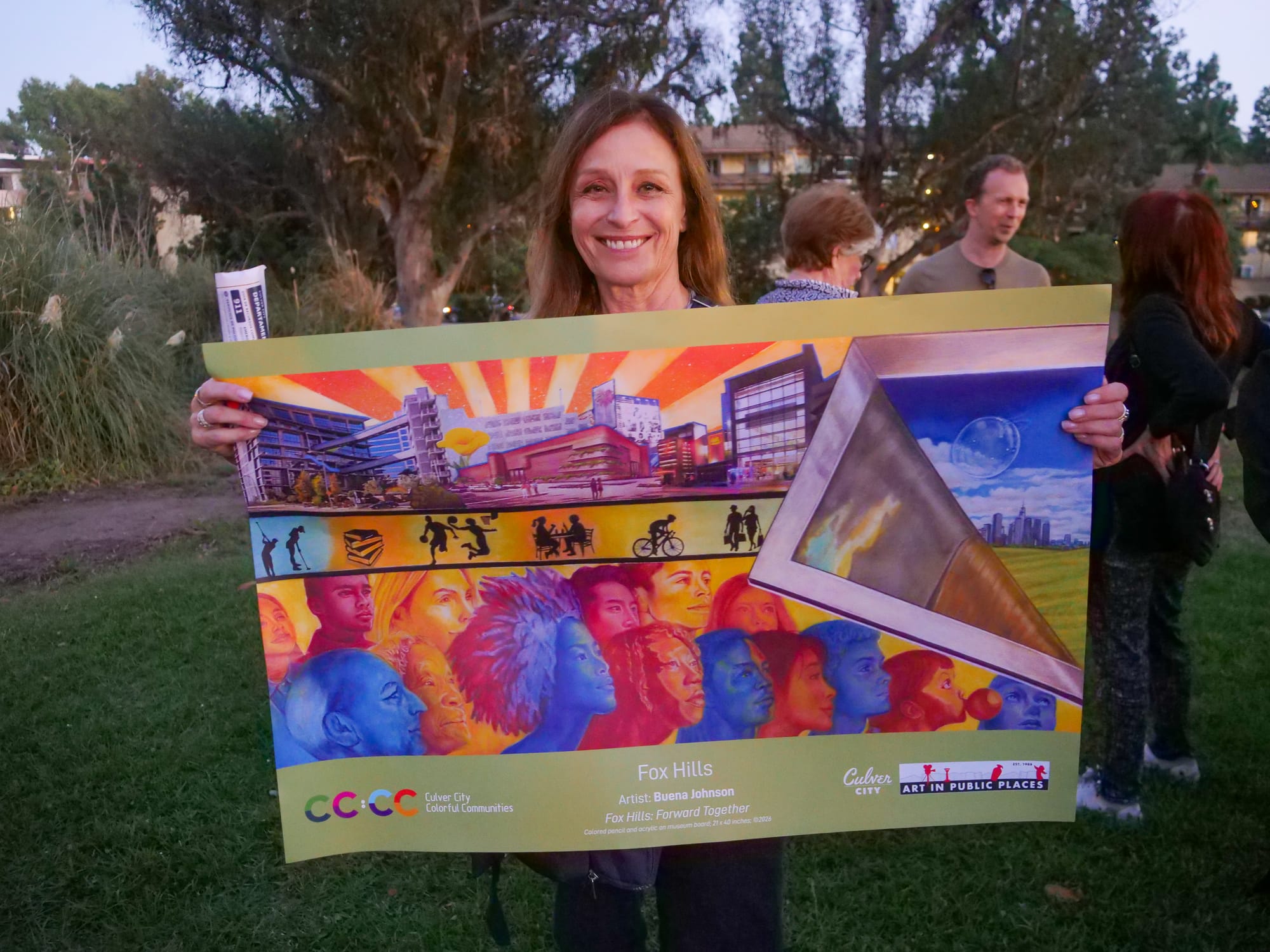
The worst thing that can happen is that people become disengaged and disillusioned, and every day they wake up and think, “What did my local government do to me today?”
People should wake up and not even have to think about it, because things are going so great.
On Better Overland, Sepulveda Connects, and the Mobility Approach
For the entire 26 and a half years I’ve lived here, one constant thread has been my advocacy for better crosswalks, sidewalks, and streets, clearly marked traffic signals, and more stop signs, so that kids can get to and from school safely.
I’ve also advocated for more crossing guards and for better ways to educate people about coming to a full stop at stop signs and slowing down in general. It’s better to be late to school or work than to never get there because something terrible happened, whether you’re in a car, on foot, on a bike, in a wheelchair, or using a cane or a walker.
That’s been something I’ve advocated for consistently. Now, whether we’re talking about Overland, Sepulveda, Elenda, the MOVE Culver City project, or anywhere else, the issue or need has to be identified first.
A lot of times, when an organization needs money, it goes through lists of grants and finds one it can apply for. Maybe it wasn’t something it was planning to do, but there’s a grant, so there’s money.
I’m not saying that’s what happens at City Hall, but I wouldn’t be surprised if it sometimes does, because cities, like businesses, are always trying to bring money in. With these projects, it has to be about listening and bringing people in, and right now I don’t think residents and businesses feel their concerns are being taken seriously.
Let’s say a senior citizen who lives on Overland has seen the plan and is worried about it. They don’t drive anymore, or they use a wheelchair, and they’re worried about getting picked up and getting into a car, which they absolutely need because they can’t ride a bike. They’re worried the project will make their life harder, or even impossible, and that they’ll never be able to get out of their home.
We should not be discounting their fears, saying they’re misinformed, or telling them they just have to walk a block and a half farther to get to their front door.
What’s the big deal? For people with mobility issues, that is a huge deal. It’s the difference between being shut in your home because you can’t get anywhere and being able to get out and safely enjoy everything life has to offer. The same goes for kids.
When we think about all of these issues, it has to be holistic. Cyclists need to feel safe on their bikes, and not just for recreation. Some people bike a long way to work, and our bike lanes should be cleaner, clearer, and better looking. We're not going to satisfy every single person, but I think we can get closer if we take everyone's concerns seriously.
I'm very concerned about safety in the Tri-School area. There still aren't crosswalks where they should be, and I don't understand why they aren't there yet. I'm hopeful that good changes will happen and that the powers that be will listen to people instead of discounting their concerns.
On Overland, I've talked to businesses that are already struggling and are very worried that city measures will put them out of business.
We should be looking at safety first, then traffic flow, neighborhood cut-through traffic (which is real), and unintended consequences. Cut-through traffic makes other areas unsafe.
We also have to consider emergency access and, as I said, our businesses, along with pedestrians, bicycles, and access to transit. Everyone wants to talk about how to get more people on public transit.
But you're not going to get people on public transit if it's harder to get there, and sometimes that means driving to a train station. It just does.
All that being said, I don't think we have to choose between safer streets and listening to the community, between bikes and pedestrians, cars and scooters, or a person in a wheelchair and a person who can run a half marathon. We need to take every single person's needs into account and get there as best we can.
Good transportation and street planning should include everyone.
On Jubilo Village and Building Affordable Housing
Jubilo Village is a development being built on church-owned property on Sepulveda Boulevard. It will include affordable housing and a new church, and the city chose to help fund it. This is one of those cases where a lobbyist registry would have helped us understand exactly how this came to be.
First of all, I support affordable housing. We need it. There are people who grew up in Culver City and can’t afford to rent or buy here. Add inflation and everything else that’s challenging right now, and we’ve got a recipe for disaster, and I think it’s already in the oven. So I support affordable housing 100 percent.
Here’s what happened. The Jubilo Village team came to Culver City and presented the project, and the city committed $4 million. Our former city manager, John Nachbar, said cities usually give $2 to $3 million, so that was already on the high side. The project couldn’t secure the rest of its funding, so they came back and asked for $16 million more. Three members of our city council voted yes, bringing the city’s total to $20 million.
At the same time, our city is in a downward financial spiral. Frankly, that was $20 million we couldn’t afford. Again, I support affordable housing, but not the way this was financed. It was structured as a loan, but the city’s own financial analysis says we won’t recover the full amount within the 55-year term. Basically, it’s a $20 million gift.
That’s why I keep coming back to this question: Why this project? If we had a lobbyist registry, maybe we’d know. Other affordable housing projects aren’t asking Culver City for $20 million, money we don’t have. We have to think carefully when we make decisions like this.
What else could we do with that money? We could support other affordable housing projects. What else can we do to create more affordable housing? What about our parks, streets, sidewalks, and other infrastructure?
Something else that concerns me is putting $20 million into Jubilo depleted our reserves. The city borrowed money to put $12 million back, and now we’re paying interest on that loan. I don’t think that’s a fiscally responsible way to spend money, even though affordable housing, as I said, is needed and is a goal we should strive for.
We have to look at our whole financial picture, and we can’t survive financially if our city council keeps making decisions like that. That being said, Jubilo has broken ground. I hope it succeeds, and I hope they figure out how to make it work without coming back to the city for more money. I want it to provide good homes for the people who will live there, and I hope it becomes a positive part of our community.
But we need to learn from how we got here, and not just for the next affordable housing project that comes before council. Anytime we spend taxpayer dollars, we have to ask: What will we get for the investment? What are the long-term costs? What else could we do with the money, and can we actually afford it, while still looking at what we can do for the greater good?
We have to think about all of it at the same time.
On the Direction of Unhoused Services
Culver City has made significant progress in helping people experiencing homelessness, through programs like the Wellness Village, the tent community on Virginia Avenue next to Ballona Creek. As that program winds down, we need to build on what we’ve learned and keep helping people move forward into permanent housing and stability.
Over the past couple of years, we’ve had a really comprehensive approach: Project Homekey, which provides permanent supportive housing; the Wellness Village; motel programs; and the Mobile Crisis Team. We should keep doing those things because they’re working, while paying close attention to long-term outcomes and what we can sustain financially.
These much-needed services are not cheap. I’m really happy that our homelessness count went down. We have fewer unhoused people in Culver City, but we can’t assume it will always stay that way. We need to be forward-thinking about how we respond when we see someone suffering, and mindful of how we can help them in a way the city can afford.
I’m really supportive of what might go on that Wellness Village site. I think it’s fantastic. The plan is with the Actors Fund Housing Development Corporation: a 100 percent affordable development with 77 homes for families and artists, including one-, two-, and three-bedroom units and artist-focused community space.
I’m especially excited about the three-bedroom units, because most of the affordable housing we’re building, like the project planned for the former gun store site, is studios, one-bedrooms, and two-bedrooms. We don’t see very many three-bedroom units.
Studios and one- and two-bedroom units don’t work for families who want to grow. This project is also in my wheelhouse because I’ve spent my career in arts and entertainment. I’ve been a member of the Screen Actors Guild for 33 years. I’m a theater producer. I spend my time with artists, and artists and entertainment professionals are extremely important to Culver City and our creative economy.
Housing affordability has been extremely challenging for artists. They’re struggling, and not just the people in front of the camera, but the people behind the camera and behind the scenes too. Sadly, they’re moving out of state or leaving the industry for other jobs, and that hurts our whole creative ecosystem. We need to help them.
Because of Culver City’s remarkable history in the arts and entertainment, I think we should make sure that history is part of our future. If we can create affordable housing that helps artists and creative professionals stay in our community, I strongly support it.
I see it as a chance to build on what we’ve done with the Wellness Village, keep addressing homelessness, and create permanent affordable housing for a community that’s such an important part of Culver City’s identity.
On SB79, Single Family Neighborhoods, and Balancing Density
First of all, buying a house has always been part of what we call the American dream. For most people, a house is the single most important financial investment they’ll ever make. It’s not just a home to live in and maybe raise a family; it’s also an investment that will help their family down the line.
When people feel that investment is under attack, of course some of them will be afraid and really angry. Women, thank God, can now buy homes on our own, even though we still don’t earn as much as men, and a home is something we can pass down to our children so they can build wealth too.
It’s getting harder and harder for younger people to build the kind of wealth older generations could, so I understand the fear and the reasoning. People worried about SB 79 and the other housing bills coming out of Sacramento aren’t just running around with their hair on fire. They’re expressing real concerns. Culver City has so many different neighborhoods and ways to live, and I think that choice is really important.
People at different stages of life want to live in different kinds of places. If you’re raising a family, you might want a single-family home. If you’re older, you might want to downsize to an apartment or condo where you don’t have to worry about the lawn and the plumbing.
Younger people starting out might not want a single-family home either. They might want an apartment with other people their age, close to transit and amenities like coffee shops and local bars, and have some fun before other responsibilities take hold.
I lived in one of those neighborhoods in Chicago, near the L train. I know how hard it was, as a single woman, to leave work or school and walk home late on a dark, lonely, snowy night. It all has to be safe, too.
With regard to SB 79, I’m troubled by the continued loss of local control over land-use decisions. Let’s put it this way: almost every election, we vote to tax ourselves to support our schools or our city, because we know they need the help.
But the number one thing people ask before they check that box, “Yes, I support this parcel tax,” is where the money will go, and whether it will be controlled locally or sent somewhere else. They want to make sure the decisions we make help us locally.
People really value local control, and I think the same principle applies to something as fundamental as how our neighborhoods are developed. SB 79 is an example of that.
Our council majority voted to officially support a bill that gives up some of Culver City’s local control over land use and hands that authority to lawmakers in Sacramento, most of whom have never set foot in Culver City. Then they directed staff to advocate for it in Sacramento.
That was despite Culver City’s own adopted legislative platform, which says we should oppose legislation that preempts local authority and that cities, which know their communities best, should make their own decisions about housing density.
I find that troubling because voters didn’t ask them to do it. Lawmakers in Sacramento voted for something they wanted, then our own council voted for something they wanted, and the people were never asked. Look, we need more housing, including affordable housing, but we also need to be thoughtful about where density goes and the infrastructure needed to support it.
Every neighborhood in Culver City has its own character, from Fox Hills to the Arts District and everywhere in between. People love where they live, and we need to honor what they love about it. I want residents involved in these decisions now, while plans are being developed and their participation can actually make a difference.
On Park and Public Space Improvements
It’s clear when you visit any park in Culver City that our parks are suffering and not living up to their full potential. We have 13 official parks and green spaces in Culver City. I’d personally like more, but the parks we have are suffering from deferred maintenance. Every one of them needs attention.
Our first priority, of course, is to take care of what we already have, and Bill Botts is a good example. Those fields have needed attention for years. My kids played softball up there, and all three of them are college graduates now, so it’s been a really long time. I’m glad some improvements are finally being made, but it’s not nearly enough.
Beyond Bill Botts, I want us to think about the other parks too, and to think both bigger and smaller about green space. I believe everyone in Culver City, whether they live, work, or visit here, should have green space within a five-minute walk.
We’re a fairly built-out city, but there are opportunities, and we have to get creative. That could mean pocket parks, or greenways: greening alleyways and pedestrian paths so they become green connectors throughout the city.
It means seeing parks as places for recreation and art, and also as an important part of our physical and mental health and of our environmental infrastructure. Trees and native plants help cool our neighborhoods, and it’s getting hotter. We all suffered this past summer.
They also capture stormwater, which matters with what’s apparently going to be a bad El Niño coming up. And they provide habitat for birds, pollinators, and other wildlife. Biodiversity matters even in an urban environment, and our parks are key to it, to the health of the planet, and to our own health and well-being.
Part of improving our parks is figuring out how to pay for it. We don’t have enough money to improve all the parks, or how people get to them.
That’s one of the reasons I co-founded the new Culver City Parks Foundation, a 501(c)(3) that was incubated about a year ago. It brings residents, businesses, foundations, and other partners together to bring additional resources to our parks through a public-private partnership.
I’m hoping it will be really successful, and I love the team we chose to lead it. They’re amazing people who really care about what we can do. My goal is a greener, healthier, more connected Culver City, and green space is one of the key ways to get there.
On the Introduction of New Technology
I’m kind of a technology nerd. I got my MBA from an engineering school, and I grew up in a household where my dad worked in robotics, so I’ve always thought of technology as a tool. I also understand that it can do great harm if it isn’t implemented thoughtfully, with an eye to the future.
AI can be a useful tool, but it can also be extremely troubling for a lot of people. I mentioned that I’m a member of SAG-AFTRA, and I’ve served on two of its committees: currently the Women’s Committee, and before that the Government Affairs and Public Policy Committee, where we advocated in Sacramento for the entertainment industry and for protecting artists and their work from being taken over by AI.
We have to be extremely thoughtful about how we use technology, so that it helps people and doesn’t harm us in the long run.
Some people say AI is going to kill us. I hope that’s not the case. I think about what technology can do to help people in Culver City. It should make city government easier to navigate and help people connect with their community.
It shouldn’t be hard to figure out what’s happening in Culver City, whether you’re looking for a community event, trying to understand what’s coming before the City Council, reporting a broken sidewalk, or figuring out who to call about an injured animal.
You should be able to find all those answers quickly, and technology is the tool to do that. One of my favorite examples of technology used for good is our public art walking tour. During my eight years on the Cultural Affairs Commission, we launched a mobile audio tour on Otocast.
You can walk around Culver City, come across a piece of public art, pull out your phone, learn who created it and the story behind it, and hear the artists and others talking about the work you’re looking at.
It turns Culver City into a living outdoor museum you can explore on your own. I love that, and I think we should bring the same kind of thinking to city services and engagement: using technology to help residents and visitors find what they need, understand what’s happening at City Hall, and communicate with the city, so we can all be more connected.
All that being said, technology should never replace talking to people. It should make City Hall work better for them, but we should still actively communicate with each other as human beings.
On City Council Meetings and their Structure
I’ve been to meetings that lasted until 2 a.m., and I’ve been the lone audience member at some of them. People have lives. They shouldn’t have to stay up until 2 a.m. to find out what happened to the one thing they cared about.
One thing I’ve learned is that if you want people to participate, you have to make participation reasonable. We have to respect our community and its time, so council meetings should not go late into the night. That’s very difficult for someone with children, a job the next morning, or other responsibilities.
When residents come to speak, it shouldn’t feel like the council is just trying to “get through public comment” before it starts talking. We should recognize that their voices are important.
I’d like to see less pontificating on the dais and fewer council members bringing up unrelated ideas to advance their personal agendas. I’d like to see more listening.
Council members should absolutely ask questions and explain their decisions, but meetings should focus on the public’s business: hearing from the community and then making decisions. If we want people to be more engaged in local government, we need to make City Hall a place where their time and their voices are respected.
The last thing we want is for people to say, “My voice doesn’t matter; they won’t listen to me anyway.”
On the City’s Readiness for the 2028 Olympics
We’re not ready yet, but we’re getting there. The City Council has a subcommittee, the Cultural Affairs Commission has one, and I believe the Parks, Recreation, and Community Services Commission has one too. That was all very smart.
I really admire what Dan O’Brien has done. He worked hard to bring in hospitality houses from other countries, so they’re paying attention to Culver City as a destination. I think that will bring a lot of opportunity here. It’s an extraordinary opportunity for Culver City on the world stage.
But we still have a lot of work to do to get ready for the Olympics. I already bought my ticket, and I hope you did too. The good news is that we’re in an incredible location. We’re close to LAX and to major Olympic venues (the one I’m going to is straight down Obama Boulevard), and we’re connected by the E Line.
We need to prepare for transportation, traffic, public safety, and emergencies, and once all that is in place, we’ll have an enormous opportunity for our local economy. I think we should plan with our Chamber of Commerce, because it has connections throughout our business community and with our residents.
Businesses need time to prepare and to understand what their opportunities might be, including the Cultural Olympiad, which I’m very passionate about. Residents also need to be part of the conversation about how the games will affect their daily lives. I’m especially excited about our cultural programming, because Culver City is the Heart of Screenland, and we have an incredible history in film, TV, theater, and the arts.
We’re already planning cultural events around the games, and I’d very much like to be part of that, because it’s a niche we have that most parts of Los Angeles don’t. We are the Heart of Screenland, despite what the folks in the Valley say.
I want people to stay in our hotels and eat at our restaurants. I want them to shop at our businesses, discover our arts and entertainment community, talk about it, and come back with their families. This is a great opportunity for us on the world stage, and our legacy will be stronger if we plan and do this right.
The games can give us greater visibility, help us improve our transportation and infrastructure, and build wonderful new relationships that last long after the games are over.
On A Potential Lobbyist Registry and Similar Election-related Policy
Six years ago, there was a lot happening, including the MOVE Culver City project, and I was trying to understand how these ideas and projects came about, and how they made their way to our city council and to commissions, committees, and boards.
It took me far too long to figure out where these projects began. Then some people outside Culver City told me it’s well known that if you want to get an idea done that hasn’t been done anywhere else, you go to Culver City, because Culver City doesn’t have a lobbyist registry. I had an aha moment. I couldn’t believe it. We’re such a modern, progressive city. Why aren’t we prioritizing something so simple?
A lobbyist registry would ease a lot of suspicion, worry, and panic. Three Culver City councils have said yes to one, and it’s been in committee, and there it sits. I can’t pretend to know why. Why isn’t this a priority?
The community deserves to know who is being paid to influence decisions at City Hall, whom they represent, and which city officials or staff they’re meeting with. We shouldn’t have to wonder how a major idea or project got to the city council, or who was advocating for it behind the scenes.
Disclosure is good for everybody, including lobbyists, because there’s nothing inherently wrong with lobbying. For instance, I agreed with the lobbyists who pushed to end cat declawing. Lobbying isn’t all cloak-and-dagger stuff. A lot of it is for the public good.
Businesses, labor organizations, nonprofits, developers, and community groups all have a right to lobby for their interests. But when someone is lobbying to influence a decision, whether they’re paid or a volunteer (because lobbying also includes volunteers), the public should be able to see that. It comes down to transparency and trust.
I’ve been asking for a formal lobbyist registry for six years, and it will be one of the first things I work to put in place when I’m on the city council.
On How to Make Culver City a Welcoming and Inclusive Place
Culver City is a very diverse community, which we’re all really proud of, and I believe our city government should be a place where everyone feels welcome, respected, and able to participate.
That goes beyond city government. It applies to everything we do here. People need to feel welcome. Our LGBTQ community, our seniors, our kids, people of every race, religion, and background: it’s extremely important.
Representation matters, especially for groups that haven’t traditionally had a seat at the table, because different life experiences and perspectives affect the questions we ask, the issues we notice, and ultimately the decisions we make.
It’s not a statement or a policy. It’s about how we actually operate, and it’s something I talk about in the spaces where I work, because I’m a feminist. When we talk about equality and equity, that includes women. We’re a majority, yes, but we’re often treated like a minority.
In Culver City’s 109-year history, only six women have served on our city council, and never two at the same time. That matters, because we’re missing those life experiences and perspectives.
I think this is extremely important. Are we reaching people? Are our programs and services accessible? Are we hearing from people who don’t usually show up at City Hall? And in the city workforce, does everyone have an equitable opportunity to be hired, advance, lead, and succeed?
We should serve the entire community, and that means a broad range of voices and experiences should be represented.
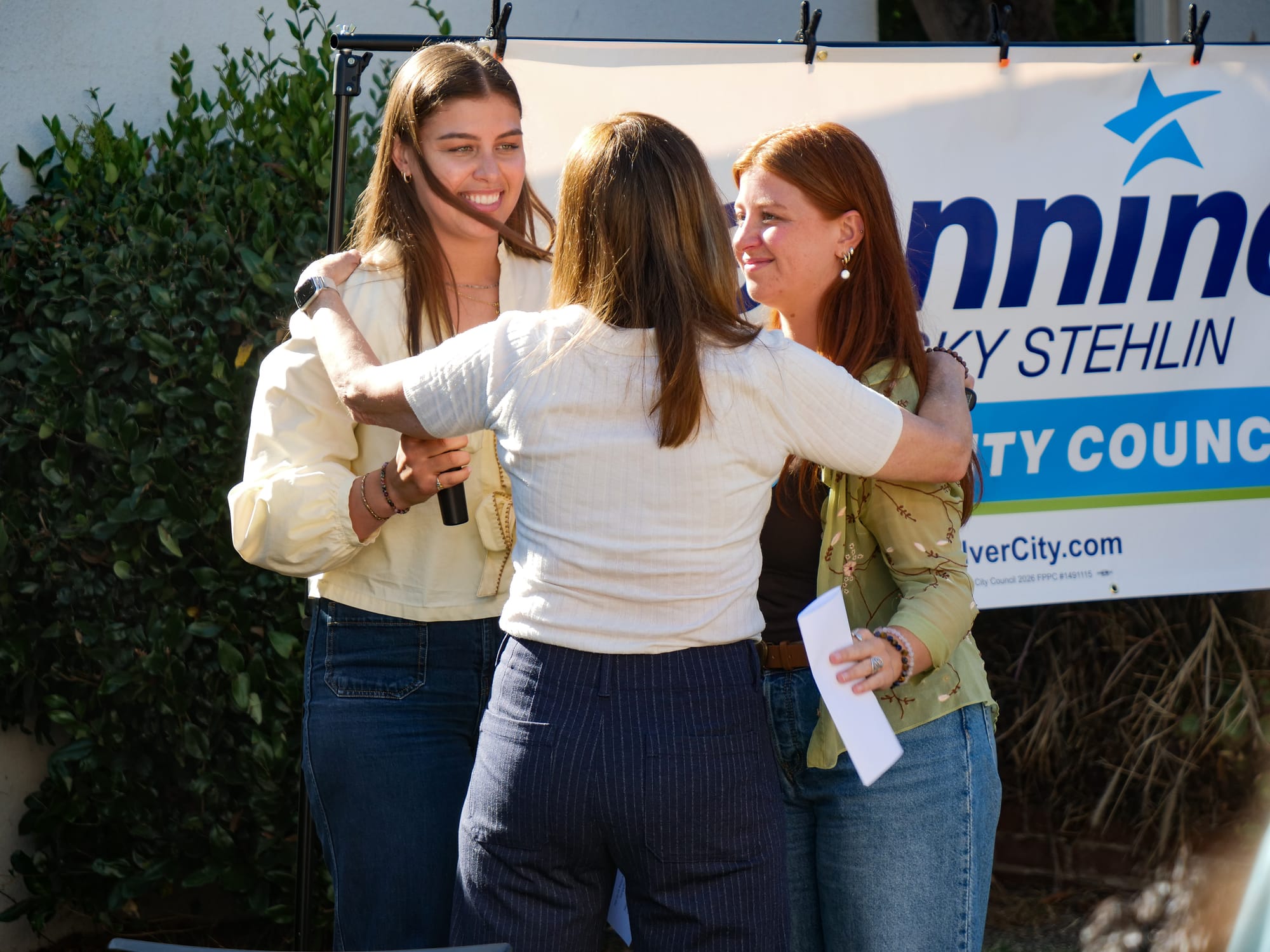
On how she would like her tenure to be remembered if elected
Wisnosky Stehlin’s response time expired before reaching this question.
Closing Statement
One of your questions asked how I want to be remembered. I want to be remembered as someone who listened, did the homework, brought people together, and got things done.
I want people to feel that their city government became more responsible and transparent, that we made thoughtful decisions with taxpayer dollars, and that residents had a meaningful voice in decisions affecting their neighborhoods.
I want to leave tangible things behind: better parks, more green space, safer streets, stronger relationships between our city and our schools, a thriving local business and creative community, and a city that’s financially stronger and prepared for the future.
I’ve lived here for 26 years and raised my family here. I’ve spent years working in this community because I care deeply about it and what happens to it. We have big challenges ahead. We need to address affordability and homelessness. We need safer streets and better traffic and mobility, and we need to take care of our parks, streets, sidewalks, and other infrastructure.
We need to support our local businesses and our arts and entertainment community. As I said earlier, we need the city and our school district working together as partners, because to most of us, this is one community.
We have to be financially responsible. We can’t look only at what we can afford today. Even if we can afford something now, we have to understand what it will cost tomorrow and what other opportunities we may be giving up.
Throughout this conversation, you’ve probably heard me come back to one thing again and again: listening. I’m incredibly proud of the broad coalition that has come together to support me: our lieutenant governor and state treasurer, a majority of Culver City’s living former mayors, business and labor organizations, community leaders, Democratic organizations, and hundreds of Culver City residents.
That matters to me, because the breadth of that support reflects something I’ve tried to do throughout my years in this community and in my life: bring people together.
The kind of council member I plan to be is someone who listens, asks questions, does the homework, brings people together, and gets things done. I love this city, and I believe we have an incredible future together.

Comments ()