
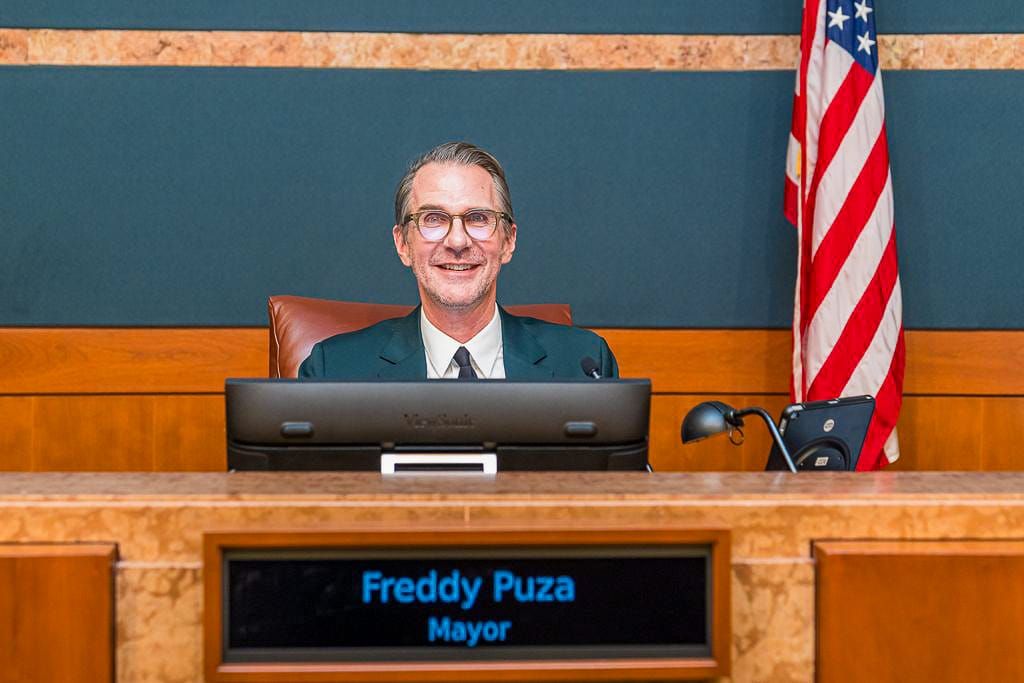
City Council Candidate Freddy Puza sat down with Culver Crescent Publisher Christian May-Suzuki to discuss his policies and positions for voters ahead of the 2026 General Election
The 2026 Culver Crescent Candidate Series is a key feature of our Voters’ Guide, which is designed to be used by Culver City voters as a nonpartisan informational resource for the November 3, 2026 General Election. As part of this series, candidates running for public office in Culver City sat down with Culver Crescent Publisher Christian May-Suzuki to share their thoughts and positions on the issues on residents' minds.
An edited transcript of these roughly one-hour interviews appears below. The length of these interviews was intentional, allowing candidates to contextualize their points and positions for residents less familiar with the scope of questions facing Culver City and CCUSD. For those more familiar with Culver City politics, key points and positions are highlighted throughout the transcript.
Freddy Puza, Mayor/Education Director
"Talking about affordability is not just a slogan; it's a daily reality of whether our working families, our older adults, renters, homeowners, landlords, and small businesses can stay in the city that they love."
Biography
Occupation
- Director of Community Relations in Higher Education for 21 years
Hometown
- Downer’s Grove, a suburb of Chicago, Illinois
Time Living in Culver City
- 15 years
Why You Came to Culver City
I was initially drawn to Culver City because it was close to my day job and centrally located within the Los Angeles region, but what made me stay was the community itself. Culver City offers something rare: the intimacy and civic spirit of a small town alongside the diversity, creativity, and opportunity of a major urban region.
City Involvement
- Member of General Plan Advisory Committee and Committee on Homelessness
- Board Member of the Fox Hills Neighborhood Association
- Organized with Protect Culver City Renters
- Participated in the Culver City Democratic Club
- Participated in the Culver City Historical Society
- Completed the Culver City Police Department Civilian Academy
- Completed Leadership Culver City
- Culver City Councilmember/Mayor: 2022-Present
One Thing You Wish More People Knew About You
How deeply my faith shapes the way I approach life and public service. It teaches me to lead with compassion, listen without immediately judging, remain hopeful during difficult moments, and recognize the dignity and interconnectedness of every person.
Favorite Thing to Do in Culver City
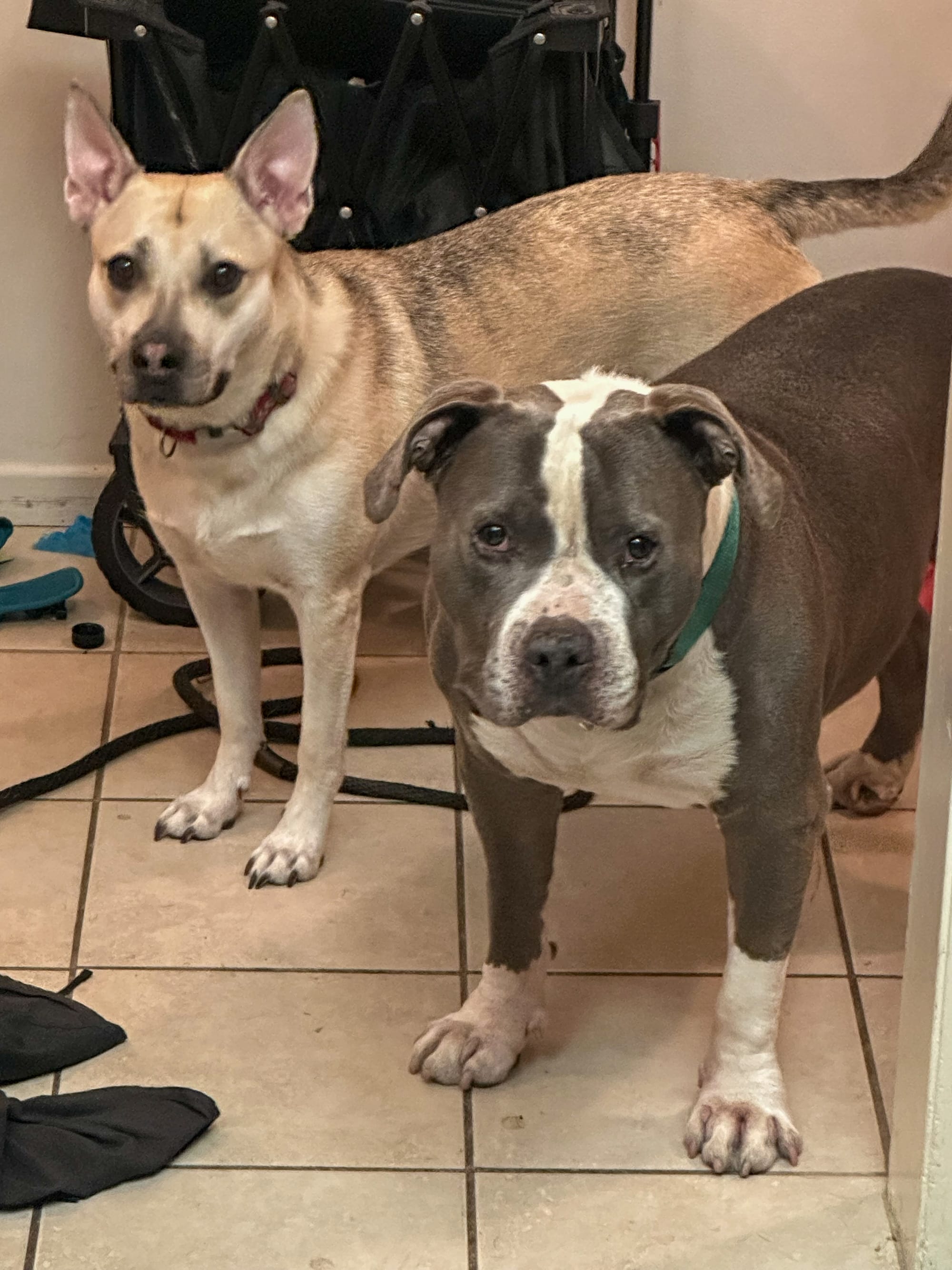
Walking and running through the Fox Hills neighborhood and Fox Hills Park with my two dogs, Liv and Larry, and activities with my local karaoke club
Notable Endorsements (Full List Here):
- “Freddy Puza represents a new generation of leadership that understands how local government can directly improve people’s lives. He has consistently focused on the issues that matter most to residents, including affordability, housing, economic opportunity, and transparent governance.” - United States Congresswoman Sydney Kamlager-Dove
- “Freddy Puza has consistently championed policies that expand opportunity, address affordability, and ensure more people can see themselves reflected in the future of Culver City. Freddy brings people together, listens to the community, and leads with both courage and purpose.” - California Assemblymember Isaac Bryan
- “Freddy Puza has worked to support working families, seniors, renters, and small businesses while remaining focused on the long-term health and stability of Culver City. I am proud to endorse Freddy Puza's re-election to continue serving our shared constituency of Culver City residents,” California Supervisor Holly J. Mitchell
Culver City
- Culver City Vice Mayor Bubba Fish
- Culver City Councilmember Yasmine-Imani McMorrin
- Culver City School Board President Stephanie Loredo
- Culver City School Board Member Triston Ezidore
- Culver City School Board Member Andrew Lachman
- Culver City School Board Member Brian Guerrero
- Culver City Democratic Club
Los Angeles
- Los Angeles County Supervisor Lindsey P Horvath
- Los Angeles County Supervisor Janice Hahn
- Los Angeles County Assessor Jeff Prang
- Santa Monica Mayor Caroline Torosis
- West Hollywood Vice Mayor Danny Hang
- Burbank Mayor Tamala Takahashi
- Artesia Mayor Ali Taj
- Alhambra Vice Mayor Jeffrey Koji Maloney
- Los Angeles County Democratic Party
- Westside Young Democrats
California
- California Senator Ben Allen
- California Assemblymember Rick Chavez Zbur
- California Assemblymember Mark Gonzalez
- Stonewall Young Democrats
National
- United States Congressmember Ted Lieu
- United States Congressmember Maxine Waters
- United States Congressmember Laura Friedman
- Stonewall Democrats
Campaign Website
Opening Statement
My name is Freddy Puza, and I am the Mayor of Culver City. This is my fourth year as a councilmember in the city. I was very fortunate to be elected in 2022, and I hope to be fortunate enough to be reelected in 2026.
For the past four years, I have worked hard to make the city more affordable, functional, and responsive to its residents. I think we are doing a really good job. We have the first balanced budget in three years. We are focusing on our infrastructure, tripling the number of sidewalks we are going to repair, doubling the number of roads that we're going to repave, investing in tree canopy maintenance, and renovating four baseball fields at Bill Botts Park.
We're also going to invest in childcare to increase childcare access, and pilot a universal basic income program. We're also going to invest in affordable housing, safe streets, and help our schools, which need a little boost because of some fiscal imbalance right now.
We're also going to invest in businesses. We'll offer a loan program for small businesses that want to expand or grow, and we'll also beautify the medians in downtown and the Arts District. The LA Times just called Culver City the “hot spot for business.” Crime is relatively and consistently down or flat.
Councilmember O’Brien and I introduced a film incentive package and know that film production in Culver City is up 8%. We also got our homeless count numbers back this year, and homelessness is down another 30%, and 69% since 2021.
Our city is on the right track, and I can say that confidently because we've actually done polling as well. We asked residents, "Is the city going in the right direction?” Since March of 2025, we've seen a 14-point increase, so this is an exciting time in Culver City.
This is just the beginning. The main focus of my campaign is affordability. How do we make sure young families, working families, new families, renters, homeowners, and small business owners continue to thrive in Culver City and survive? It's really expensive to live in Culver City in Los Angeles, so how do we deal with that?
I am also running on making sure we get back to basics in our governance, focus on infrastructure, make sure our local economy and our small businesses are thriving, making sure that safety and belonging go together.
These are all really complex ideas, but I'm really excited to continue that work and make Culver City the best place to live.
On Culver City’s Fiscal Position
As I mentioned, we have a balanced budget for the first time in three years, but some might say that's not true. Those aren't my words; they are from City Manager Odis Jones, who oversees our budget, and consultant Ernst & Young. We had a third party verify our budget this year, and I am very excited about that.
As Mayor of Culver City, my focus has been on the budget and infrastructure. I meet with City Manager Odis Jones often, and I use that time to really focus on the budget.
We are using a Joint Powers Agreement to help. It's a financial tool we're using that a lot of cities actually are looking at and trying to mirror what we're doing in Culver City. We're also working on a five-year financial plan, so it's not just a one-and-done kind of thing. We're going to look broadly at what's going to happen in the next five years.
Our population is expected to increase by 50% by 2045. Our residents expect high-quality services, so we need to make sure we are thinking about how to prepare for the impact of that population increase.
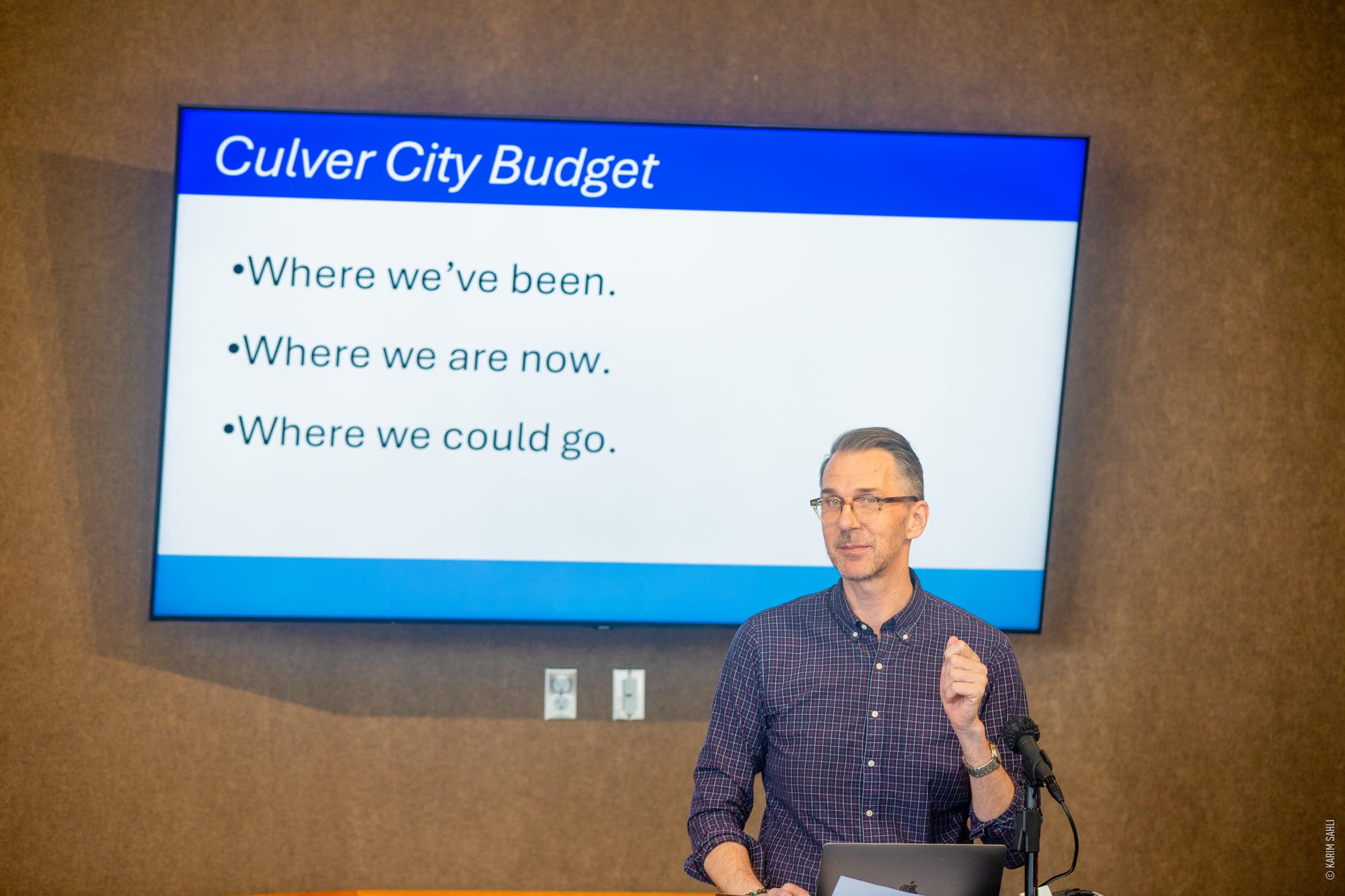
Our number one revenue source is sales tax. Property taxes are third or fourth on the list depending on the year and circumstances, so we need to make sure that we have a thriving local economy, a thriving small business community.
We also have to make sure that we balance that with making sure that our residents feel safe, that they belong, and they're part of the community and included in conversations.
We are also able to help our schools. Our school district has some structural imbalances in its budget, so I'm proud that this will be the second year the city will be able to make a donation grant to the schools to help them balance their budget.
We're taking on a lot, but I think we can do it all, and we have been doing that without being divisive, without pitting the community against each other, and now's the time to come together and really think about that.
Community engagement has been very important to me since I became Mayor. The first thing I did was go with the city manager up and down the restaurants and businesses in downtown Culver City, introduce ourselves, and meet with them. Some said, “We have never had a mayor or a city manager come and do this.”
We've also held nine Let's Talk Series events, which are about community engagement and listening to people about their budget. The budget is derived from many of those conversations. Community engagement and communication are essential as we develop our budget, and we'll continue to do that.
The proof will be in the pudding if we continue to do that community engagement.
On Priorities for Improving Culver City
The main thing is going to be affordability. How do we keep Culver City within reach? How do new families who are just starting out here be able to move here, and how do older adults or someone who's been living here for 30 years maintain their ability to stay? That's going to be essential.
I launched the Standing Affordability Subcommittee, so we're going to look at affordability issues beyond housing, like childcare access, grocery stores, and how we support new families. That's going to be a really important part of what I want to do in that subcommittee.
The other thing is infrastructure. No matter who I talk to, what their feelings are about the city, what position they have, everyone wants infrastructure improved. We're doing that this year in this year's budget, but we have to continue that. We also have to look at deferred maintenance. It's not the most sexy thing, but it's something that can cause a big issue, so we've got to make sure that we are looking at that and properly addressing it.
The other thing is making sure city government works well. Our residents, as I said, expect a high quality of services, as they should. So, how are we being the most responsive? How are people able to get permits and business permits and building permits as fast as they can so they can depend on that, because predictability is important.
We also have to make sure our budget is stable, and that we're prepared for any long-term unknowns that might happen in the future. As I said, we're developing the financial plan, which will be essential for future planning.
The last thing is focusing on safety and belonging. We have to make sure that we balance our ecosystem of public safety and protect our immigrant and other communities who are most vulnerable during this federal administration.
On Working with Residents
My career is about relationships. I'm a very relational person, so my door has always been open. I can guarantee that most people, even those who oppose my views, have always been able to reach me and have a conversation. I hope I have been able to explain in detail where I'm at and why I am making the decision I'm making.
We should be receiving community feedback from all points of view. But at the end of the day, it would be impossible to implement everyone's voice. That'd be 40,000 different ways to move forward, or 40,000 different directions to go.
Listening means taking in the information, hearing what the community wants, looking at the data, and then making a decision based on those things, and that's how I make my decisions.
I think people will say I've been very open and at least having the conversation. All the community engagement that the city and I have done already this year is important, but I think we can do more.
I'm very excited about the civic assembly, of which we've had two so far. We're going to have another one to talk about different decisions in the city, and it's brought in people who haven't been involved or who I haven't seen, and I feel like I'm fairly plugged in.
We're getting a diverse cross-section of the city to give us opinions about decisions we're going to make. Even so, we always start by saying while this is to gather feedback on issues, the council will make the final decision. We want to make sure that they're invested in this and give their all, but it's not like they're going to be making the decisions.
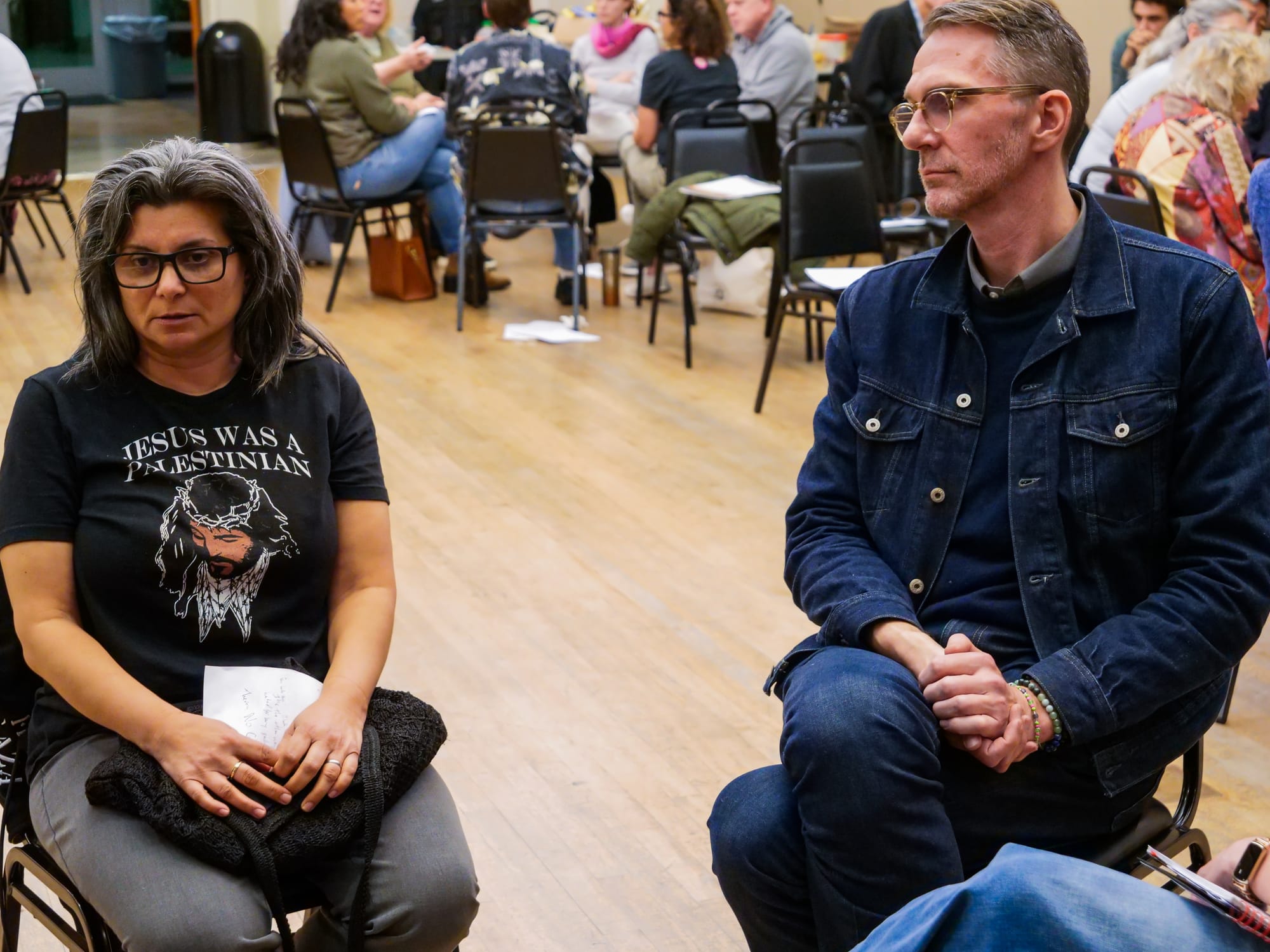
That was the fear for some folks. The decision to have those civic assemblies was a 3-2 vote, but the other two council members who voted against it have now praised the program and think it's a great idea, so I'm glad to see that.
Again, the proof will be in the pudding as we continue to do it. The next phase that the city and I want to do is holding porch talks or community talks where we'll go out into the community, have someone in the neighborhood host it, and then bring neighbors.
I want to move from reactive communication to proactive communication, so these won't necessarily be “We have an issue. What do you think we should do about it?” That can be part of the context of these conversations, but this is also letting people know we're reaching out. We're building relationships so we can just hear about what's going on, what's on your mind, and what the issues you're dealing with in your everyday life are.
This builds on what a lot of people talk about: moving council meetings outside of chambers. I am not saying we'll move actual meetings, but we can move council outside and make sure we're more integrated in the community. I'm very excited about this next phase of community engagement.
On Better Overland, Sepulveda Connects, and the Mobility Approach
I'm a problem solver, and the problems at hand are: How do we deal with climate change? How do we make our city safer, our streets safer? How do we make it more accessible? How do we make transportation work for everyone?
These projects represent solutions to that. I'm open to other ideas, but doing nothing will only exacerbate everything. It will only increase traffic. It will only increase our dependence on car culture.
I'm not against car culture, but we know single-vehicle miles traveled is by far the number one contributor to greenhouse gas emissions, so these projects represent an opportunity to really create a more connected city.
I supported them because we need safer streets, better traffic flow, and transportation options for residents, workers, and local businesses. It doesn't mean every project is perfect, and I believe in listening to feedback and making adjustments where necessary.
I believe good leadership means being willing to evaluate what's working, what's not, and how we can improve moving forward, and I think Better Overland is an example of that. We've done around two and a half years of community outreach, and we've made compromises.
There’s a lot of misinformation about Better Overland. There are no lane reductions. We're not removing all the parking, and we made concessions when people came in good faith and really wanted to work with us to solve their issues. One example is Grace Lutheran Church: they provide homeless services, and they had handicap parking and drop-offs and pickups in the front; so we designated spaces on the side streets for that to improve flow for everyone.
This isn't an issue of us versus them or this population versus that population. It's about creating a mobility network that works for everyone. For far too long, it's been only about cars, and I understand Los Angeles' history and the car culture embedded there.
But we're in a new place, and there are a lot of people who have moved here because of the walkability, the urban feel, the bikeability, the options for alternative modes of transportation, and because they want to live closer to where they work.
At the same time, as we try to make Culver City affordable, we want all socioeconomic levels to be able to live closer to where they work. That cuts down on traffic, which means fewer cars on the road and a better environment.
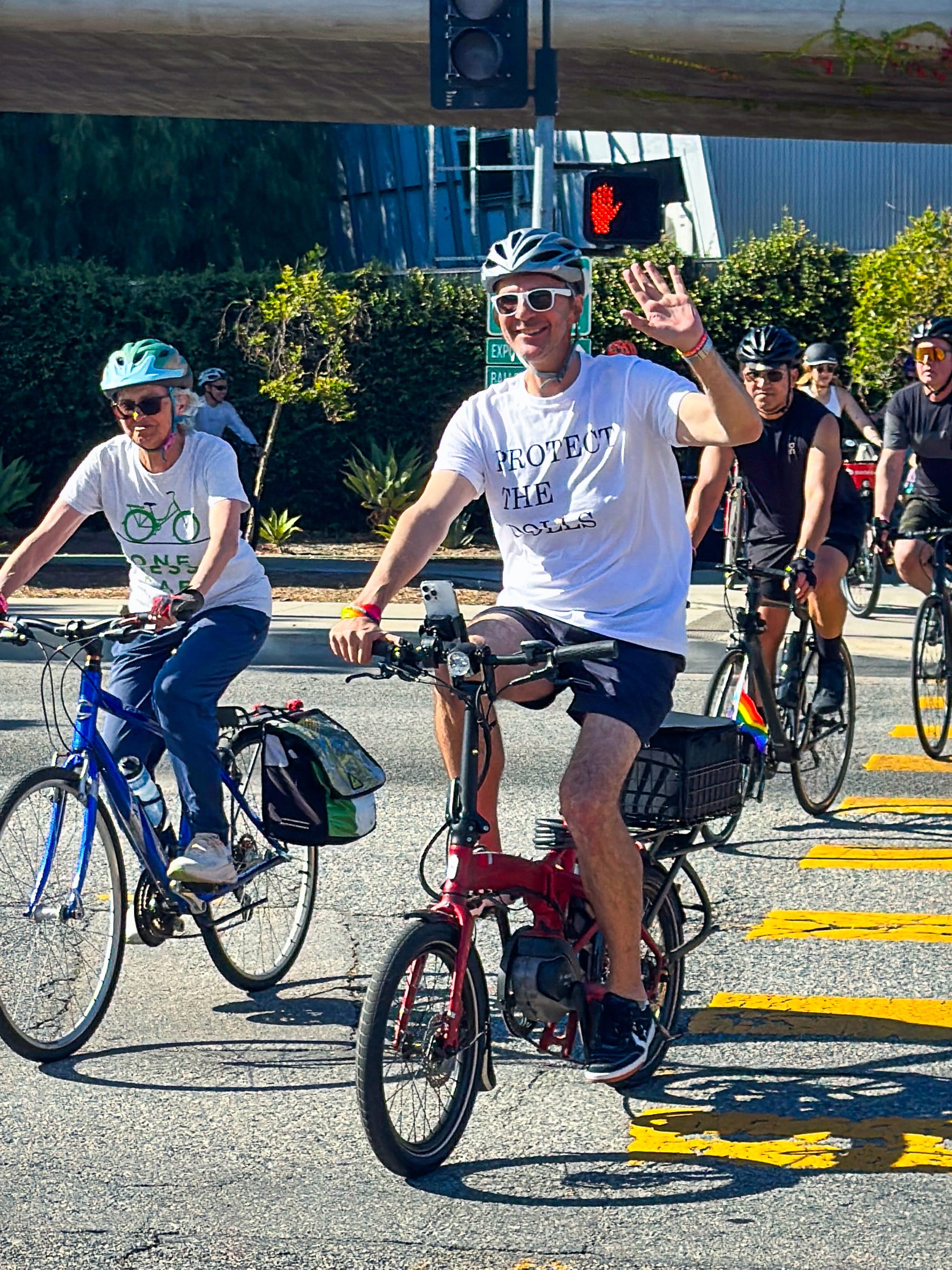
I see this as part of balancing our mobility network. For far too long, it's been focused on only one thing, and there are so many other options. You can take the Metro, you can take the bus, you can ride a bike, you can walk. We have to make it safe, reliable, and consistent for people to do that.
I'm not saying that everyone needs to get rid of their cars and take a bike. No one is asking anyone to do that, but if we let people who want to do it and see the value in it, it will only make it easier for the people who remain in their cars to get around faster.
Those other people are going to be off the streets and using other types of transportation. If everyone were to switch out even one trip per week in Los Angeles County, it would make a substantial difference in not only the environment, but also traffic.
On Jubilo Village and Building Affordable Housing
Housing decisions are never simple. Culver City, in my opinion, has to be willing to address affordability thoughtfully and responsibly. I understand that projects like Jubilo Village create strong opinions on all sides; there's no doubt about that.
My focus has always been on finding balanced solutions that address affordability, support working families and seniors, and ensure projects fit our community's long-term needs.
We can't keep talking about affordability and affordable housing, and then refuse to have difficult conversations about housing. Jubilo is a special case, and I reached that decision after a lot of thoughtful communication with the community from all sides.
We can't mandate a preference for people who live and work in Culver City because that would be against fair housing laws, but one of my conditions for approval was to approve digital kiosks because I think if we're going to do this project, we have to figure out ways to generate revenue, and that digital kiosk program will bring in far more than the cost of Jubilo.
For a lot of people, that probably wasn't the best answer and may have been frustrating, but I think that was the path forward. As I said, we have to put our money where our mouth is when it comes to affordable housing and addressing the housing crisis, and this was the opportunity before us.
A lot of people said the other affordable housing projects wouldn't take up time or money from the city, and lo and behold, they ended up needing gap financing because financing affordable housing is really hard to do. The affordable housing project at the Wellness Village site and the Gun Store will probably need some gap financing.
But at the end of the day, this is going to be the path forward. These are things that we're going to have to do. We're going to have to invest in that. We had the Redevelopment Agency money and used it for Downtown Culver City, which is arguably a great thing and really helped the city, but we historically have not invested in housing, so this is our way to restore that balance.
If you haven't noticed, the theme is balance and restoring balance, and we need to make sure we create housing opportunities for all income levels.
On the Direction of Unhoused Services
We just got our homeless count numbers back. There's a 30% reduction this year and a 69% reduction since 2021. We lease out two motels to provide two Project Homekey sites. One's temporary; the other is permanent supportive housing.
We have the Wellness Village. We also have the Mobile Crisis Team, which provides unarmed response to people experiencing mental health crises and also does homeless outreach. Obviously, this has been effective.
We now have more people in housing services than on the street, but the ultimate goal is getting people into permanent supportive housing. Part of that means we have to invest in affordable housing, and we have to put our money where our mouth is when we talk about affordability.
We can't talk about affordable housing for very low-income people every election cycle or all the time, and then not do anything about it. I'm really proud that in this current budget, we put a lot of money towards affordable housing projects.
One is the Jubilo Village, which will provide 93 units for very low-income families. Another is a housing project at the Wellness Village that will be affordable housing for artists, and then the third is the former Martin Retting Gun Store that will be transformed into 67 units of affordable housing for people in education or other folks that could qualify for that, as well as space for artists.
What are we going to do now that we're going to possibly take the Wellness Village offline for that affordable housing project? There's a project called Safe Parking that I think is a great option to look at. It's much more economical, and it will also reach a different population.
A lot of people are slipping into homelessness. They might have a job, but they might be living in their cars, and this will be a way to capture them. Safe parking programs have a high success rate, and they are very economical.
We are going to be redoing our Homelessness Plan, so I'm curious to see that and what options the Advisory Committee on Housing and Homelessness has.
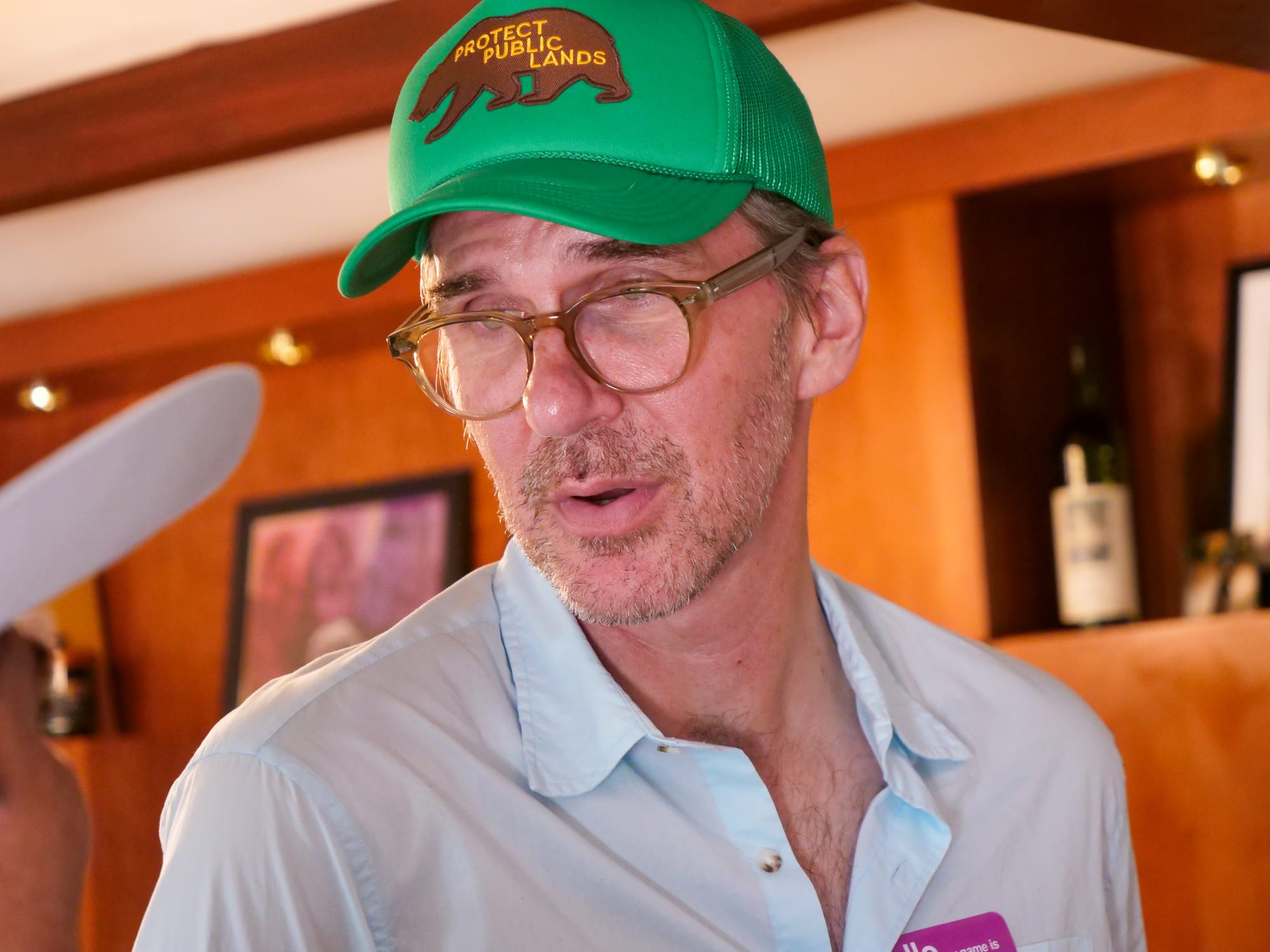
The other thing is making sure we preserve affordable housing and keep people where they are before they slip into homelessness. I'm proud that we're piloting a right to counsel program. I've always said that you have to couple that with a rental assistance program.
We have other tools to keep people from falling into homelessness. We also have our rent control and tenant protections, which are tools that are really working in this region, given the context of Culver City's economics and dynamics. Together, all of that supports the most vulnerable.
We're working on a program for low- to moderate-income individuals to help them get into homeownership. It will be financial literacy training; we'll be partnering with a financial lender and seeing how we can help people take that financial leap into homeownership because I believe in a ladder of housing.
Switching back to our homeless services, we want to make sure that we can reintegrate those who are able into society and make sure to give them job training, social training, and whatever else they need to thrive and survive.
One of the things I did with community engagement was start organizing other populations. The city would say it was doing community outreach before, but always to the business community, which is amazing, and we need to be reaching out to them.
But there are so many other populations that we should be reaching out to, so I started with the faith-based leaders because I feel like they're community organizers on the ground. They know what's going on in their communities.
I believe we're all in this together. We're a community, and we have to help one another.
On SB79, Single Family Neighborhoods, and Balancing Density
Our Regional Housing Needs Assessment goals, mandated by the state, are 3,341 units by 2029.
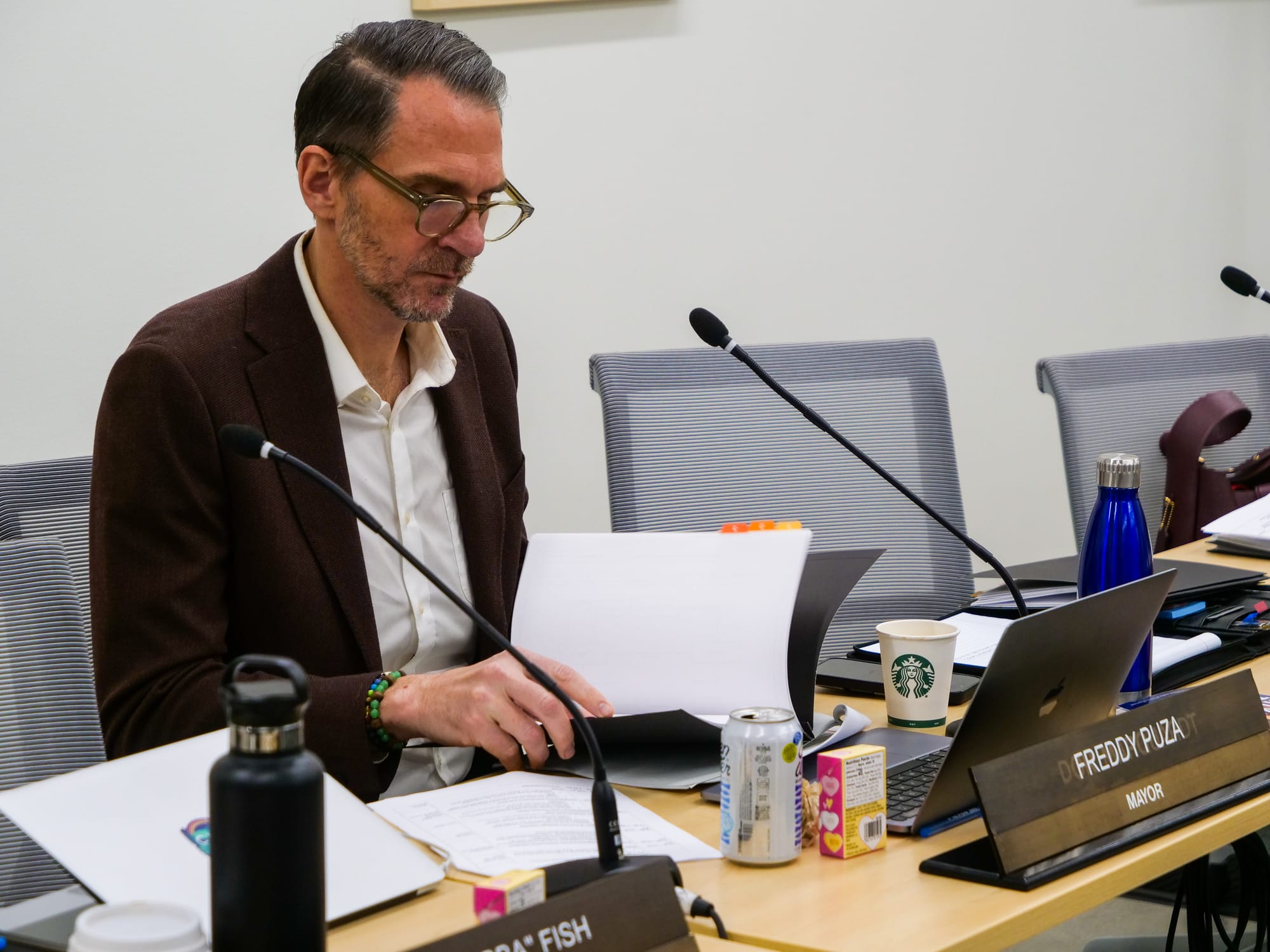
Cities create the conditions. We don't build the housing, but we know that there are 4,500 units in the pipeline. 800 of those are affordable, so we are making good policy that's moving that forward.
Before our housing element, I was in that camp of gentle density throughout the city. Instead of really concentrating housing in particular spaces, I thought, “Why don't we just spread it throughout the city so everyone takes a portion?”
Some might take more. Some might take a little less, but ultimately it would be more balanced. Instead of a six-story building, there'd be a fourplex. I lost on that, but we still have an amazing state-certified housing element.
Here is where we're at. Culver City has historically had a population of 40,000 for decades. We haven't built housing, so now the state is stepping in to address the housing crisis. Needless to say, the homeless issue in the region and the lack of affordable housing are major challenges, and so these state bills address that. It's about how we work with the state right now to best address SB 79.
We are working on a tiered approach called an alternative map; it will push some density around. We'll push it closer to transit, which is what we want — more housing around our Metro and our bus system — and then it will decrease as it moves into the R1 Single Family Residential District and R2 Two-Family Residential District neighborhoods.
We're able to flip that out as long as the total density stays the same. I think that's a great opportunity to compromise and work with the state in that kind of way. There'll be some on the commercial corridors and throughout the city, but a good portion of the housing is going to go into Fox Hills, which I predicted. I live in Fox Hills, and this is what I didn't want, and that's why I fought the way I did.
That does bring some infrastructure benefits. Hopefully, there will be markets, coffee shops, restaurants, and bars we can walk to in Fox Hills. But I understand the concerns about that density.
At this point, we just have to balance and make sure that moving forward, it's as equitable as possible given the circumstances. I also think that since a majority of the housing is going to go into Fox Hills, we have to make sure that it's a priority for council that we put in infrastructure there to support all the housing, such as mobility infrastructure and other resources, to ensure that the community doesn't become disadvantaged because of the housing that's coming in.
On Park and Public Space Improvements
After the vote on Jubilo Village, I agendized a CIP (Capital Improvement Plan). Of course, we had one before, but it was only really between the CFO and the Public Works Director. The CIP that I propose is much more comprehensive and much more rooted in community engagement.
We would have all the directors of each department. We would include engagement and community input, and insert council priorities into that. That obviously includes our park system. It's great to have a Citywide Parks Plan.
I'm glad that we were going to start with two parks, and then Councilmember Yasmine-Imani McMorrin said we should probably look at all the park systems at once rather than just prioritizing two parks. I'm glad the parks plan decision was made to look at things comprehensively: figure out what each park has, what each park needs, and what we need to do.
$812 million is a lot of money, especially right now, so our priority will be to figure out how to approach it. We'll probably have to do it in bits and pieces. It probably won't be one big project, but at least we have that framework of what we need.
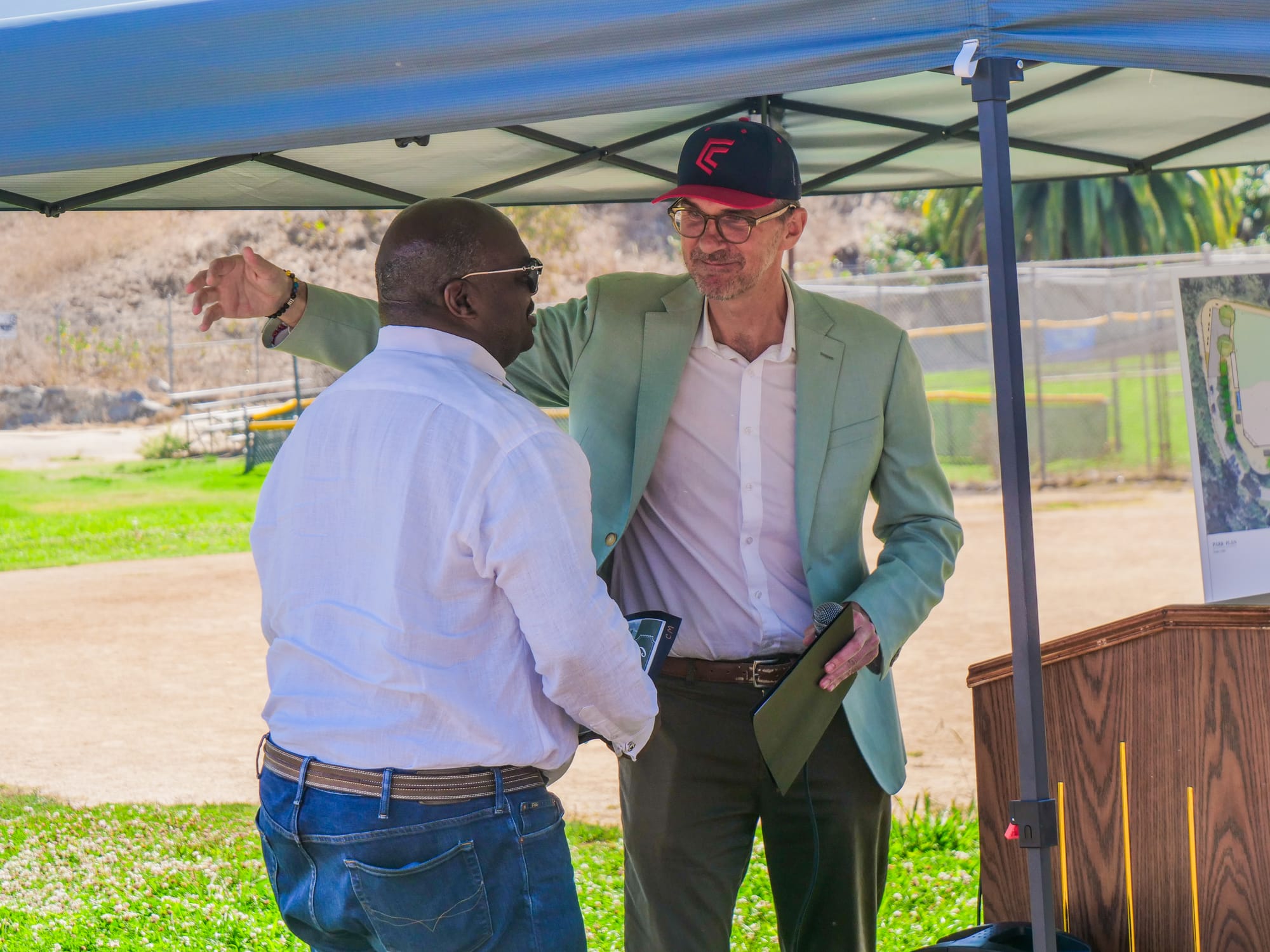
We are renovating four baseball fields at Bill Botts. Each of our parks has many opportunities that need attention and love, and our park system brings everyone together.
It’s a universal thing that no matter what your position is in the city, people love parks. It's one of the reasons people move to Culver City. We have a lot of green space, and we want to make sure we maintain and beautify them, and make sure staff have the resources they need to maintain our beautiful parks.
On the Introduction of New Technology
It’s a really exciting time, but it could also potentially be a scary time. Anything new is challenging at times. We like to say change is sexy, but it's really difficult.
I was never afraid of social media. I embraced it. I thought it was great. Although social media has pros and cons, AI is on a different level. I do think that AI will be similar to — not exactly the same, but adjacent to — the Industrial Revolution in terms of impact. It's going to completely change the world as we know it.
I'm torn because, on one hand, I think it's happening, and so how do we embrace it? How do we create guardrails? How do we regulate it to make sure it's working for us in the ways that are most beneficial?
The other side of me thinks we don't have to accept everything that comes our way, and the community can push back. But I'm not hearing that latter part too much. I do hope AI and automated, autonomous features in our society do some of the work we don't want to do and leave creativity, art, and academia to the human mind, because I think that's where it should be, with technology handling some of the more mundane tasks.
Automated or autonomous vehicles — I personally love them. I think they're great. The safety feature is probably the best thing. There's so much data that we can get on them, and they're much safer than humans driving, and that's just data analysis. We have to make sure that with these fleet stations, we work with the AV industry and our community to ensure that it's not harmful or inconvenient for our neighbors, so I'm looking forward to having the conversation about the fleet stations.
As far as Flock, we're actually going to do a comprehensive analysis of all of our technology and look at surveillance issues, privacy issues, and then make decisions about them. I will be prepared to make whatever decision based on that report.
Flock has become really a bipartisan issue. A lot of people don't like it, and I've always been told it's fine, but it depends on whose hands its data is in. We're seeing a federal administration that's not always following the law, so we're at a very critical time, and we want to make sure that we are protecting the dignity and safety of our neighbors, especially those most vulnerable under this administration.
I will always want to make a data-driven decision, also mixed with community engagement.
As far as AI within the organization, the city itself, I want to make sure that we have guardrails and guidelines for how to deal with AI, when to use it, and when not to use it, but I think at the end of the day, some of this AI is going to be really beneficial to us. The question is, how do we balance it all out?
On City Council Meetings and their Structure
I feel like we are at the sweet spot to dip our toes into the water and do a bit more. We know meetings are running too long. We know we have an ambitious council who wants to do a lot of work. We know we want community engagement.
One thing I want to continue to do is what I mentioned earlier: increase community engagement throughout the city. I do think it can be intimidating to come to chambers. People don't always understand how you communicate in chambers, and if you give public comment on agenda items, it's not a two-way dialogue. You get a certain amount of time, and it's just so formal.
The agenda can be confusing, distracting, or intimidating. I think the more we go out and talk to the community, the better that will be. I also know a lot of cities are discussing making some of these changes.
Someone sent me something the other day about the cost savings that come from streamlining meetings because of all the staff that has to stay overtime, not to mention community members who are not able to make public comment on items that might be really of value to them or important to them if they are having to stay until one or two in the morning.
Not a lot of people can stay that late, and we're doing business at that time, so I think change is needed. What we did this year was great for piloting a program, seeing what's working and what's not, and then reevaluating it. I hope that my successor, who I think will be Vice Mayor Bubba Fish, will take lessons learned from this year and then go further with that.
The school district switched its policy a while ago. They do all their public comment at the beginning of the meeting for all items, and I think that works, especially for the school district, for people who have children. They can get their comments in, and then go home and do whatever they need to do, whether work or spend time with their children.
I think that may be a model to look at, but I think it's about figuring out what works best. Again, change is hard, so it's not perfect, and I'm sure it was clunky and maybe disruptive for folks. But we also have been seeing that meetings are shorter. They're on average ending at 11 p.m. or midnight instead of 1 or 2 a.m., and we're still getting a lot of business done.
We haven't got it right just yet. We haven't found the sweet spot, but we just started this year. How do we continue on that process to find what's going to work best for everyone?
On the City’s Readiness for the 2028 Olympics
The Olympics are a once, maybe twice in a lifetime opportunity to host it in your home city. It's going to be very exciting.
Culver City is not hosting any Olympic events, so we had to really find out what we were going to focus on. Right now, we are working with New Zealand; we're going to have a Hospitality House and Fan Zone. A Pan-African Village is in the works. I believe Lithuania is going to be at one of our venues in the city. There are talks with the Netherlands, and kudos to my colleague, Councilmember Dan O'Brien, who really took the lead on a lot of those conversations and organization.
I hoped that we would have more art focus in Culver City, and so there are still some arts components to it, and there'll be programming during the Hospitality House and Fan Zone, maybe an opportunity for a film festival at Culver Theater, and some other art activities that will go on.
But my big concern is that it's exciting and a once-in-a-lifetime opportunity, but what's the cost? Along the way, I've always been the budget hawk on this, working to figure out how much we are going to spend for essentially a two-week event, and then what's the return on investment on that?
Of course, the Olympic experience is priceless, but also we have to worry about our finances in the city. It’s just figuring out where our limits are because each of those events, while some might not necessarily cost the city any money if they're going to a private venue, will still increase foot traffic. There'll be increased traffic in cars and buses and mobility, and they'll need resources, trash collection, etc.
How do we have the city resources to really service all of these venues operating at the same time? I have concerns, honestly, about the federal administration and their role in the Olympics and how that's going to all play out, especially with our immigrant communities and other vulnerable communities with this administration.
I know L.A. needs support from the administration, and so those are the concerns. Overall, I'm optimistic about it. I think it'll be a great community-building opportunity if we do it right, and I think we need the right leadership to make sure it's guided in the right direction.
On A Potential Lobbyist Registry and Similar Election-related Policy
I support comprehensive campaign finance reform. I think money should get out of politics. I think we should end Citizens United. I think campaigning should only be allowed three months before the election.
I’m not going to be able to affect that at the local level, but those are some of the things that I really support. I support campaign contributions from the city, similar to what L.A. has. I think that is a way to get in-kind contributions from the city if you opt in; that way we can reduce the amount of money that may or may not influence elected officials.
A lobbyist registration is also important. I think I want to move forward with it and look at it, but I think there are complexities to it, like how are we going to enforce it? Are there going to be penalties? What about the people you know?
It's the same as with a lot of things; the people who are working in good faith are going to sign up and register, and the people in bad faith are not going to. What do we do in those situations, and how do we track that?
There are a lot of unanswered questions, but I think the concept is really a good idea. Matching funds would be such a great thing in Culver City. I know it's an investment, but I think it's a worthwhile investment. I'm not an expert in this field; I think we can do it based on preliminary projections. I think we can afford it, and I think it's worth prioritizing that in our budget.
The more transparency we have and the more open we are, the better. We have to build trust with our community.
There's always been, you know, waning trust in government, and that ebbs and flows. But communicating, following through on what we say — even if people don't always agree with it — and being transparent is how you build trust, and I think we're on the way to that.
It's always an ongoing process and never completely done.
On How to Make Culver City a Welcoming and Inclusive Place
I believe everyone in the city should feel like they belong. I've been proud to co-create, start, and lead Culver City Pride. I helped with Juneteenth this year, helped with Lunar New Year events, and am always trying to create events and community that bring people together and help them feel included.
Events alone are not the end-all, be-all, because there has to be policy behind it. That's why, after Trump was reelected, I made sure that we agendized looking at our sanctuary city policies to make them tighter and more succinct, and to think about how we include the LGBTQ+ community and people seeking reproductive care.
Policy should always create an inclusive, equitable, and diverse community, and that's not going to stop because we know community also is why Downtown is doing well financially, based on the reports we get from our Finance Department. There's always a deeper story to be told with those reports, but there is increased financial activity in downtown because we create inclusive events that bring people. That creates a more desirable city to live in.
It’s also those people who are going to go eat at a restaurant, drink at bars, and go shopping, so it helps the economy. It is mutually beneficial if you can just see it from a humanity standpoint.
We do regular reports each year about the diversity of our staff in City Hall, and make sure we're maintaining equity across the board and all different types of categories: gender, race, and other demographics. Being around different people is a good thing, and we're so fortunate to live in Los Angeles, which is home to probably one of the most diverse communities in the world.
So if you don't know how to interact with a different population or someone who's not the same as you, it's a great opportunity to learn that and evolve because that is the society we live in, and it's moving in that direction. We want to make sure that we care for each and every person. A lot of our issues have been caused by division.
We know that Culver City used to be a sundown town. We did a historical study and saw the different ways that the city prevented different populations from thriving and even surviving in Culver City. It's always going to be our past; I'm not saying don't acknowledge it, but we need to understand our past, move forward, and ask ourselves, “how do we never let that happen again?”
I think that's really demonstrated in the policymaking body that we have right now.
On Vote 16 and Encouraging Healthy Civic Participation
This is exactly the kind of conversation our community should be having. Vice Mayor Fish has done a lot of the work to bring it forward, and I look forward to seeing how Culver City weighs in, and I trust our residents to make their voices heard on this, and I respect the democratic process that will decide it.
I support Vote 16. I think it, ironically, came within 16 votes in the 2022 election. It's a great opportunity to have our youth organized and you know get civically activated, and I think the work that has been put into it it's worthwhile, and ultimately the voters have to decide on what they think about it.
On How He Would Like His Tenure to Be Remembered
I would like to be remembered as having taken a turn with affordability, and setting the stage and creating the conditions for it to be easier to afford to live and thrive in Culver City. That’s the main thing, and I also want people to remember that we changed the environment completely.
Culver City is very blessed to have a very engaged electorate right now, but I want to be remembered for increasing that even more, and doing community engagement in ways that are new and different and more inclusive, and getting a broader sample of the electorate.
I want to be remembered for making sure that we have that strong future financial setting and that we have created some policies and guidelines around our budget.
Looking to 2045, if I am fortunate to live that long, I hope people remember we really set the stage for that next implementation or update of the General Plan, and they think, “We were set on the right course because of the councils of the past and Mayor Freddy Puza.”
Closing Statement
I was fortunate to be elected in 2022, and I hope to be fortunate again to be reelected to serve the community for another four years, and I really believe that I am running for re-election to the Culver City City Council because I believe that for our community to thrive, it must remain a place where people can actually afford to live, work, and build a future.
Talking about affordability is not just a slogan; it's a daily reality of whether our working families, our older adults, renters, homeowners, landlords, and small businesses can stay in the city that they love. Over the past four years, I have delivered practical, progressive results from establishing the Affordable Housing Trust Fund, supporting the pilot right to counsel program, supporting small businesses, and expanding mental health crisis response.
There is so much more work to be done to ensure our government remains functional, accountable, and transparent, and I am committed to building our practical solutions. Keeping Culver City within reach, making City Hall work better through fiscal responsibility, getting back to basics on infrastructure and city services, and ensuring that safety and belonging go together hand in hand.
With the stakes higher than ever, I am committed to fighting for an inclusive, sustainable Culver City where everyone has a voice and everyone belongs. Thank you so much, and I hope to earn your vote.

Comments ()