
Culver City's 2026 Guide to California Ballot Measures
California has 14 statewide measures on the November 2026 ballot, and the results of these elections could have varying degrees of impact on Culver City and its residents
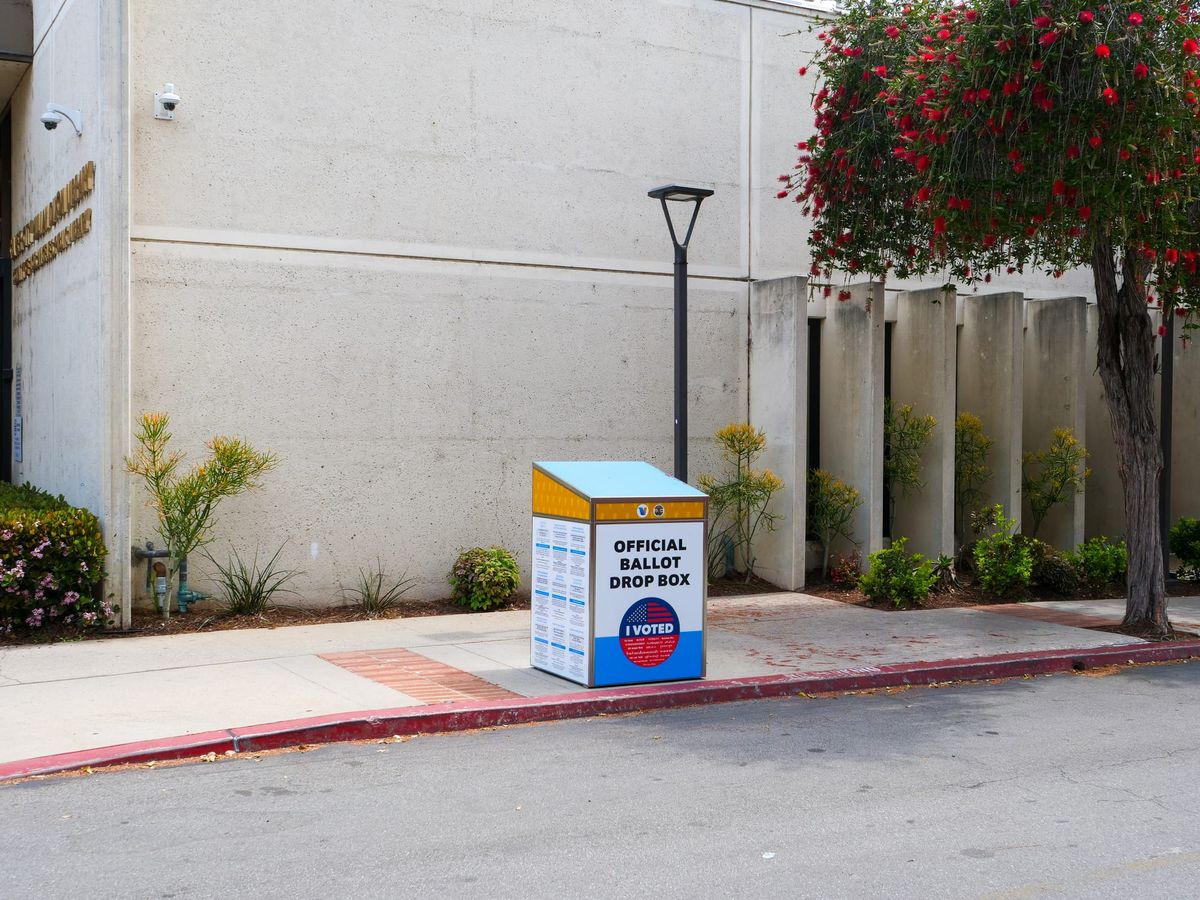


Culver City residents can help shape how California operates this November.
The city has its own measures on the November 3, 2026 General Election Ballot for voters to decide, but plenty of activity at the state level also affects the Culver City community. While many of these are not focused on locally concentrated issues, the results of some ballot measure votes could significantly affect Culver City and its residents.
California voters will consider 14 statewide propositions this November, each with varying levels of impact on Culver City. The following is a Culver City-focused analysis of these 14 state measures and how their results could impact daily life.
Direct Impacts
These measures will have clearly visible, tangible impacts on Culver City and its residents. While they generally apply statewide and are not focused on Culver City, passing or failing these measures would significantly affect how Culver City operates.
Proposition 3: The California Children's Education and Health Care Protection Act of 2026
- Official Ballot Title: PROPOSITION 3: PROVIDES PERMANENT FUNDING FOR SCHOOLS AND HEALTH CARE BY EXTENDING EXISTING TAX ON HIGH INCOMES. INITIATIVE CONSTITUTIONAL AMENDMENT.
- A renewal of a tax rate first adopted in 2012 that imposes additional marginal tax rates on the higher income brackets. If approved, the measure will make the following marginal tax rates permanent:
- $361,000 to $433,000 (single filer) or $721,000 to $866,000 (joint): 10.3%
- $433,000 to $721,000 (single filer) or $866,000 to $1.4 million (joint): 11.3%
- $721,001+ (single filer) or $1,400,001+ (joint): 12.3%
- If defeated: All three drop to 9.3%
Education funding from the state has been a question mark for Culver City Unified School District and its contemporaries across California. Funding from this tax — which has been in place since 2012 — is added to the state’s Education Protection Account, from which Culver City Unified School District received more than $11.5 million during the 2025-26 fiscal year.
Proponents point to this financial picture and the damage that losing funding — expected by the Legislative Analysts’ Office to be between $5 billion and $15 billion annually — would cause, resulting in deep cuts to schools across California. They note that this does not increase taxes in any way, and only extends already existing taxes.
This would only target the highest earners in the state, who recently received a break at the federal level after the colloquially titled “One Big Beautiful Bill” canceled a scheduled increase on the marginal tax rate by making the current 37% rate permanent.
Opponents argue continuing the tax is another example of a larger problem in the state. California has the highest marginal tax rate for high earners in the country, and they argue that continued tax pressure will drive up the cost of living in the state while encouraging frivolous spending by the California government.
They also argue that converting temporary taxes for a specific purpose into permanent taxes sets a precedent that California voters should fight against.
Proposition 39: California Voter ID Initiative
- Official Ballot Title: PROPOSITION 39: PROHIBITS CITIZENS FROM VOTING UNLESS THEY PRESENT GOVERNMENT-ISSUED IDENTIFICATION. INITIATIVE CONSTITUTIONAL AMENDMENT.
- Require voters to present government-issued identification at the polls (or the last four digits of a government-issued ID number when voting by mail), require the State to provide voter ID cards on request, and require officials to report citizenship-verification rates annually.
Proposition 39 essentially acts as a local branch of the SAVE America Act, which was proposed over accusations from President Donald Trump and his supporters that voter fraud was perpetrated in the 2020 Presidential Election, enabled by the lack of an ID requirement through non-citizens and undocumented residents voting or the duplication of ballots.
Criticism of the policy is strong, with some going so far as to call it “Jim Crow Voter Suppression,” and there is no tangible evidence of voter fraud despite a large investment of time investigating the election proceedings. The impact on voter participation is contested, with the group behind Prop 39 arguing it improves participation by increasing trust in the process.
At the same time, opponents pointed to the 2022 Texas Primary, following the state’s implementation of additional Voter ID requirements, in which more than 12% of mail-in ballots were rejected, as evidence to the contrary.
Supporters of Voter ID recently filed a lawsuit against the state’s Attorney General, Rob Bonta, over what the lawsuit called “a neglect of duty” connected to the language presented to voters on the ballot. They argued the title presented to voters implies a negative connotation, which reflects a prevailing sentiment among left-wing politicians and voters on mandatory Voter ID.
Potential Direct Impacts
While these situations are not day-to-day or regular occurrences, the results of these bills will affect Culver City if its government takes actions enabled by these measures. Measures that could allow or disallow irregular and/or voluntary activity in the city also fall into this category.
Proposition 37: California Middle-Class Homeownership and Family Home Construction Act of 2026
- Official Ballot Title: PROPOSITION 37: CREATES LOAN PROGRAM FOR MIDDLE-INCOME BUYERS OF QUALIFIED NEW HOMES. INITIATIVE STATUTE.
- Authorize up to $25 billion in bonds to offer eligible buyers fixed-rate second mortgages for up to 17% of the purchase price of a qualified new home. Homeowners repay the bonds through their mortgage payments, alleviating the burden on taxpayers.
Affordability — particularly in housing — has been on the minds of the Culver City community for years, and this program could help buyers enter one of the most expensive housing markets in the state.
Taxes on the sale of large real estate properties in the city can bring significant revenue to Culver City through the Real Property Transfer Tax, established by Measure RE in 2021. However, views on using bonds to address key issues in Culver City have been mixed.
Notably, this is one of two state propositions that did not have any arguments or opposition submitted against it; the other was Proposition 1.
Proposition 43: Local Taxpayer Protection Act
- Official Ballot Title: PROPOSITION 43: LIMITS VOTERS’ ABILITY TO RAISE REVENUES FOR LOCAL GOVERNMENT SERVICES. LEGISLATIVE CONSTITUTIONAL AMENDMENT.
- Changes the requirement for special taxes put onto the ballot through citizens’ initiatives to pass from a simple majority (50% + one voter) to a 2/3 vote (66%)
This is particularly pertinent to Culver City in this election season, raising the stakes for the local citizens’ initiative on the 2026 Ballot. While it would only apply to taxes proposed after January 1, 2027, and would not impact Measure AA — the Culver City parcel tax measure on the 2026 ballot — any subsequent attempt to raise funding through special taxes would become significantly more difficult.
Prop 43 would apply to any special tax, which is a tax that generates revenue reserved for particular purposes as opposed to being added to a municipality’s General Fund Revenue. Special taxes that are not placed on the ballot by the public already require meeting the 66% threshold to pass, and citizen initiatives are seen as an option to make passing these taxes easier.
Councilmember Albert Vera was hopeful that the local Transient Occupancy Tax placed on the 2026 ballot could be allocated towards investments related to the city’s budding investment in tourism, but was unable to receive the support in part because of the higher threshold required for a special tax proposed by the city.
Supporters point to the cost of living and many voters' dissatisfaction with how money intended for specific purposes is spent as arguments for Prop 43, while opponents argue that the measure would only weaken voters' power to implement positive change in local municipalities.
Indirect Impact
These will not influence how Culver City operates or affect the decisions of its staff or council, but they will have an impact through the partners it works with or the systems under which other jurisdictions or entities can affect Culver City residents.
Proposition 44: Clinic Funding Accountability and Transparency Act
- Official Ballot Title: PROPOSITION 44: REQUIRES COMMUNITY HEALTH CLINICS SPEND 90% OF REVENUE ON PROGRAM SERVICES. INITIATIVE STATUTE.
- Requires nonprofit Federally Qualified Health Centers (FQHCs) to spend at least 90% of their revenue on program services advancing their charitable purpose rather than management and overhead, with monetary penalties for noncompliance.
Venice Family Clinic, which has a location in Culver City and operates the Sandy Segal Youth Health Center on campus at Culver City Middle School and Culver City High School, would fall under the purview of this proposition, having been a FQHC since 2012.
Proponents of Prop 44 argue that regulations are necessary to prevent clinics and their highest-paid employees from abusing taxpayer funding. With federal funding for California healthcare seen as unstable at best, residents cannot afford to let these community clinics engage in CEO embellishment and other forms of wasteful spending.
Healthcare providers like VFC have expressed their opposition to the measure, arguing it was not written in a way that will enable it to serve its intended purpose.
As proposed, VFC argues that Prop 44 will cripple operations by forcing additional spending on administrative costs and diverting money away from things like “people who design and supervise care delivery, help patients get and keep their health insurance, and support patients getting the referrals they need.”
Proposition 45: Building an Affordable California Act
- Official Ballot Title: PROPOSITION 45: MODIFIES ENVIRONMENTAL REVIEW FOR CERTAIN PROJECTS. INITIATIVE STATUTE.
- Amend the California Environmental Quality Act (CEQA) to expedite environmental review of specified project categories (including most housing, transportation, water, health, and clean energy projects), setting deadlines for review and limiting court review of project approvals.
Prop 45 is intended to remove barriers that inhibit the progress of environmentally beneficial projects. By removing some guardrails on projects in categories meant to tackle pressing issues affecting the public good, supporters hope this measure will reduce the cost of living and speed up projects that directly address key issues tied to the health of California’s environment.
It would also reduce the scope of what can be considered in a CEQA lawsuit. Proponents argue that this proposition is necessary to accelerate projects that bring positive change but have been hamstrung by regulations, and that moving these projects forward will create local jobs. Supporters estimate that delays caused by CEQA permitting requirements can increase the cost of newly built homes by more than $75,000.
Opponents cite part of the Legislative Analyst Office’s analysis of the proposition, which predicts that these changes could “lead to approval of projects with negative environmental impacts that would not have otherwise occurred.” The cost-reduction claim has also been scrutinized, with critics arguing that rents, mortgages, and utility bills would not be affected if this measure passes.
Decreasing room for public input is another concern shared by opponents, who argue that the reduced control shifts power toward developers unconcerned with the pollutants their projects emit.
Potential Indirect Impact
While these measures could tangibly affect Culver City, their direction and applicability are more focused on potential partners for projects in the city rather than Culver City itself.
Proposition 1: The Veterans and Affordable Housing Bond Act of 2026
- Official Ballot Title: PROPOSITION 1: AUTHORIZES BONDS FOR HOUSING AFFORDABILITY PROGRAMS. LEGISLATIVE STATUTE.
- Authorize $11.25 billion in general obligation bonds: $10 billion to fund affordable rental housing and homeownership programs, and $1.25 billion for farm, home, and mobile-home purchase assistance for veterans.
Proposition 1 is unique in that it is one of the only statewide ballot measures with no argument submitted against it in the official Voter Information Packet. This bond measure focuses on bolstering funding for programs related to housing affordability.
Bond measures have a strong passage rate in California, presumably because they lack immediate debt incursion or impact on California residents in exchange for desired services. Culver City took out bonds without a vote through the establishment of the Culver City Public Finance Authority to create liquid funding to bolster the city’s budget, and some residents have shared concern and/or skepticism about the reliance on bonds.
Affordable housing and veterans needs have been recognized as issues which need tackling, with the former receiving significant investment and documented prioritization by the city council in Culver City.
Proposition 4: California Fair Elections Act
- Official Ballot Title: PROPOSITION 4: REPEALS PROHIBITION AGAINST PUBLIC FUNDING OF ELECTION CAMPAIGNS. LEGISLATIVE STATUTE.
- Repeals the constitutional prohibition on public financing of campaigns, allowing state and local governments to establish voluntary public financing systems — such as a matching donation system — with expenditure limits and strict qualifying criteria. Increases penalties for prohibited foreign contributions in connection with ballot measures and elections.
Campaign financing has also been a subject of discussion ahead of the 2026 Election, and this could open a new pathway of options to address transparency and funding concerns. Prop 4 would allow cities and local entities to create public financing programs for campaigns like New York City’s Matching Funds Program.
Established in 1988, the program gives candidates who agree to the campaign spending limits and financial oversight required by the program $6 in matching funds from the City for every $1 donated by New York City residents.
Prop 4 would also implement similar restrictions on spending these funds, such as expressly prohibiting them from being used to repay personal loans, in addition to any limitations that cities may decide to implement if it considers such a program. Passing this bill would repeal prohibitions on public campaign financing in California, but it would not require any entity to create such a program.
However, the current prohibition only applies to "general law" cities, which do not have a city charter and are entirely governed by California State codes. However, charter cities like Los Angeles and Culver City are not impacted by this prohibition, so the result of Prop 4 would only have potential impacts on nearby general law cities.
Opponents point to two main red flags as reasons to fight this measure: no limitations on how many candidates in an election could receive money and no limits on the amount of money they can receive from taxpayers.
The purpose of this measure is to empower individual voters to influence how political campaigns are financed, reducing reliance on a handful of large donations from influential figures or corporate entities. Implementing changes to the Political Reform Act would increase the workload of the California Fair Political Practices Commission (FPPC).
Proposition 40: 2026 Billionaire Tax Act
- Official Ballot Title: PROPOSITION 40: IMPOSES ONE-TIME TAX ON CERTAIN TAXPAYERS. INITIATIVE CONSTITUTIONAL AMENDMENT AND STATUTE.
- Imposes a one-time tax of up to 5% on taxpayers and trusts with covered assets valued over $1 billion, with 90% of revenues for health care and 10% for food assistance or education-related programs.
Proposition 40 may be the most newsworthy measure for voters in the state’s largest cities, but its impacts on the city itself are rather limited. Culver City has a share of businesses whose valuation exceeds $1 billion, but the individuals behind that wealth are generally not Culver City residents.
It would apply only to the small population of individuals with $1 billion in assets in California, which CalMatters estimates is around 214 (as of January 1). One of these billionaires — Los Angeles Times owner and minority owner of the Los Angeles Lakers Patrick Soon-Shiong — based his medical startup NantWorks in Culver City, but the most recent reports state Shiong lives in Brentwood.
This could also conflict with several other propositions on the ballot. Should Proposition 41 and/or Proposition 42 pass with more votes, their text would block the passage of Proposition 40. Opponents of Proposition 40 — including Governor Gavin Newsom — argue that higher taxes will prompt billionaires to leave the state, reducing revenue despite the rate increase.
Proposition 41: Improving Transparency, Effectiveness, and Efficiency in California Government Act of 2026
- Official Ballot Title: PROPOSITION 41: PROHIBITS NEW STATE TAXES THAT EXCLUDE REVENUES FROM STATE SPENDING LIMIT. REQUIRES AUDITS FOR NEW STATE SPECIAL TAXES. INITIATIVE CONSTITUTIONAL AMENDMENT.
- Require pre-election and recurring audits of programs funded by new statewide special taxes, and prohibit new state taxes enacted after January 1, 2026 that exclude their revenues from the existing voter-approved state spending limit.
Another measure targeting new taxes, opponents of Proposition 41 accuse supporters of crafting it to interfere with Proposition 40’s Billionaire Tax.
Taxpayers deserve better returns for what they pay, supporters argue, and this measure would add new auditing requirements, including one completed before a proposal is placed on the ballot, for new state tax measures.
Since Propositions did not undertake this process on the 2026 Ballot, the “Billionaire Tax” proposed by Proposition 40 would be nullified if Proposition 41 receives more votes.
Opponents point to its Trump-donating supporters, such as Google co-founder Sergey Brin, as red flags that this Proposition was not intended to serve the average California resident.
Proposition 42: Retirement and Personal Savings Protection Act of 2026
- Official Ballot Title: PROPOSITION 42: PROHIBITS NEW STATE PERSONAL PROPERTY TAXES AND CERTAIN RETROACTIVE STATE TAXES. INITIATIVE CONSTITUTIONAL AMENDMENT.
- Prohibit any new state tax on the ownership or control of personal property (including retirement accounts, financial assets, and business interests), or that applies retroactively, for taxes enacted or taking effect on or after January 1, 2026.
Another measure whose title indicates its purpose, not its function, Prop 42 focuses on limiting taxes on personal financial assets. It does not impact taxes on “real property,” which includes land and permanent buildings, and is limited to tangible and moveable assets categorized as “personal property” in tax codes.
Opponents argue that the bill's intent is being misrepresented, claiming it was created specifically to fight the one-time “Billionaire Tax” proposed in Proposition 40, similar to Proposition 41. This measure would also protect retirement savings, pensions, and savings accounts from further state taxation.
Several measures proposed in California legislation since 2020 have been targeted at increasing taxation on personal property. However, these have taken forms similar to Proposition 40, targeting only the largest net worth taxpayers in the state.
Minimal Foreseeable Impact
These measures are not currently applicable to Culver City or its residents. Most focus on the state of California as a whole, and impact state operations or spending that does not directly tie to Culver City.
Proposition 2: Save for California’s Future Act
- Official Ballot Title: PROPOSITION 2: INCREASES STATE’S RAINY DAY FUND. LEGISLATIVE CONSTITUTIONAL AMENDMENT.
- Change how much the state must deposit into the Budget Stabilization Account (rainy-day fund), raise the cap on the account's balance from 10% to 20% of General Fund tax proceeds, and exclude reserve deposits from the state spending limit.
Proposition 5: Recall of State Officers Legislative Amendment
- Official Ballot Title: PROPOSITION 5: CHANGES RECALL ELECTION PROCESS FOR STATEWIDE OFFICERS. LEGISLATIVE CONSTITUTIONAL AMENDMENT.
- Eliminate the successor election when a state officer is recalled, leaving the office vacant until filled under the Constitution and state law; if the Governor is recalled, the Lieutenant Governor becomes Governor for the remainder of the term.
Proposition 38: California Immunology Research and Cures Initiative
- Official Ballot Title: PROPOSITION 38: AUTHORIZES BONDS FOR IMMUNOLOGY MEDICAL RESEARCH. INITIATIVE STATUTE.
- Authorize $8.4 billion in state general obligation bonds for immunology and immunotherapy research, split between a University of California-affiliated nonprofit research institute and a grant program for public or nonprofit universities and institutions.
EDITOR'S NOTE: A previous version of this story did not acknowledge the charter city exemption for the current campaign financing ban being decided on by the Proposition 3 vote.

Comments ()