
CEQA Exemption reversed for Costco Gas Station project
The project, which looks to nearly double the gas station output at the Culver City Costco, is now subject to a California Environment Quality Act (CEQA) review.
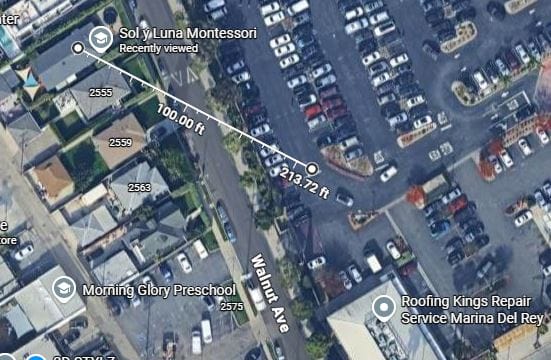
An appeal of an exemption under the California Environmental Quality Act (CEQA) for a Costco Gas Station project at 13463 Washington Blvd. was successful last Monday, March 9, as the city council revoked the exemption originally granted by the Planning Commission. As a result, the project must now undergo an environmental study process before approval. This review will determine its impacts on air quality, noise, and other factors, and could take anywhere from months to several years.
New information shifted the opinions of staff and several councilmembers from when the appeal was first considered at the Public Hearing on October 13, 2025. At that meeting, city staff were directed to evaluate the evidence presented at the public hearing, which led them to reverse their 2025 guidance and instead recommend that the City Council deny the CEQA exemption.
As currently proposed, the project would relocate the gas station at Costco to the west side of the lot and nearly double its size, from 16 fueling stations to 30. There would be 20 Electric Vehicle Charging stations to replace the current station on the lot’s east side. To make room for the larger gas station, the center would lose 56 parking spots overall.
The appeal, filed on behalf of Sol y Luna Montessori School, focused on the project's size and proximity to the school, arguing that these “unusual circumstances” made it ineligible for a CEQA exemption.
Upon further review, city staff determined that these factors constituted unusual circumstances. This conclusion was based on recommendations from the California Air Resources Board (CARB). While a 50-foot setback — the required minimum distance between a building or structure and a property line, street, road, or other designated boundary — is recommended for traditional gas stations, larger facilities, defined as those with a throughput of at least 3.6 million gallons per year should be no closer than 300 feet to sensitive land uses such as schools, hospitals, or residential areas.
Planning Commissioner Stephen Jones noted this during the Commission’s deliberation. He was one of two commissioners to vote no on granting the exemption at the Commission's July 24, 2024, meeting.
Costco’s current permitted throughput is 2.2 million gallons per month, but the facility is not expected to reach that output even with the larger facility, according to a response to the appeal. Even so, Costco’s gas stations pump far more gas than the recommended amount for a 300-foot separation from Sol y Luna and other sensitive receptors. The staff report attached to last week’s item also highlighted the enormity of the project: a typical gas station has just eight pumps, while Costco’s proposed station would have almost four times that number.
“There is a reasonable possibility that a significant air quality impact on sensitive receptors would occur due to the unusually large size of the proposed project and the proximity to two daycare and preschool facilities,” the staff report read.
Costco’s representation argued that potential negative health impacts were already analyzed in the required Health Risks Assessment, which found minimal negative effects. It also claimed Costco’s data shows that, though gas station use increased with larger facilities, the overall number of Costco memberships — which are required to use the stations — remains stagnant.
“While it is expected that there will be more trips to the expanded fuel facility than the existing facility, those trips are offset by the trips from the removed retail facilities,” the response to the appeal reads.
Presentations were not made at Monday night’s meeting, as the public hearing had already been closed and the consideration was under an action item. Deliberation last week was minimal, as most of the council did not have much to say in the face of the staff recommendation.
Councilmembers Albert Vera and Dan O’Brien relied on the city staff's recommendation to guide their decisions, leading them to shift from agreeing with the exemption at the Public Hearing to voting against it Monday.
“I lean on staff,” O’Brien said of this decision. “This is out of my expertise.”
Vera acknowledged the additional staff time required to prompt an applicant to undergo a CEQA process, which can take an average of 2.5 years to complete if an Environmental Impact Report is required according to a 2016 study by the California Legislative Analyst's Office (LAO), but said he felt it was necessary.
“We have a duty to the community and to our children,” Vera said last Monday.
Vice Mayor Bubba Fish cited an issue separate from the appeal as another reason to require Costco to go through the CEQA process for this project. He argued that the increase in fueling activity at Costco and, consequently, in Culver City does not align with the goals of the city’s General Plan, which includes an element focused on Greenhouse Gas Reduction.
“I think this is exactly the type of project that CEQA was designed for,” Fish said. “The process was designed to give us an objective analysis so we can evaluate it.”
The motion to reverse the Planning Commission’s decision passed unanimously. The project developers must now conduct an Initial Study as part of the CEQA process to determine whether the project qualifies for a Negative Declaration or be subject to a full Environmental Impact Report.
A Negative Declaration could result in the project being approved by the end of 2026, while an Environmental Impact Report could delay the project by several years.
Comments ()