
City Contribution crucial in CCUSD financial picture
Significant concerns over the future remain, but the $2.5 million contribution from the City of Culver City was credited as a key factor in the Positive Certification given to the First Interim Budget Report of the 2025-26 school year.
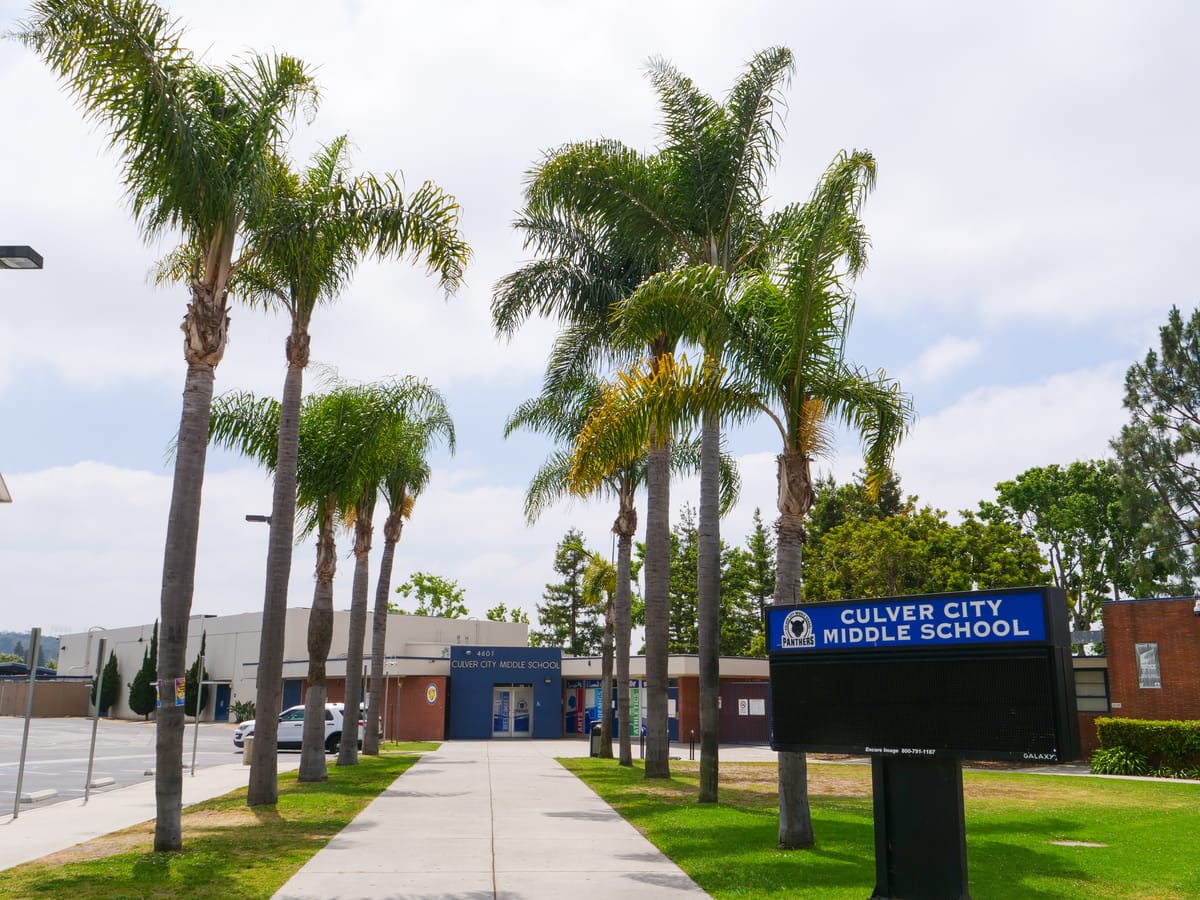
After a tumultuous budget cycle defined by significant cuts, the Culver City Unified School District’s First Interim Report received a Positive Certification at the Board of Education meeting held Tuesday night, due largely to the City of Culver City’s $2.5 million contribution. This allowed the District to barely meet the state-required 3% General Fund Reserve for the next three years, highlighting ongoing financial vulnerability despite the short-term improvement.
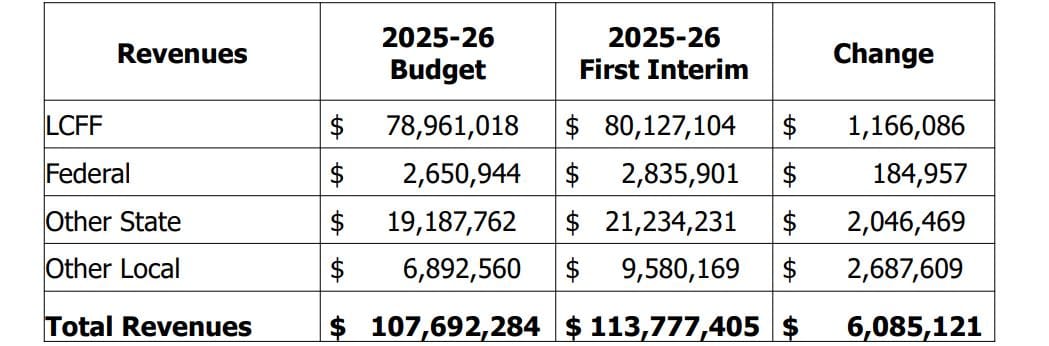
In her presentation to the Board of Education Tuesday night, Assistant Superintendent of Business Services Santha Rajiv explained that the city’s $2.5 million contribution was critical to stabilizing the District’s budget and helping secure the Positive Certification by improving projected reserve levels. While other factors contributed to the $6 million increase in revenue since the budget was first adopted in June, Rajiv underscored city funding as a crucial factor in this certification.
“If the District had not received the city of Culver City’s donation, we would not have met the 3% reserve requirement for 2025-26,” Rajiv said during her presentation Tuesday night. “Because of the city’s generous and timely $2.5 million contribution, we were able to meet the reserve requirement.”
An increase in the Average Daily Attendance — the metric used by the California Department of Education to determine financial allocations to school districts — for Transitional Kindergarten (TK) was another important piece of the budget puzzle that Rajiv highlighted in her presentation.
Transitional Kindergarten is a free program similar to preschool reserved for students who turn five between September 2 and June 2 of each school year prior to the 25-26 budget, which loosened eligibility requirements to make Transitional Kindergarten available to all four-year-olds and included almost $1.3 billion supplement to TK funding to increase the total in this year’s budget to $3.3 billion.
“The state generously subsidizes TK in particular,” Board Vice President Brian Guerrero said. “Every TK student brings in [approximately $5,000] to help pay for the extra aids and things that TK requires.”
However, Guerrero also noted that some metrics suggest that students are leaving the District as they advance through schooling, further eroding CCUSD’s much-needed revenue stream. According to Guerrero, about a quarter of students qualify for free lunch compared to 40% at the middle school, suggesting a loss of students between those levels.
“Fifteen percent of our kids are not suddenly getting wealthier,” Guerrero said. “Whatever we are doing, we are losing 15% of the kids, which, according to my napkin math, is around $500,000.”
The budget's health also relies on generous Cost of Living Adjustment (COLA) projections the state uses to compensate for inflation and other factors. The COLA is set annually by California’s Department of Finance as part of the state’s budget. Over the last 13 fiscal years, it averaged 2.45%, with a high of 8.22% in Fiscal Year 2023-24. The 2025-26 Funded COLA was set below this average at 2.3%, but District is projecting a jump to 3.02% next year, and to 3.42% in the 2027-28 school year.
There are still significant concerns with the budget after this year. The District is barely maintaining future reserve amounts, even with the increased COLA. This year’s reserves are expected to hover just above 5%, but the next two years project reserves just hundredths of a percentage point above the 3% minimum required by the state’s Department of Education for Positive Certification.
Some residents attribute many of the District’s issues to the number of students on permit attending Culver City’s public schools. Students are normally assigned to a school district based on the zip code where the family resides, but families can apply for an Intradistrict Transfer to allow their kids to attend schools outside their district. In this case, students on permit enrolled in Culver City schools contribute to the District’s Average Daily Attendance (ADA) and therefore increase state funding to CCUSD.
The proportion of Culver City-based students versus students on permit has been a hot topic, but Board Member Andrew Lachman hoped to quiet the noise and get a concrete number. While the number of students on permits at Culver City schools has been blamed for issues like traffic near schools, these students count towards CCUSD’s ADA, while those living in Culver City who are permitted to attend other districts or choose private schools take away from that metric.
According to Rajiv, students on permit account for 20-28% most years. That number was at about 25% last year, and went down to 21.2% this year.
But the bigger concern looming is the loss of funds from projects under the Redevelopment Agency's purview. When then-Governor Jerry Brown dissolved California’s Redevelopment Agencies, the property taxes diverted from schools into these agencies were funneled into the Redevelopment Property Tax Trust, and some of that money is put back into the District while the monetary obligations from the RDAs are being fulfilled.
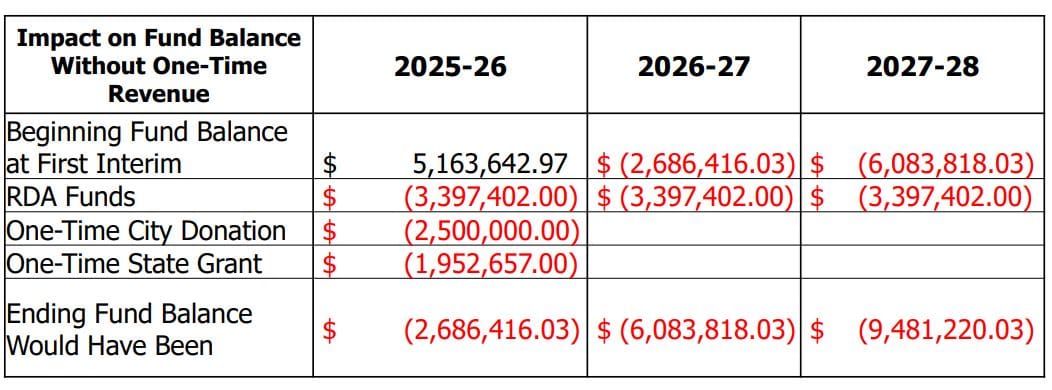
Obligations for several Redevelopment Agency projects were fulfilled in the 2024-25 school year, and the pass-through funds for the final RDA project connected to Culver City will conclude in 2028-29. This will leave a close to $3.4 million hole that CCUSD officials will have to fill, according to projections presented by Rajiv.
“Without this RDA funding,” CCUSD Board of Education Member Lindsay Carlson said, “we would be in serious trouble as a District.”
Rajiv also suggested that the District undertake a Fiscal Stabilization plan to find a long-term solution to replace the RDA funds. Without that money, Culver City receives among the lowest returns on its property tax in the state, making the dissolution of RDAs even more painful for the District’s future finances as new costs loom.
“We must also plan responsibly for future compensation increases,” Rajiv said, “ensuring that we support our workforce in a way that is financially sustainable.”
While the state requires such a plan when submitting a budget that does not qualify for a Positive Certification, Rajiv believes CCUSD should work toward maintaining a 5% reserve, which is considered the best practice by the District.
Board President Stephanie Loredo shared concerns about the budget process for the 2026-27 school year, noting that projections for 2028-29 without the RDA funds could prevent CCUSD from receiving Positive Certification for its budget.
“This is not the healthiest situation because we are not fiscally resilient enough to withstand an emergency,” Loredo said. “Those RDA funds were supposed to [supplement] our reserves above 3%, and that is not how we are using them right now.”
On top of the already precarious budget situation is uncertainty at the federal level, leading to what the district calls “unfunded mandates.” These mandates are laws passed by the state or the District that lack funding support. Special Education, which was heavily subsidized by the Federal Government until the current administration, has been one of the hardest hit areas in recent years.
Rajiv said the District spends an average of $22,000 per student who needs Special Education and other assistance, while General Education students' costs range from $10,000 to $12,000 per pupil.
“70% of our Special Education money is coming from General Fund dollars,” Rajiv said. “One of the reasons why our District is unable to balance the budget is because our needs for our students are higher and the services we provide are expansive.”
But Special Education is not the sole reason for the financial crisis, Board Member Lachman emphasized. He supported a position Carlson established during her comments, that the Board needs to adopt a future-focused investment mindset to correct the budget's current trajectory.
"We really need to be able to think bigger if we are going to make sure that we are going to seal up this hole," Lachman said.
Carlson lamented the need to weigh the needs of different student populations against each other and emphasized the need to secure a significant pool of additional funding to mitigate this and ensure CCUSD has the funds to fully support all students.
“Life as we know it in this District will change dramatically unless we pull in some additional funding through a parcel tax,” Carlson said.
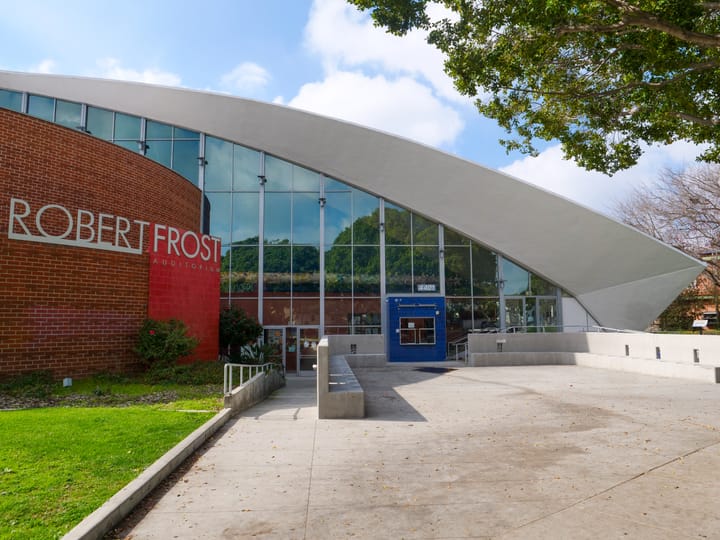
Placing a parcel tax measure on the 2026 ballot is one of the conditions for the $2.5 million city contribution, and there are efforts in both the District and the community to pass the tax. Carlson also suggested examining how to leverage CCUSD property, like the Robert Frost Auditorium, to increase the District's revenue stream.
 Christian May-Suzuki
The budget is a two-way street, with both revenues and expenses, and Vice President Guerrero noted that the District should also examine its spending. However, around 90% of CCUSD’s budget is allocated to payroll, and another 5% is reserved for overtime and other personnel costs. Positions added using one-time COVID-19 pandemic funds that have since expired have created a need to right-size.
“We know we need those positions,” Rajiv said of positions added using one-time funds, “I don’t think we adjusted our staffing...we have to have a closer look at our positions.”


Comments ()