
Council approves project to replace former Gun Store
The former Martin Retting Gun Store property at 11029 Washington Blvd. was purchased by Culver City in September 2023 to prevent another gun store from opening in its place
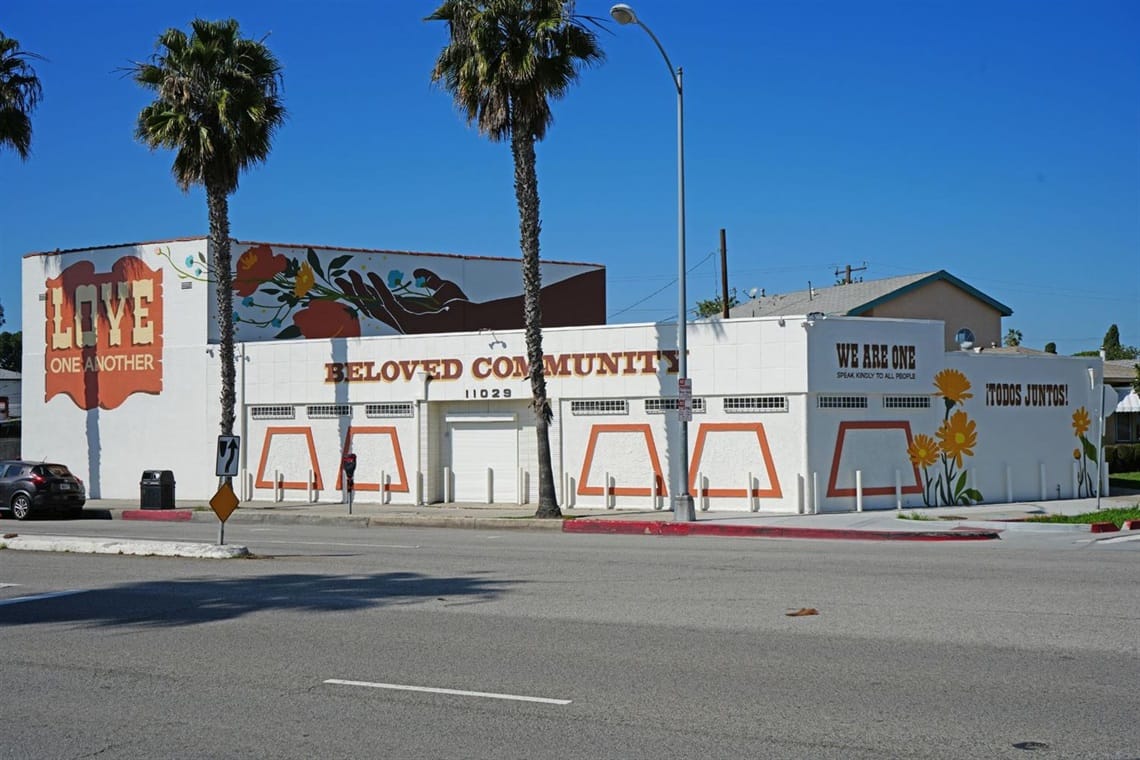
Culver City has decided the fate of the former Martin Retting Gun Store site.
At its meeting Monday night, the city council approved a 67-unit, 100% affordable mixed-use project to replace the former Martin Retting Gun Store at 11029 Washington Blvd., which the city purchased in September 2023 to prevent its continued use as a gun store. Since then, the city has reviewed proposals and community feedback to select the best use for the site.
Expanding affordable housing has driven planning in recent years. Culver City must plan for at least 3,341 affordable units by 2029 to comply with state law. This project targets residents earning between 30% and 80% of the area median income ($31,980–$85,280 as of July 1, 2025).
The proposal recommended by the Planning Commission, submitted by developer West Hollywood Community Housing Corp., was selected from five proposals presented to the Planning Commission last September. Before being considered by the Planning Commission, each site proposal was scored on a 100-point scale by staff, with emphasis on affordable housing quantity, development vision, and financial feasibility.
 Christian May-Suzuki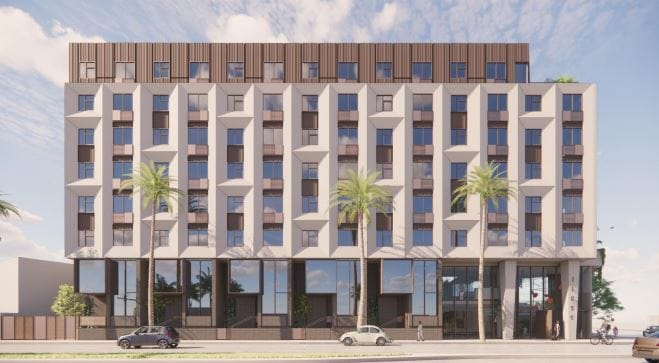
WHCHC was chosen for its extensive experience, with over 950 units in 24 affordable housing projects across four cities. Staff found its proposal strong in affordable housing offerings and design quality, awarding it the highest score.
Financing was also a key piece of the recommendation to the council, according to Planning and Development Director Mark Muenzer. While the retail element is limited, WHCHC’s history of successful affordable housing projects was a factor considered by staff and the Planning Commission in this recommendation.
“What particularly impressed staff was...they did a very good job in starting to talk about the financing of the project to ensure a timely and high-quality completion,” Muenzer said.
WHCHC has also employed a prominent Culver City-based architecture firm to build this project. Ehrlich Yanai Rhee Chaney Architects (EYRC) has been a longtime member of the Culver City community, having worked on prominent projects in the city, including the Culver Steps, the Stoneview Nature Center at the Baldwin Hills Scenic Overlook, and the Warner Building at Ivy Station.
While Councilmember Dan O’Brien and other council members supported the project, O’Brien specifically voiced concerns about the lack of parking, echoing points raised during the Planning Commission discussions. A nearby resident noted that public transit, namely Culver CityBus, serves the area well. Muenzer elaborated that the project's limited parking is intended to attract residents less likely to own cars, thus aligning with the city’s goals for this development.
“I don’t necessarily know if parking is going to be such a big issue given the target demographic and the part of Culver City it is located in,” resident Benjamin Seligman said.
Housing in the project will already be allocated preferentially to teachers, with the lot’s location near La Ballona Elementary school being a significant driver in the decision to purchase the lot in 2023.
WHCHC President and CEO Jesse Slansky further noted that developers could lawfully prioritize applicants who do not own vehicles, and such a preference would not discriminate against a protected class. O’Brien suggested exploring a vehicle-free resident preference to address parking concerns, but the council did not reach consensus, and the idea was not included in the final motion.
Parking options could change if the project incorporated a more traditional retail component. However, when City Manager Odis Jones questioned how this could be funded, Slansky was unable to provide specific answers.
“You can fit parking, of course, but it is incredibly inefficient,” Slansky said. “To get a meaningful number of spaces would be incredibly expensive, so we are trying to prioritize people over cars.”
O’Brien also suggested potentially replacing the artist loft with a retail component, which would allow the city to recoup funds paid for the lot. Councilmember Albert Vera suggested a model similar to Tilden Terrace, which also houses several retail spaces below 33 housing units.
“We got a lot of criticism for paying well above market for the property,” O’Brien noted. “With all of the new people coming to town, we need to be able to pay for things.”
An offer to modify the parcel’s zoning to accommodate more density was put on the table with the Request for Proposal (RFP) process, Vice Mayor Bubba Fish recalled. While no proposal attempted to take advantage of that, WHCHC is utilizing density bonuses to exceed the 35 units per acre normally allowed in the Mixed-Use zone where the project is located.
Fish also pointed out that without the work of previous councilmembers like Daniel Lee and Alex Fisch, who worked to abolish parking minimum requirements in Culver City alongside McMorrin, and of Representative Laura Friedman in doing the same for projects near transit during her time as a California Assemblymember.
“Without those decisions, a project like this would not be legal to build,” Fish said. “Now, this lot will have 67 affordable homes.”
Comments ()