
Dear Culver City: Controversy about students on permit at CCUSD
EDITOR'S NOTE: This piece was submitted by a source unaffiliated with Culver Crescent and does not confirm the opinion of The Crescent or its writers.
EDITOR'S NOTE: This piece was submitted by a source unaffiliated with Culver Crescent and does not confirm the opinion of The Crescent or its writers. Click here to view the full Dear Culver City disclaimer.
By Carolyn Libuser, PhD
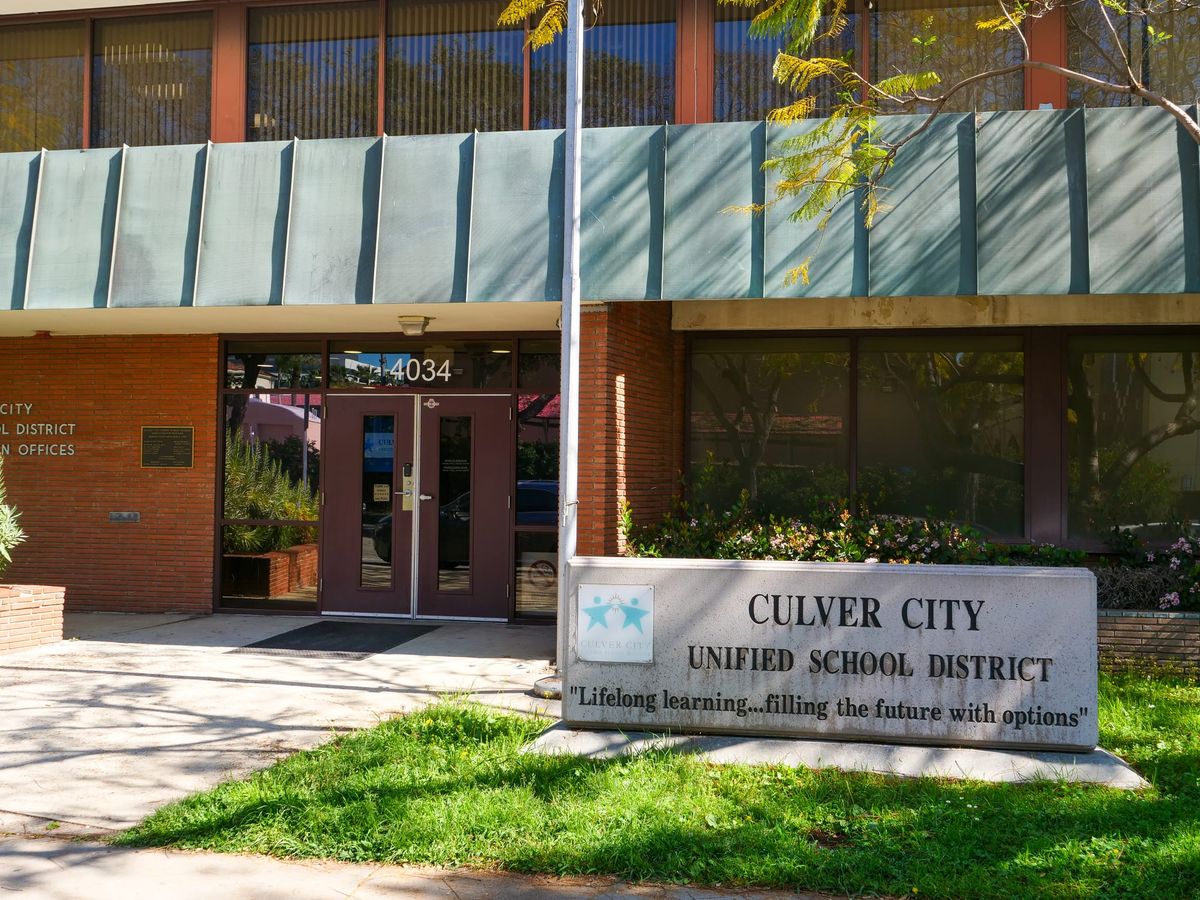
Recent controversy has surrounded students on permits in CCUSD. Individuals who dare to speak out about that topic have been censored and vilified in school board meetings and accused of racism.
Let’s take a look at the facts. First, the district doesn’t release information with respect to race or economic status for permit students. The district says this is to protect student privacy.
Second, it is claimed that there are students attending Culver City schools who are not on permit and who don’t live here. These are unauthorized students, and the claim is based on census data. Again, if in fact there are unauthorized students, there is no way to determine their race and/or economic status.
Third, some have said that the census data is highly inaccurate. The academic research says otherwise. In fact, an article published by the Public Policy Institute of California points out that the post-census evaluation found California to be one of the most accurate states. This was primarily due to California’s substantial investment to support the count.
According to the census data, as updated to 2024, there are about 5,494 children aged 5 to 17 within the Census boundary for Culver City, which also coincides with the district boundary.
As of January 31, 2026, K-12 enrollment in CCUSD is 6,282 students. The district’s most recent estimate is that around 22% of CCUSD students are on permit. That breaks down to 1,382 students on permit and 4,900 "resident" students.
However, based on data from neighboring districts, at most 70% of residents will actually enroll, which is equivalent to about 3,846 true residents. Some say the enrollment rate could be as low as 60%, since many residents enroll in private schools. If so, the population of true Culver City resident students would be about 3,296.
The discrepancy is not small — 1,054 resident students, or about 21.5% of the population, are unaccounted for by CCUSD if the resident enrollment rate is 70%. If the enrollment rate is 60%, that’s 1,604 students, or nearly 33% unaccounted for. They are not on permit, nor are they residents. This discrepancy says nothing about race or economic status. It is just the hard data.
This leads us back to the crux of the argument. What would CCUSD look like with many fewer permits (such as Beverly Hills, Manhattan Beach, and Redondo Beach)? If 3,800 verified resident students enrolled, the Measure O parcel tax dollars would go much further per capita. Every student at the high school would have a locker. Measure E dollars would go toward facility improvements rather than building additional classrooms (as is being done now). There would be one less elementary school (as there was in the 1980’s); El Marino opened in 1994.
It is legitimate to discuss this question, and it is one that should be part of the public discourse. Many make the argument that more students yield more ADA money and thus having permit students or even unauthorized students is a good thing. Do those numbers really add up?
CCUSD is on the cusp of severe financial distress. Its reserves are barely 3%, the state's required minimum. It is worth taking a look at every single option, including limiting enrollment only to residents, and projecting the financial impact.
Accusations of racism have no place in this discussion. It is a legitimate financial question.
Carolyn Libuser has a PhD in management from UCLA, where her training included statistics and data analysis. She worked at the Rand Corporation for 4 years, conducting classified research using statistical analytics applied to military logistics. Libuser was an adjunct professor at Loyola Marymount University for twelve years and has lived in Culver City since 1986.

Comments ()