
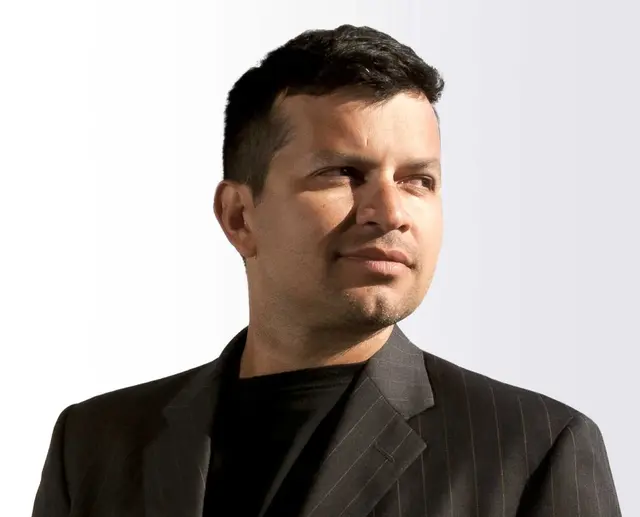
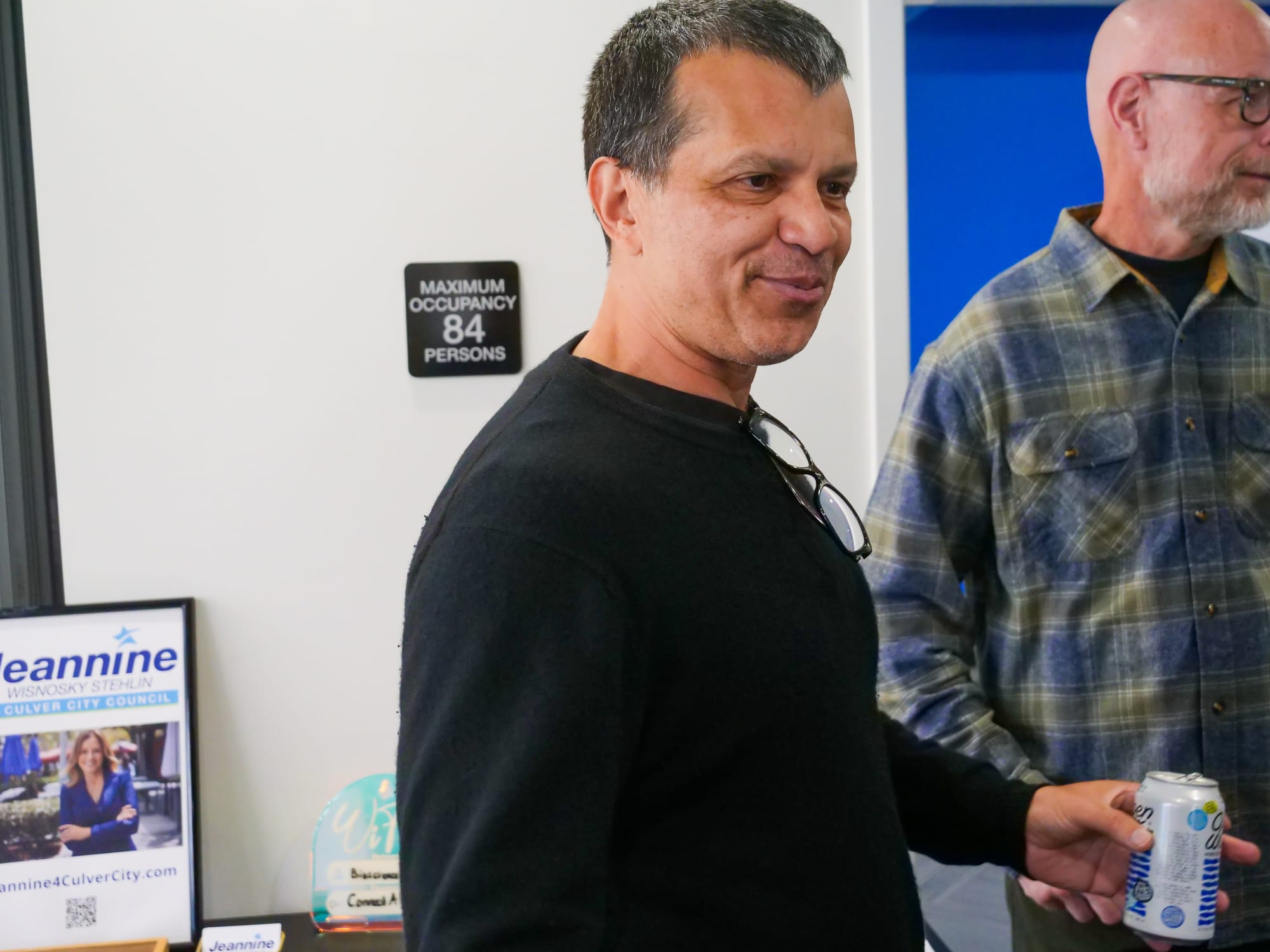
City Council Candidate Franklin Carvajal sat down with Culver Crescent Publisher Christian May-Suzuki to discuss his policies and positions for voters ahead of the 2026 General Election
The 2026 Culver Crescent Candidate Series is a key feature of our Voters’ Guide for Culver City residents for the November 3, 2026 General Election. As part of this series, candidates running for public office in Culver City sat down with Culver Crescent Publisher Christian May-Suzuki to share their thoughts and positions on the issues on residents' minds.
An edited transcript of these roughly one-hour interviews appears below. The length of these interviews was intentional, allowing candidates to contextualize their points and positions for residents less familiar with the scope of questions facing Culver City and CCUSD. For those more familiar with Culver City politics, key points and positions are highlighted throughout the transcript.
Franklin Carvajal, Psychologist
I have zero special-interest money from anywhere, and all the money put into this campaign is my own. I'm completely independent, so you don't have to worry about me being biased towards one side or the other.
Biography
Occupation
- Clinical Forensic Psychologist, Nurtureful Psychological Services, PC.
Hometown
- Caracas, Venezuela
Time Living in Culver City
- 10 years
Why You Came to Culver City
I moved to Culver City because I was dissatisfied with how the City of Los Angeles was being managed. I wanted to live in a smaller community where local government could be more responsive and accountable to residents.
City Involvement
- Financially supported Streets For All, Measure AA, and other school and community initiatives
Other Notable Involvement (Outside Culver City)
- Immigrated to United from Venezuela at 16
One Thing You Wish More People Knew About You
I consider myself the middle candidate—someone who evaluates ideas on their merits and seeks practical solutions. I want residents to have clear information about city decisions, public spending, and the choices facing our community. That is why I created my website, carvajalforculvercity.com, where I share my positions and explain my thinking through my blogs. I believe informed residents and transparent government make a stronger city.
Favorite Thing to Do in Culver City
I enjoy running to the gym, walking to downtown, the Ivy, and Platform, and stopping to talk with neighbors. Those everyday connections are a big part of what makes Culver City feel like home.
Campaign Website: https://www.carvajalforculvercity.com/
Opening Statement
My name is Franklin Carvajal, and I'm running for Culver City Council. I'm running because I'm disappointed with the two-party democratic system, left-left and left-right, and the way the Democratic Electoral Machine doesn't allow other people to enter the race.
The other reason is that I'm a resident, and there are a lot of things that affect me as a voter. I decided to actually become a candidate because, to tell the truth, because I'm sick and tired of the city not answering or not responding to my grievances. That's why you find me doing this, and I serve as the middle candidate.
I have zero special-interest money from anywhere, and all the money put into this campaign is my own. I'm completely independent, so you don't have to worry about me being biased towards one side or the other.
That makes me very, very different from everybody else, who already has funding coming from all these special interests.
On Culver City’s Fiscal Position
The weird thing is, there is all this free money people can get. There are grants, all these measures, and we get all of this money from all these tax sources to use later on. Fuel tax, sales taxes, property taxes — those revenues are collected by different levels of government. I don't know why we're not fully tapping into that.
My big worry is using the General Fund and bonds. The city can now use bonds without actually asking voters. That's a huge problem because you're putting people in debt without them actually saying yes to that.
We're talking around $50 million in bonds this time, and we're talking about paying it back over 30 years. I'll be dead, and they would still actually be paying for all these bonds.
That's my major concern: not bankrupting the city and using the free money instead.
On Priorities for Improving Culver City
One of my promises to my neighbors up and down my block, because that's where I got most of my signatures for candidacy, was to fix the sidewalks and curbs so people can actually walk and so pedestrians aren't at risk of injury.
The second thing that I'm interested in is the problem with the congestion of traffic and its high speed. It puts a lot of people in danger, particularly for people walking around.
I'm probably one of the only people truly trying to build SB 79 housing of 11 to 17 units. I live only a block from the Metro Station, but I need the city to help me with the fiscal side of that. The problem is that the city isn't actually helping people with these kinds of small developments.
I'm very worried about transparency. There is not enough voter education information on the website. Just like a credit card statement tells you everything, the city should have that place for voters. It should have exactly the same thing, and when you get a property tax bill, it tells you exactly and breaks down what you owe.
That's what the city should be doing, and that's a huge problem that I think we have. We've had about 11 complaints about fraud and abuse, so we need that transparency.
On Working with Residents
The problem is that we have created an in-group and an out-group. We have the left-left, and we have the right-left. The right-left is extremely conservative; they're not that far from some of the Republican kind of thinking and values. The left-left sometimes becomes extreme in its policies, so what happens is that they end up trying to force people to do things they don't want to do.
I'm trying to bring both sides together and find common ground so that we don't have to actually make people do things they don't want to do and try to get people to do things in a manner that they feel comfortable with and not forced to do it.
This is why people don't want to do the things that some of the council members come up with, because they basically feel forced into it.
I'm in the middle. I don't answer to anyone. I don't have special interests. I don't have Our Culver or Culver City Democrats United, Culver City Neighbors United. I don't have any of these things, so I don't have to actually worry about any of this stuff.
I can actually do the work that they cannot do.
On Better Overland, Sepulveda Connects, and the Mobility Approach
I'm always interested in this topic because people forget the third option: pedestrians. Most people walk; they aren't cycling, so we have to think about cars, pedestrians, and bicycles.
First of all, we need to focus on sidewalks because people walk. It's called the walk shed, so I want sidewalks that I can actually feel safe on. With bicycles, I find that there's a lot of controversy that doesn't need to exist to begin with, because there are cyclists who don't care. There are people who are going to ride between 5 p.m. and 7 p.m. when it's the most congested, and are going to go through the most congested areas and don’t care.
There are also some people who actually care. They are the people who say, "This is too dangerous. I want something done about this.” Then, there's a third kind of cyclist who just doesn't want cars. That's the ideological extreme component of this grouping, where they're talking about things like combining this with ideas of global warming.
Climate change is very real, but you can't just simply say that we're going to get rid of cars. I guarantee you, if you were to have only electric cars, they would still say they don’t want electric cars because they just want bicycles.
In my opinion, we have to get to that point where small streets should be created with a lot of bumps and a lot of annoyance so that only bicycles go through and cars don't, and have large arteries be just for cars.
But again, some people and some bicycle groups don't care, so you can't just lump everybody together.
On Jubilo Village and Building Affordable Housing
The problem was the left-left thought that they were going to get all this money from the government. They didn't, and what really got a lot of people upset was that the council went and dipped into our city savings. That's what was problematic about it.
Nobody really cares about you getting taxpayers' money we actually have out there and building things with it. People get upset when you start pulling from the city's savings, because if the city goes bankrupt, you lose everything.
Property owners lose everything because their house value goes down, and that's most of their wealth, and that was the problem with the Jubilo Village.
There's also maintenance and expenses that are going to have to be taken care of month after month after month. It looks like they will be able to cover that with the rents, but I'm not 100% sure.
With all of these projects, you don't know until 5, 10 years into the future.
On the Direction of Unhoused Services
I like to speak always about both my experience and the larger policy reality. I have spoken to people in the city, people who are actually in charge of these projects, because I wanted to find this information and understand it myself.
The problem before was that, while it was a good idea, they had no accountability, so there was no plan to transition individuals from one type of housing to another.
People became dependent and were just drinking, doing drugs, and just hanging out, because if you give them everything in housing and all this other stuff, it makes sense.
That was a mistake, in my opinion. You have to plan from the point of entry to the point of exit, and how to move those people efficiently.
There are different kinds of groups of people that actually are difficult to help. I think the city is doing an excellent job with the unhoused. From my own experience, we had people staying and camping around the LA Metro Station on National Boulevard and Wesley Street, and I saw a correlation between that and cars being broken into and similar things.
Drug addiction is real; these are not evil people. I'm a psychologist, so I understand all of this, and it's not their fault. When they're in certain locations, and they aren’t treated, or we're not doing what we're doing, people complain that you don't do anything about it and suffer. But then they complain when you want to put money into it.
You have to pick one or the other. I'm very happy that unsheltered people were moved, they are being helped, and the money is being spent the right way.
On SB79, Single Family Neighborhoods, and Balancing Density
This is something that has affected me personally. I live on Wesley Street, and I want to build these seven-, nine-, or 10-story buildings all around much of Ballona Creek, which is going to probably double the density.
I'm close to the Metro Station, and I have a lot that can actually be built out, but I have families on each side. One of them built an ADU, and there were no problems with that. What I'm starting to realize is the city has zero accountability about the ADUs. They haven't been able to figure out where the ADUs are.
How is it that they don't ask these people to at least provide some kind of affordable housing for some of these places, and then provide some kind of incentive for them to actually provide affordable housing?
A lot of them are Airbnbs and so forth, so they could have actually incentivized ADUs to become affordable housing if they wanted to, as opposed to having these dense, huge things. I'm building it because it's needed.
The left-left wants it. They are actually pushing for it, and I understand that now they're kind of worried about the density and the single-family housing.
But guess what? Newsom and the state just don't care about that. There's no way to stop me from building, no city standards, no ordinances, nothing. It's like a dictatorship of the state over the city. I can build 11 to 16 units, and I have single-family houses on both sides.
This is part of the left-left agenda, and now they want to say, "Oh no, we want to redistribute the density because of this, that, and the other.” But that's not what they were saying before, and I'm waiting for the money for them to help me with their money to build close to the station.
Hopefully, other people will do the same thing.
On Park and Public Space Improvements
We were just at the Hispanic Heritage Month Celebration at Tellefson Park, but he was a huge racist, and I want to change the name of the park. If you know the guy's history, you will come to realize that, so my first thing is to change the name of all these parks named after people who were racist and so forth.
That park also had no shade in the middle, and people were all off to the side. I was told they're actually fixing it. They're actually adding more trees to it and some art things to it, but we do have the money to actually fix all of these parks.
I'm totally pro park, 100% pro parks. I grew up very poor, and parks were a place where I used to go to have a place to have recreational activities and be outside of the city and so forth. Anything that has to do with parks, I'm fine with that. I understand Bill Botts is expensive, but at the end of the day, it's going to be worth it.
It's a very nice location, and I think it really helps people who have no income access all of these other things, like restaurants and the Shay Hotel, where we're having this conversation.
On the Introduction and Use of New Technology
Flock cameras are the right-left’s love child. The right-left loves these things, so I had to have a conversation with them. Obviously, I had to go and look into this more because they continue to tell me how great they are.
What I found out was that the federal government can actually issue warrants and get Flock to give them the information they want without you knowing.
Suppose the federal government just doesn't like you; they can easily come up with some kind of crazy scheme to actually get whatever information they want and say that it is private and they can't tell you or anyone else, so the city is not actually able to ask them what it is they know. How is the federal government actually asking, tapping into these things?
Even if the city asks them, the federal government can claim it's top secret, so that's the problem. It is the problem of the highest of the highest levels of authority, and what they can and cannot do.
I'm okay with finding criminals and all the stuff that the cops are doing in the city. All the ghost guns and the other stuff that they have found is awesome.
But the possibility that Big Brother will use this in court for the wrong purposes is still a problem.
On City Council Meetings and their Structure
Terrible, I give it an F. First of all, people are already tired, and you want them to sit there for seven hours. You should spread these things throughout the month and have them one to two hours at a time. That actually helps a lot of people to join the conversation.
It is anti-democratic to run the council meetings the way they're running right now. I have all the time in the world, so I can follow it, and I have a website that records the city council meetings and can explain a lot of these things that they're actually up to. Why did I do that? Because it creates transparency.
Now, you can actually go in there and not have to take all this time out of your day. I'm glad that I'm actually the fifth candidate because now I'm actually getting people in the city to compete and actually to do things well. They definitely need to continue to change these meetings.
On the City’s Readiness for the 2028 Olympics
Well, if you think the city is dangerous right now for pedestrians and bicycles, just wait until the Olympics come. We have all these people talking about how much they love bicycles, pedestrians, and all this other stuff, but we have to have a plan for that. What are you going to do?
These are people that are from other countries. These are people who are from other states, and they're going to be driving and using all these methods of transportation. You need to actually then start asking yourself, “What are you going to do to protect the city and the residents?”
Forget the Olympics and the money it's going to bring; let's talk about the residents. This is going to bring money, but the residents are going to have to start thinking about how they're going to protect themselves.
I don't want to have 10,000 cars going down Wesley and people parking there illegally, and not having enough parking enforcement to make it so I am able to actually find a space on my street.
That's what happens every time there is a huge event.
On the Importance of Making Culver City a Welcoming and Inclusive Place
I'm an immigrant who came from Caracas, Venezuela at age 16; that answers the question, right? It’s immensely important.
I think they're doing an excellent job. I love all of the diversity of all types within the city, and I hope they continue. I'm a diversity baby, a DEI baby. I would not have two PhDs and have all the wealth that I have without it. That's just a fact.
It's not because somehow they wrote me a check or took the test and defended my dissertations right for me. It was because they did all that stuff with the effort, but I needed access to it, and that's how it happened.
On Vote 16 and How to Support Healthy Civic Engagement
I think a lot of the fear around Vote 16 is catastrophizing, focusing on the worst-case scenario. You let your kids use social media, but don’t want to let them vote because you're worried about their mental health? Give me a break.
Do you know what a lease bond is? No, right? The first thing we need to do to support civic engagement is explain these things as simply as possible. If you're going to explain lease bonds, you have to tell the person that we're borrowing money, and we're using properties we own as collateral, and if we don't pay that bond, that property goes to whoever has it.
That's plain language, and the problem that I find with a lot of these initiatives is they are just all disguised with all these technical terms — they're not telling people straight out what all this stuff means.
Look at half the stuff that has to do with how to get free money, and it's like trying to read Klingon. State tax credits and this, that, and so many other technical terms. Voter education begins with making it as simple as possible, and the reason I have a website that translates it via AI is that AI has been instructed and prompted to make it as easy as possible to answer the questions.
That's actually part of the prompting in it, and that's how you actually begin with it, and people can actually then continue to ask questions, and because AI has already been prompted to respond as simply as possible, it continues to actually explain things in a way people can understand.
A website that does that, you know, can actually help a lot of people, you know, whatever they want to go and just become educated people. There should be no reason that when it's time for somebody to vote, they shouldn't be educated.
On How He Would Like His Potential Tenure to Be Remembered
I want people to know you can be an orphan without a dad or mom, and you can come into this and do it. I created blogs that chronicle everything I have done and what I learned from it.
Now, you have an easy roadmap for anybody who wants to run. You don't have to have the left-left or right-left machinery. They are kind of like mom and dad bringing you into something. They give you the money, the mentoring, the support, the referrals, and the voters. I want people to know that there's another way to do this.
I also want people to know that instead of wasting $10,000 to $15,000 on flyers and all this nonsense, why don't candidates just ask people where they want this to go, and you just donate.
People are not going to know you as much. Fine, but you have the satisfaction of actually contributing to the community, putting the money back into the community.
That's what you want to show. You want to show that it doesn't matter whether you win or not. You're actually putting this stuff all into the community. I'm looking for high school students to be my campaign managers. I'm not paying a $10,000 or $15,000 campaign manager. That's just crazy.
One way or another, I'm satisfied with the meaning of this campaign, and I'm actually learning. I have a blast and give something back to the community, as opposed to actually taking all of these donations and wasting them on all these flyers, and then you have these people talking about global warming, and recycling, and other climate concerns. It's just crazy.
Closing Statement
If you want more of the same, vote left-left or left-right. If you want something different, and you want somebody who actually listens to you and who doesn't have to listen to special interests, then go ahead and vote for me.
I have nothing to really lose in terms of answering to you, to the voter. I'm only accountable to the voter. That's it. I was a resident and a voter, and my grievances were not answered. Now, I'm here trying to represent those people who have the same frustrations, and there are a lot. I want to respond to your grievances and do my best to actually do something about it.
An example is that I asked the city about sidewalks. They told me it was too expensive. Well, it only cost $10 million. You can actually get that money from somewhere freely at this point in time. For bicycles, with cars going too fast, I asked, “Please put some lights here and there,” and the response was, “No, we want the cars to go as fast as possible because we want traffic to move as quickly as possible.”
It was a never-ending set of grievances that led me to the point where I was like, "This is ridiculous. I'm just gonna go ahead and do it.” I want to show people that it can be done, and for other people to actually know that if they get as frustrated as I do, then they can actually go into it.
That's the only way that's gonna get the left-left and the right-left to start answering questions, to start thinking to themselves “there could be a guy out there like this guy, Franklin Carvajal, that is going to come out of nowhere with his own money, and he's going to start messing up everything for us.”
The plan is for them to actually wake up and start doing things differently, and stop trying to push people out of the system. I was asked twice not to run, and that's completely anti-democratic. So let people in.
The city should find ways to increase the number of candidates and help them, mentor them into a democratic system, instead of insulating everyone into these two camps of two and two every single time for the rest of their lives. That's what the city should be doing.

Comments ()