
CCUSD making final adjustments to cell phone policy
The policy, mandated by California law through Assembly Bill 3216, outlines limitations on students' usage of cell phones and other mobile communications devices at Culver City Unified School District sites
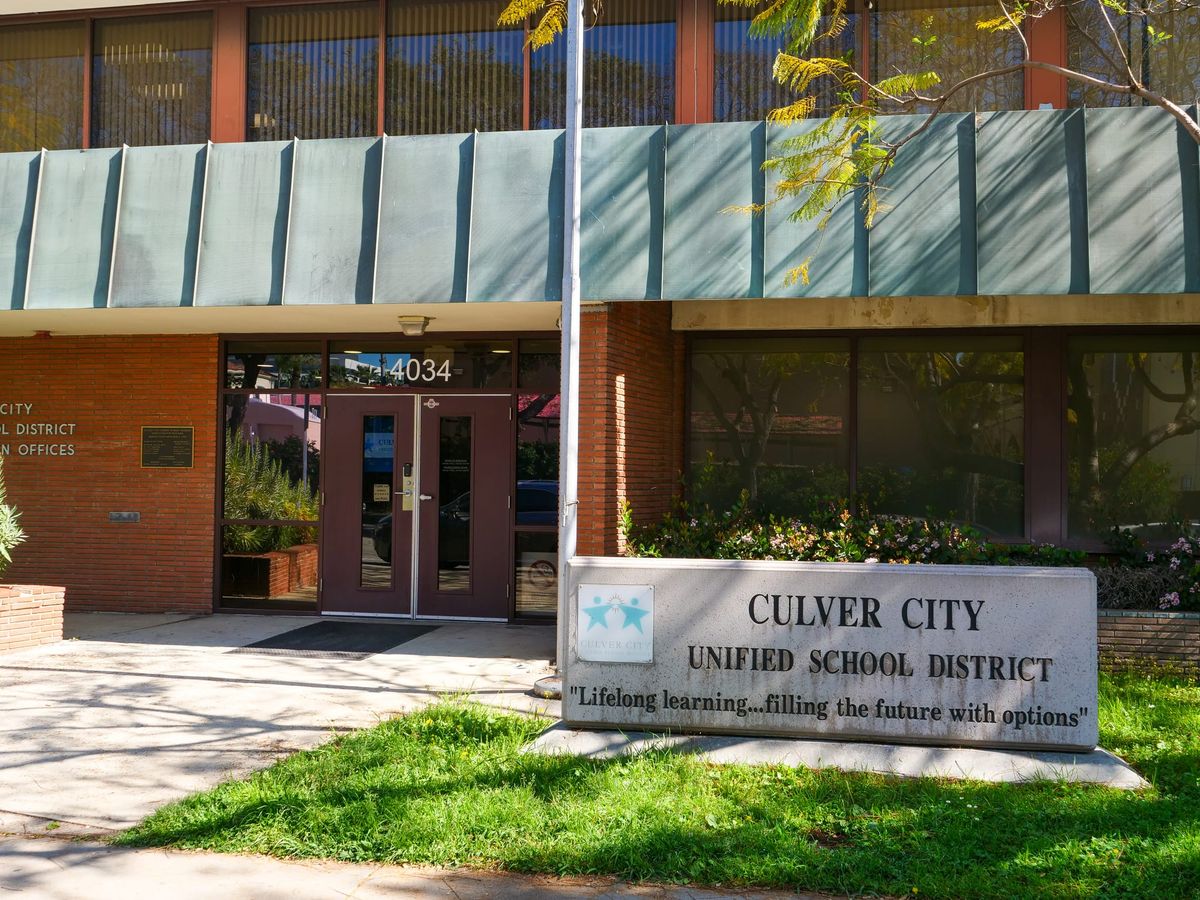


The Culver City Unified School District is finalizing the details of its new Mobile Communications Device Policy as part of compliance efforts with a new state law. Assembly Bill 3216 requires public school districts to implement a policy limiting cell phone use, and CCUSD will use an “away all day” policy rather than external resources like Yondr pouches to minimize mobile phone activity during school days.
A movement to encourage minimal phone use at schools — Culver City Families for Slow Tech — has emphasized the benefits of keeping students off their mobile devices for the day. Students who are restricted from phone use during school days are less exposed to external factors like social media, the overuse of which is linked to increased rates of anxiety, depression, and loneliness for students, according to research cited by the group.
Many of the broader aspects of the policy were established when it was initially approved at the June 23 Board of Education meeting. The way in which the policy will be executed — keeping devices off or in silent mode and stored in backpacks or site-specific designated areas — the disciplinary actions associated with violations, and the exceptions to the policy have all been established and approved by the Board of Education ahead of the July 1 deadline set by AB 3216.
The policy dictates that “students shall not use smartphones or other mobile communication devices while at a school site or under the supervision and control of a district employee,” except in the case of emergency or as required by a medical need determined by a licensed physician, an Individualized Education Plan (IEP), Section 504 disability accommodation plan, or other legal requirement.
There will be a multi-tiered disciplinary process at all levels, but the progressive responses at the high school level will be stricter than those for younger CCUSD students. Devices may be temporarily confiscated upon the first violation of the policy at all levels, but elementary and middle school students will receive an additional reprieve from escalated responses that violators at Culver City High School will receive following a repeated offense.
Administrator conferences, behavioral or support plan development, and other intervention measures may be utilized for high school students who violate the District mobile device policy multiple times. For students at the elementary and middle school level, these interventions are reserved for those who violate the policy three or more times.
Other examples of this policy show implementation will take time and may not initially provide the results parents are expecting. A study released in April 2026 entitled “The Effects of School Phone Bans: National Evidence from Lockable Pouches” showed that disciplinary actions against students escalate dramatically during the year of implementation.
“In the first year after adoption, disciplinary incidents increase, and student subjective well-being falls, consistent with short-term disruption,” the paper’s abstract reads. “However, effects on well-being become positive in later years, and disciplinary effects fade.”
Mixed results have been observed in analyses of the policy’s impact on academic performance. A 2013 study on the impacts of mobile phone usage, cited by Culver City Families for Slow Tech, concluded that several positive outcomes were directly correlated to reduced mobile phone use, including an increased ability to recall detailed information from lectures and a 1.5-letter-grade improvement on a multiple-choice test administered as part of the study.
On the other hand, the 2026 study showed negligible increases in test scores over a three-year period following adoption, with the largest increase being a 0.9-percentage-point jump in high school math test scores. On the other hand, middle school test scores fell slightly, which researchers argue can be partially attributed to a lack of impulse control among younger students and other factors.
“Younger students may have more limited impulse control, making them more likely to substitute toward other disruptive behaviors when phones are removed,” the 2026 study reads. “Differences in the magnitude of phone use reductions may also contribute: in our data, phone activity declines more in high schools than in middle schools, so middle schools may bear the costs of introducing and enforcing the restriction while generating smaller benefits.”
Implementation and enforcement are a concern, as Board Member Lindsay Carlson pointed out at the June 23 Board of Education meeting where the policy was officially adopted. She argued that having these discussions over the summer “feels late and not super inclusive of the educators of classified staff,” who may be tasked with enforcing the policy.
The specifics related to enforcement at individual school sites and the "day-to-day operations" associated with the policy were expected to be finalized by the end of last week for inclusion in student handbooks for the upcoming school year, Superintendent Alfonso Jiménez said at the July 14 Board of Education meeting.
“Schools are making their final edits with regard to implementation,” Jiménez explained.
District officials did not respond to a request for additional information on policy implementation at the time of publication.
View the full policy approved in June here.



Comments ()