
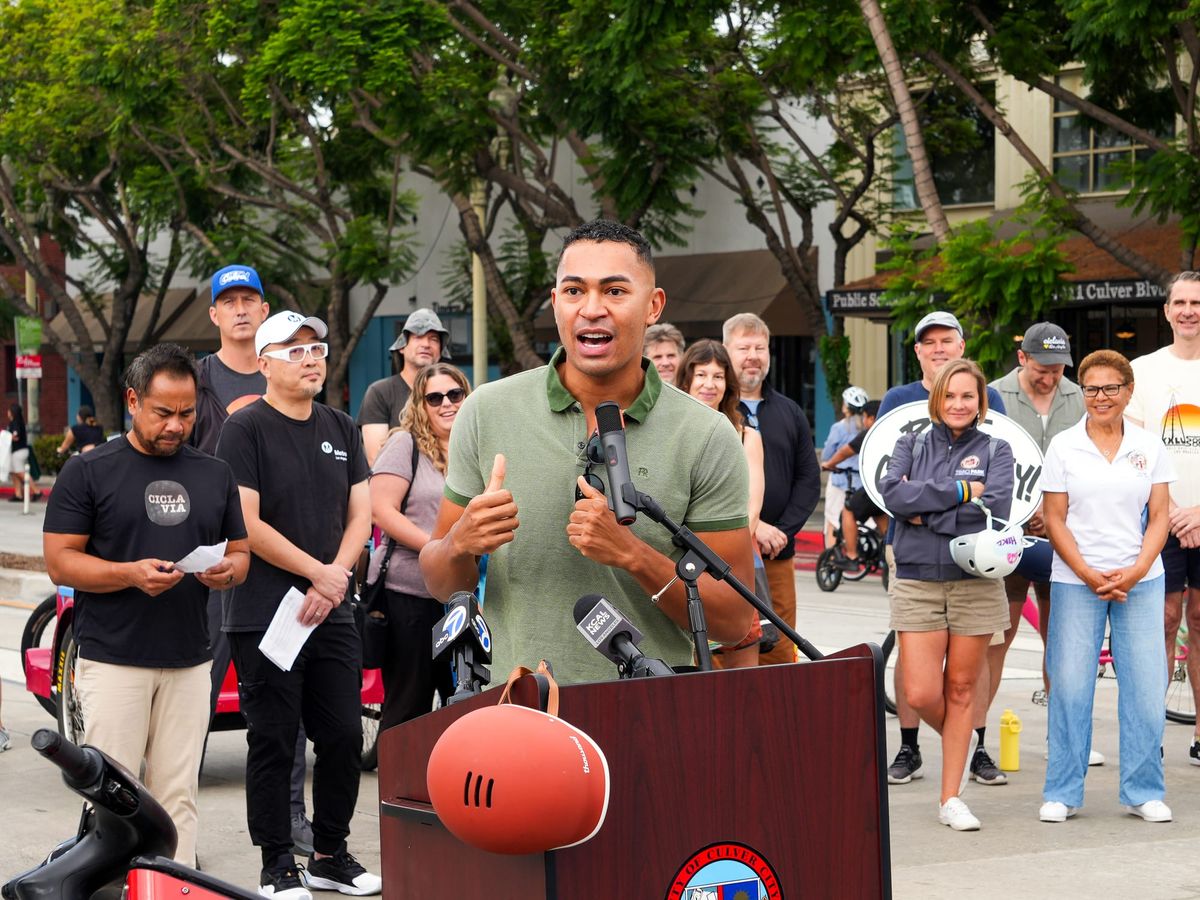
Culver City Unified School District Board of Education Candidate Triston Ezidore sat down with Culver Crescent Publisher Christian May-Suzuki to discuss his policies and positions for voters ahead of the 2026 General Election
The 2026 Culver Crescent Candidate Series is a key feature of our Voters’ Guide for Culver City residents for the November 3, 2026 General Election. As part of this series, candidates running for public office in Culver City sat down with Culver Crescent Publisher Christian May-Suzuki to share their thoughts and positions on the issues on residents' minds.
An edited transcript of these roughly one-hour interviews appears below. The length of these interviews was intentional, allowing candidates to contextualize their points and positions for residents less familiar with the scope of questions facing Culver City and CCUSD. For those more familiar with Culver City politics, key points and positions are highlighted throughout the transcript.
Triston Ezidore, Governing Board Member, Culver City Unified School District
I'm proud of the progress I've helped advance, and I'm clear about the work ahead: improving reading and math, protecting classroom funding, retaining great educators, strengthening mental health support, and preserving the arts and career opportunities that help students find their purpose.
Biography
Occupation
- Sales, West US Fleet Electrification Company
Hometown
- Culver City, CA
Time Living in Culver City
- I’m a son of Culver City. I grew up here, graduated from our public schools, and moved back to continue fighting for the community that raised me.
Why You Came to Culver City
My family came to Culver City for El Marino’s Japanese immersion program and because of the district’s historically strong record of educating Black students. We came for the schools, and this became the community that raised me.
CCUSD / City Involvement
- CCHS Graduate
- CCUSD Equity Advisory Committee
- CCUSD Positive Behavioral Interventions and Supports Committee
- CCUSD Sexual Harassment and Misconduct Committee
Notable Endorsements (Full List Here):
Culver City
- Culver City Mayor Freddy Puza
- Culver City Vice Mayor Bubba Fish
- Culver City Councilmember Yasmine-Imani McMorrin
- Culver City Councilmember Albert Vera
- Former Culver City Mayor Meghan Sahli-Wells
- Former Culver City Mayor Alex Fisch
- Culver City School Board President Stephanie Loredo
- Culver City School Board Vice President Brian Guerrero
- Culver City School Board Member Andrew Lachman
- Former Culver City Unified School District Superintendent Dr. Brian Lucas
- Former Culver City Association of Classified Employees President Debbie Hammie
Los Angeles
- Los Angeles County Sheriff Robert Luna
- Los Angeles County Assessor Jeff Prang
- Los Angeles County Supervisor Holly J. Mitchell
- Los Angeles County Democratic Party
- LA/OC Building & Construction Trades Council
California
- California State Superintendent of Public Instruction Tony Thurmond
- California State Treasurer Fiona Ma
- California Lieutenant Governor Eleni Kounalakis
- California State Senator Lola Smallwood Cuevas
- California State Assemblymember Isaac Bryan
National
- U.S. Senator Adam Schiff
- U.S. Congresswoman Sydney Kamlager-Dove
- U.S. Congressman Ted Lieu
- Sierra Club
One Thing You Wish More People Knew About You
I think people know I am outspoken, but they might not realize how much listening happens behind that. I take conversations home with me. Even when we disagree, I think about what someone said and whether there’s a need to reconsider.
Favorite Thing to Do in Culver City
Probably doing the Culver City Stairs on a Sunday morning, then grabbing a latte at a local coffee shop.
Campaign Website
https://www.tristonezidore.com/
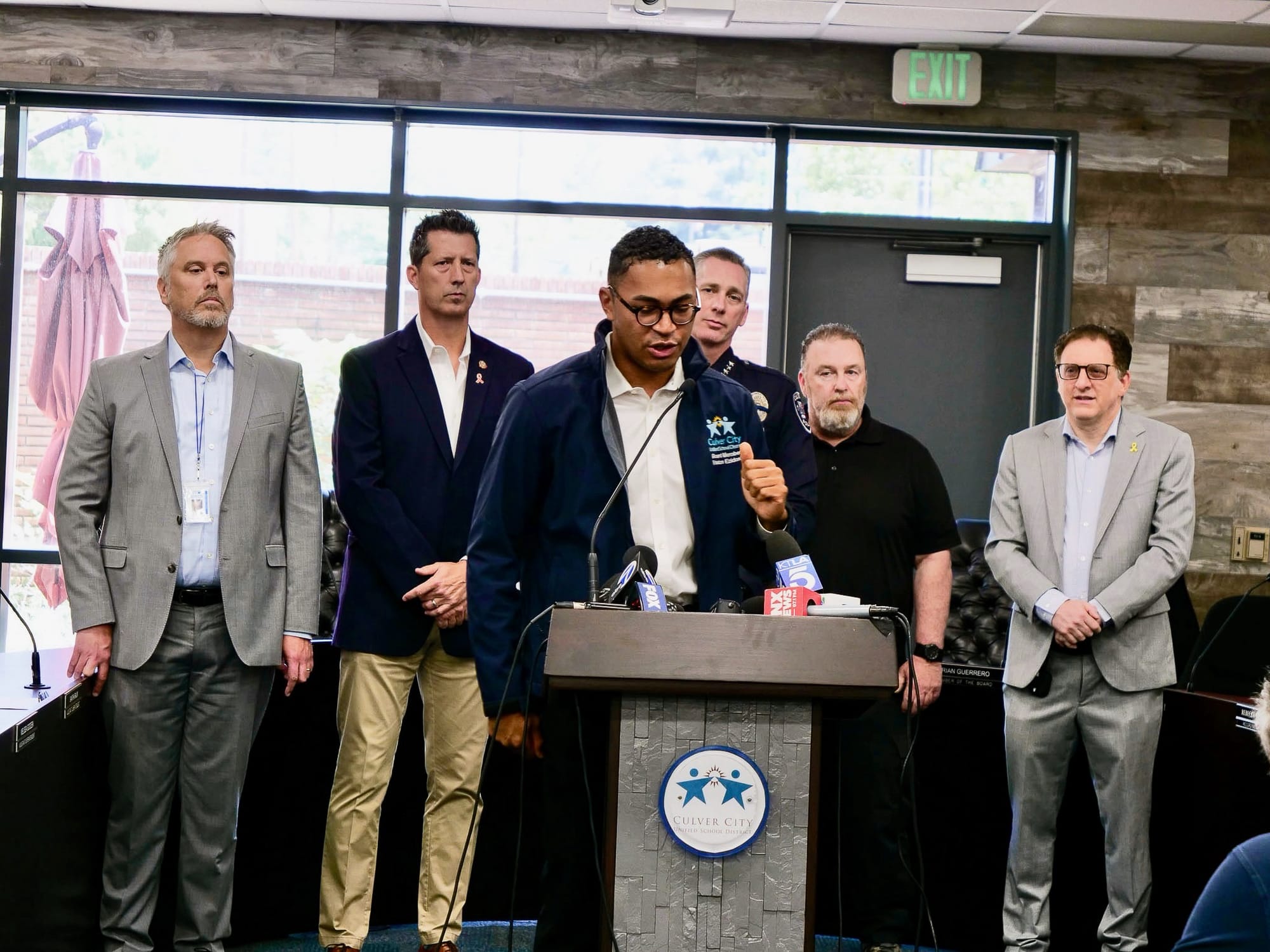
Opening Statement
I am Triston Ezidore, proud graduate of Culver City Schools, and this work is deeply personal to me. I know the difference that a great teacher, a supportive adult, and an opportunity to discover your talents can make. I want every student to have those experiences.
When I first ran for school board, I promised to ask difficult questions for students who too often go unheard, and turn our values into action. During my tenure, I've championed the Black Student Achievement Plan, stronger mental health support, and investments in arts and career pathways.
We have some of the highest graduation rates in the state. It's increased 3% to a total of 97.2%. We've never had more advanced scholarly pathways, and I've worked to strengthen our partnership with the city and advance the modernization of our aging schools.
I also want to recognize that families and educators are experiencing real challenges. Teachers need basic supplies. Students need timely support. Families deserve clear communication, and our community deserves confidence that every public dollar is being used responsibly. I'm running for re-election to build on our progress and adjust those challenges head-on.
My priorities are improving reading and math achievement, retaining great teachers and staff, protecting classroom funding, and ensuring every student feels safe, welcomed, and challenged. I want strong arts and career programs, reliable student services and facilities projects delivered with transparent budgets and clear accountability.
Achieving those goals requires honest financial planning, meaningful collaboration with educators and families, and the willingness to evaluate whether our decisions are working. I want to leave our schools stronger than I found them and ensure that every student graduates with the skills, support, and opportunities to build the future that they choose.
On the Parcel Tax and Increasing Revenue in CCUSD
I believe a property tax is an appropriate and necessary part of a long-term funding strategy, provided we're really clear about what residents are paying for and are accountable to the results.
There's some confusion with the figure. They're saying Measure AA would provide $18 million, but it's around closer to $14 million annually for 10 years with oversight and restrictions on its use, including a prohibition of administrative salaries and other restrictions.
These protections matter, but when we talk about and in the context of the question of “is this the best funding option,” it's important that we as a community, and as a district, do not say that all of our financial problems will be solved by just a parcel tax or a general tax.
Is this the best option for us right now? Yes, but we can and must be able to chew gum and walk at the same time.
We owe it to the community to also look at our district spending, because we know that additional revenue does not relieve us of all the responsibility to manage the money that we already have. We need to be reviewing contracts and purchasing on a routine basis to reduce avoidable operational costs and improve attendance.
We need to strengthen enrollment, pursue grants, deepen our partnership again with the city as we've done and have gotten money from doing that and work with our community organizations.
I'm going to take this as a personal responsibility as the only candidate in this race who's been endorsed by every elected person that represents Culver City at every level of government.
We also need to be advocating for better school funding at the state and federal level, of course. I would distinguish recurring revenue from temporary help, as we've seen grants come in.
We understand that grants are one-time contributions that can help us make investments, but we also need to be building permanent funding streams and make commitments to staff based on that funding.
On Creating New Positions or Bringing Positions Back
It's super important to bring positions back, and it shouldn’t be a surprise to anyone that my first priority would be positions that directly affect students' ability to learn and receive support. To me and many others, counselors and mental health clinicians are super important and top of mind.
Classroom teachers are important because staffing pressures affect instruction. Special education support staff and intervention staff helping students with reading and math is also crucial. I also would evaluate the staffing that makes our arts and career programs possible.
It's important to understand that a position's impact is not always obvious from the title. That is why I've always asked for responsibilities under job titles when making cuts, as well as a clear plan for absorption.
It's really hard for me to answer specifically about the state of our mental health services because the board, as it stands right now, hasn't yet gotten the plan for responsibility absorption. We know that in the past few years, reductions have been necessary. but that doesn't mean that the need or the responsibilities that these positions were doing every single day is not important.
If these responsibilities have been absorbed and the work is still getting done because there has been overlap in responsibilities and reductions were necessary, that's one thing.
But it's my opinion that in the positions that I've already laid out — counselors, mental health clinicians, classroom teachers, special education support staff, intervention for reading and math — I'm not convinced that those responsibilities are being absorbed anywhere, and that for me is what would be top of mind.
It's also our responsibility to make sure that we ask for a public restoration plan from our district for the community to understand the student need and the full cost of positions with sustainable funding sources. The previous board did the best that they could, but the challenge with bringing in staffing with one-time money is that when the dollars go away, we're on the hook out of our General Fund.
The question is how can we bring in positions responsibly and make sure that we are tying it directly to long-term funding strategies?
On the State of Mental Health Services in the District
Adequately equipped and doing the work are two different things. We have an important foundation, including school counselors, school-based mental health professionals. We often partner with San Diego Youth Health Center, and we help connect families with outside services.
Those are all meaningful resources, but when I think about whether or not I would declare the system is adequate, I wouldn't do it simply because these services exist. I like to examine systems and barriers. In my humble opinion, any barrier or any extra step between a student being connected with mental health resources means it is not adequate enough.
Even though the pipeline exists and the partnership exists and the standing MOU exists and the services are there, having to refer out for some students is detrimental. We need to be asking these simple questions to understand whether a student can actually receive appropriate help when they need it.
There are many questions we need to be asking. “How long are students waiting?” “Are referrals resulting in care for families?” “Do they know where to go?” “What's the drop-off rate between students seeking help, getting referred, and not actually going?” “Are elementary school students receiving enough support?”
I would advocate for manageable caseloads, a clear referral process, earlier interventions, and stronger coordination with community providers. We should report on access and response times while protecting student privacy, but that's information that the board needs to know, and that the board should be sharing with our community.
Teachers also need training and support to recognize concerns and connect students with professionals.
On the State of Diversity, Equity, and Inclusion in the District
Diversity, equity, and inclusion are essential to the educational mission. Students need to know that they belong, that adults will protect them from discrimination, that their background will not determine the opportunities available to them.
What's important for us to always understand is that these systems were not built for certain students to thrive in. With that basic understanding as the foundation, there is no way that you can effectively do this job and say that it is not important that all policy, all budgets, everything that comes through the board's desk be looked at through a DEI lens. That's why I championed the Black Student Plan.
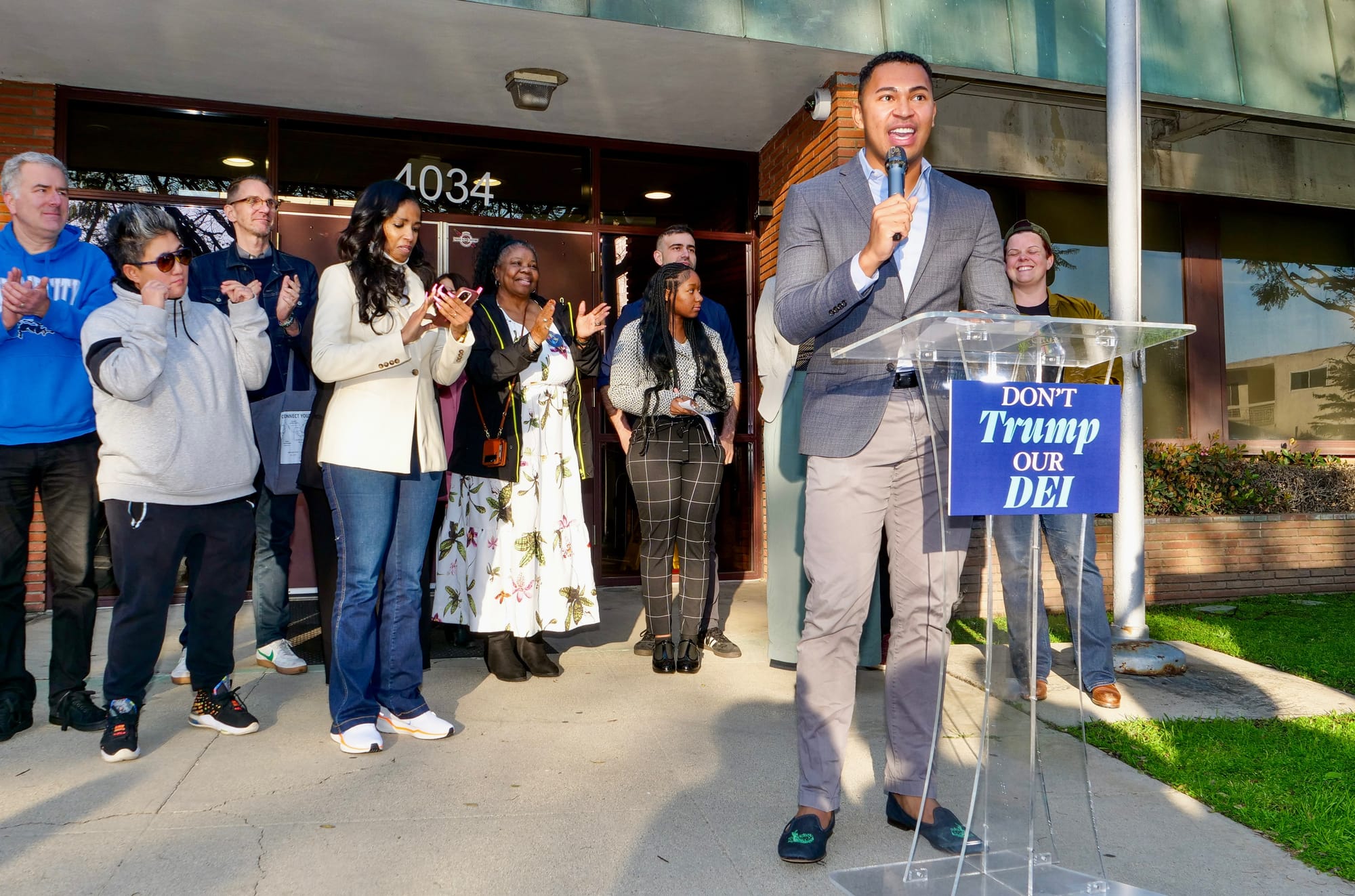
From the first day I was sworn in to the board, we were seeing persistent disparities, and we have a responsibility to identify the barriers and address them with specific goals and resources. Some may call these policies and practices that we've done as DEI policies. To me, I just call it doing the work of a school board.
When we talk about addressing learning loss and learning outcomes, when I talk routinely about the fact that this board was tasked with, in my humble opinion and perspective, one of the hardest challenges a board can face in overseeing the aftermath of COVID, what that learning loss did to certain students, and how that learning loss inequitably affected certain subgroups over the others; no matter what people or the federal government calls it, it's my opinion that facing these challenges is our job, and these DEI policies are showing to be effective.
We routinely talked about it on the campaign trail. I know the superintendent talked about in the state and the district, but the data was just embargoed by the California Department of Education, and every single subgroup that we've identified in our strategic plans — that some may call DEI policies — are seeing an increase in test scores.
We're talking about not just Black and Brown students, but all of our unduplicated students, our foster youth, our in-house students, our students with disabilities and IEPs, our English learners, and our Black and Brown students are all seeing increases in test scores, all seeing increases in reading level, all seeing increases in graduation rate.
DEI policies, or whatever you want to call it, shows to be beneficial when put in practice, and we are reporting to the community that intentional investments are proving to be worth it.
On the State of Attendance
Attendance has leveled, but I would be pretty careful about assigning one cause to attendance issues without looking at our local data, being entrenched in our community on sites, and talking with students about the actual reason why people don't show up to school.
Absences can sometimes be illnesses. It can sometimes be anxiety. It can sometimes be bullying. It can sometimes be transportation difficulties, family instability, or academic frustration. I often talk about mirrors in education and people seeing themselves reflected in the work that they are engaging with every single day, and I think a lack of mirrors is another reason for a lack of attendance or a lack of the thought of the importance of coming to school.
First of all, we need to be diagnosing it by making sure that we're present in the community and talking with people to gather this local data to really understand why. We need earlier supportive outreach, starting when a pattern begins. Instead of sending a threatening letter or using other punitive measures, we need to start with a conversation.
How can the school serve as a social safety net to make sure that we're providing and adequately providing these services? That could mean counseling. That could mean transportation assistance and getting creative with how we do transportation. It can be an academic support plan. It could be addressing school climate issues.
We need to know what's preventing children from attending school, and how can a district help.
On the State of Facilities and Priorities for Improvements
It was an honor to be a part of Measure E and to be chair of the board during its first round of implementation. I was President of the Board during the implementation. I played a heavy role in placing it on the ballot in his campaign, and I'm forever grateful to the community for sticking with us through that and understanding the importance of state-of-the-art facilities for our students to learn in each and every day.
In terms of what's the facility that I'm most excited for? I believe that we're getting a new gym, that is going to be exciting. But I don't think that there is one specific thing; I'm excited for every single one of our campuses. I'm really honored that the voters gave us enough money for every single one of our campuses to be seeing substantial improvements.
To answer the question with an order of importance, we need to be looking at health, safety, and fundamental issues first and foremost. Oftentimes with facilities bonds, people don't understand that infrastructure like aging plumbing are included. You're not going to see a brand new structure, but that is a safety and health issue. When we have plumbing issues, we have to dig into the ground and replace plumbing. That's a safety and essential health issue that I would love to see addressed if there is a need.
I also look at essential building systems. When you're looking at accessibility and learning environments, we need to be addressing issues like deteriorating walkways for students, deteriorating roads, unreliable heating and cooling.
Obviously, plumbing and bathrooms are essential, and we need to be looking at basic services first before we can be pie in the sky.
On Supporting Teachers in the Classroom
Teachers having to buy tissues or toilet paper or other baseline essentials shouldn't be happening, and we definitely have the money as a district to make sure that we're providing those.
I would say classifying this as a budgetary issue is not a fact, it’s more about a system and who's in charge. It's clear that there's somewhere in between the pipeline of having to place that order — however that order gets placed — and the supplies arriving in the classroom, there's clearly a gap happening there, so that there may be a perception that the district does not have that ability, but we do.
We need to be looking at an accountability lens for where in the pipeline these basic needs are not being met, because we do have the resources to provide essential services. We just have to course-correct the alignment between placing the order and staff receiving it.
Speaking more broadly, I would advocate for dependable supply allocation for every school, a straightforward again ordering process, and clear expectation of how quickly requests are fulfilled. We also have to hold our district office staff accountable to these clear expectations.
We should use the district purchasing power to get better prices and maintain sufficient inventory at all times and get regular feedback from teaching classified staff about what's missing.
Donations can enrich things like nice to haves, but access to basic necessities should not depend on a teacher's personal finances, or school fundraising capacity, or a club that raises money to provide these things.
It is a district responsibility, and I know we have the capacity to do it. I just think we need to be holding our staff accountable to these outcomes.
On Honors Courses and Roles in Curriculum Development
The board does not write curriculum, it's our curriculum development staff that do that, and that is what happens in this district. The board was not writing any curriculum during the Honors English discussion. The board approves curriculum, but the board does not write curriculum. That's the job of our Assistant Superintendent of Ed Services, our Director of Teaching and Learning. What I've always pushed for and hoped to see will be a curriculum committee that reviews curriculum.
Of course, I support rigorous academic options, including honors and advanced coursework, and I support making those opportunities genuinely accessible. We should challenge students who are ready for advanced work while ensuring strong instruction and support for everyone.
I can be pretty clear: Do I support Honors English? The answer is yes. Do I understand the need for intentionality when it comes to students, and which students reflect in the classroom? Of course. I've proposed to implement Honors Ethnic Literature, and the board is actually going to be seeing a presentation very soon around what that would look like.
It's my humble opinion that in order to push for results, lowering the bar is not the way to do it. What we've seen from the inclusion of mirrors in education with other advanced curriculum is that students want to engage with curriculum that they see themselves reflected in.
While we were saying as a blanket statement that not enough Black and Brown kids were taking honors English, we brought in AP African American Studies, and the attendance rate and the demographics of the class are through the roof.
What that signifies to me is that students like to engage with rigorous opportunities and rigorous coursework when they see that reflected in it, and I completely understand that. Bringing back an honors curriculum that has representation and mirrors in it, like Ethnic Literature Honors, would provide just that.
I am forever indebted to the teachers for bringing up their concerns. Teachers bring essential expertise about curriculum and instruction, and students and parents bring essential experiences about how these decisions affect them.
It's the board's responsibility to set direction, ask for evidence, ensure a transparent process and evaluate the results.
On Arts, Career Technical Education (CTE), and Electives
Arts and career education are central to a well-rounded public education, and they help students discover their strengths, connect with schools, and develop skills that they can use in college careers and their life. In order to adequately support electives or CTE or arts, we need to make sure that we continue to again be in community and ask the students which electives, which CTE pathways, and which arts that they want.
When we look at enrollment data as a whole, we look at district enrollment data, but also class enrollment data, class load, and number of students enrolled in each class. During my time on the board, there were two student advocates who actually did a survey at the high school and presented the findings to me along with the Superintendent, our Assistant Superintendent of Educational Services at the time, and our Director of Teaching and Learning.
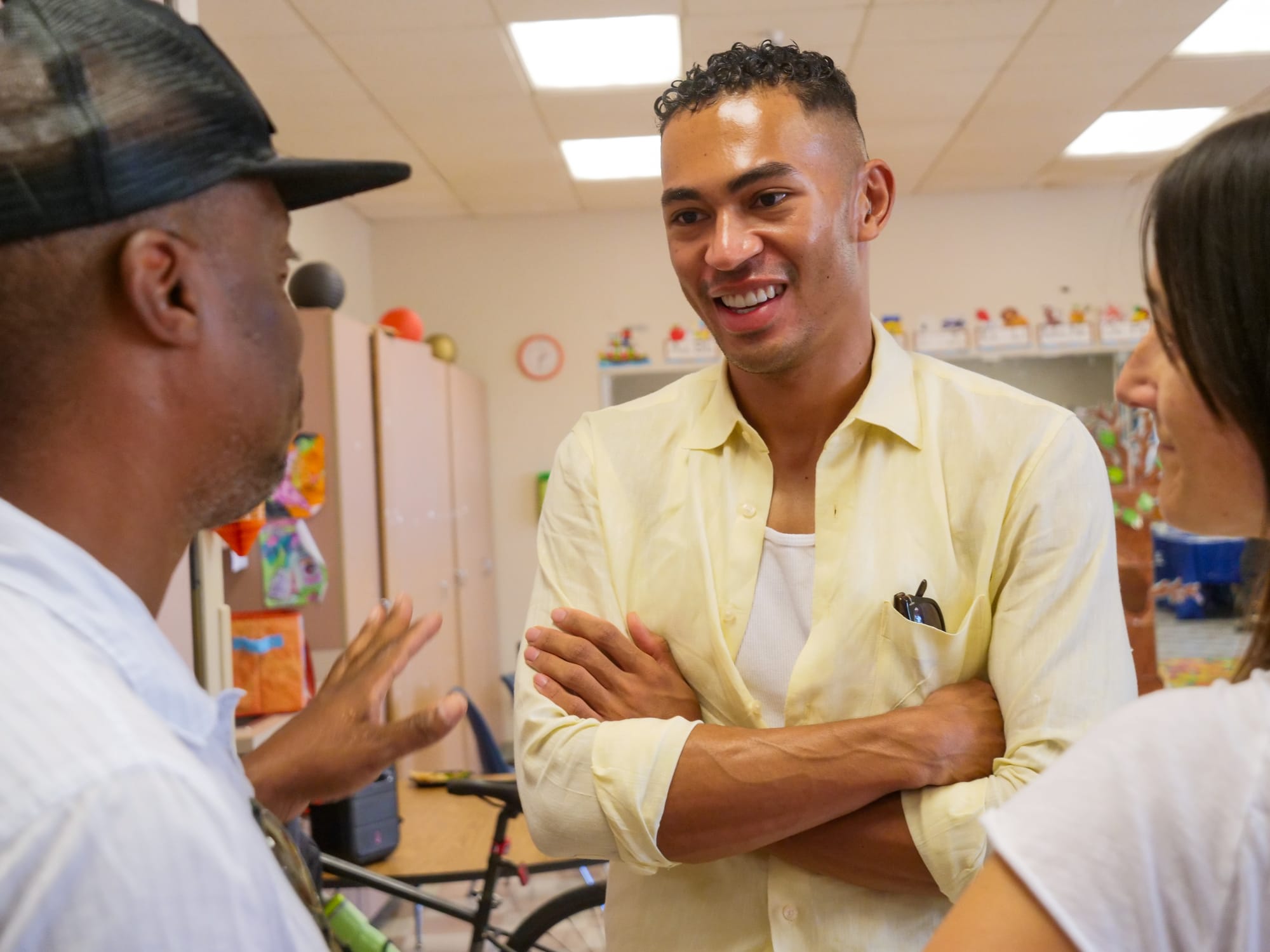
If we say that it's important to support these programs, we owe it to students to make sure that we're offering them the stuff that they really like, and that means analyzing the data.
There's a difference between an elective and a CTE. CTE is a pathway that is meant to be completed, so it's really important that we look at “completer” data in that lens.
When I was a student in the district, I took CTE Film, but when we look at the drop off of the difference between enrollment versus students who are completers, students were just taking it for one year because they had to have an elective credit to graduate.
If so, that's not a CTE pathway, that's an elective, and it’s important to bring in both pathways that students are encouraged and want to take for the entire three year pathway, and single year electives that they want to do as well.
My vision for the Arts Coordinator is someone who really helps create a coherent experience from elementary school through the high school. They should be supporting teachers, coordinating community partnerships, and identifying gaps in access.
I know CCUSD already has a strategic arts plan from ‘23 to ‘28, but what I've heard from the community is that they want to see an updated arts plan, and I would love to see this position really spearhead that community engagement and the creation of that, and get really in the weeds about the implementation of the next phase of this arts plan.
Success means students can explore arts early and continue developing their interests, regardless of their school or family ability.
On Outside Contractors
Trust comes from a process the public can understand and results the district can verify. We should always be advocating for competitive procurement where required and appropriate.
Obviously, careful review of the qualifications and past performance, and clear disclosure of conflicts is critical. Once a contract is approved, oversight must continue.
For some of the major projects, residents should be able to see programs against the budget and schedule, explanations for a change in orders, and whether the contractors are meeting expectations. If performance falls short, the district should use the remedies available in the contract.
Community members should not have to piece together months of board agendas to understand what happened. Clear reporting and prompt acknowledgment of problems are essential to rebuilding confidence. When we talk about our partnership with outside contractors again, there are vendors that we work with where the entire process is very, very public and very clear.
For Measure E projects and all of the RFPs and competitive bids that we put out for our architecture pool, for our DSA inspection services pool, for our program management that's going to happen in our phase two, for our construction management, has been competitively bid out. The district staff has to present the board the findings, who responded, and who they selected, and ask for the board to approve that selection.
I deal with this in my day job right now. In my previous day job, I worked for a fleet electrification company. We help school districts and cities electrify their fleet, and I do their sales and go-to-market strategy for the West U.S. everything west of Texas. I'm really familiar with cooperative purchasing, competitive bidding, and dealing with districts who take transparency very seriously.
Before this, I worked at a construction firm, so I uniquely understand the procurement processes for construction vendors as well. We all had to apply the same standards to all of our vendors, so we just need to make sure that the process is as transparent as possible, and we also report outcome data to the community.
On Mobility and Transportation To and From CCUSD Schools
I want a coordinated approach that gives families safe, practical choices. That means walking, biking, public transit, and driving when that's necessary.
Students with disabilities and families traveling farther also need to be included from the beginning in the conversations. The Tri-School Area Mobility Study documented speeding, substantial pedestrian activity, and congestion around limited school access points, and those findings justify action.
I would prioritize safer crossing, appropriate crossing guard coverage, accessible sidewalks, connected bike routes, reliable transit connections, and better organized arrival and dismissal.
For the Tri School proposal, Sepulveda Connects and improvements near Sunkist Park, I would evaluate each design with student safety, travel reliability, accessibility and whether it shifts traffic problems onto other residential streets as important pieces. I support the goal of safer access and better mobility while wanting evidence from the specific designs.
Again, as a school member, this is a city issue. I don't get and haven't been really nitty gritty in the weeds. But as a board member, I work with the city, and as I've been on the city liaison committee my entire time on the board.
I will work with the city on the street improvements and ensuring the district addresses its own responsibilities, including obviously campus access and school operations.
On Attracting Culver City Families to CCUSD Schools
I take enrollment and retention pretty seriously, but I would want to distinguish broader demographic changes from families choosing another school. Those are very different challenges.
We should ask families why they leave, and I have always asked for an exit interview. When you're at and when you're looking at your employer and you have an employee leave, they often do exit interviews to understand and self-evaluate how things can be better.
Are they concerned by academics? Are they concerned about safety, special education services, communication, or access to programs? We should act based on useful information rather than making assumptions.
I don't often hear people talk about when we look at why 20 years ago was enrollment this, and now it's this. The quiet part out loud is it is our economy, the basic fact that the cost of living is through the roof, and that people at the level they were 20 years ago are not having kids anymore.
When we look at pipeline, it's really hard to compare it to then versus now because there are a whole lot of young people and young professionals who are just opting not to have kids, whether because they don't want to or because they can't afford it, and this federal administration and this economy is not making it better.
For the students who are out there, we need to make sure that enrollment is easier, improve communication about what our schools offer, and really create opportunities for prospective families to visit.
Marketing is a big thing. As a person who's campaigned and gotten people to turn out to vote, I can uniquely understand that marketing can help families really understand the strengths, but it must be supported by experiences that earn their confidence.
On Recent Administrative Turnover
It is not unique when you look at an institution where the cabinet essentially functions as a C-suite. When the superintendent or CEO comes, typically they like to bring their own team, and when the CEO or the person who's at the top leaves, those people typically leave as well.
I'm not saying that this is what happened here, but I wouldn't say that this is a unique trend. If we look at the broader context of education institutions in California around the United States, we typically see when a superintendent or new superintendent is brought in, they would like to bring in their own cabinet because that cohesion really matters when it comes to the governance team.
As we know, implementation is key for educational institutions, and leadership stability matters because turnover can often interrupt relationships, delay discussions, and create uncertainty for staff and families.
But I don't want to assume that every departure has the same cause. Oftentimes, there are retirements, like what happened in previous superintendent Dr. Brian Lucas's case. Sometimes it's compensation. Sometimes organizational culture can play a role, and it's really the superintendent's role to examine these patterns and bring forward a retention strategy, and that should include clear responsibilities.
Realistic workloads is another piece of the puzzle, especially as we've talked about reductions and kind of that work absorption. Effective onboarding, professional development, the relationship with the cabinet level and the board; board members have a role too. The board needs clear priorities. The board needs a constructive evaluation plan, consistent expectations, and an understanding of their role.
Doing that work in the weeds on the specifics is the job of the superintendent and his cabinet, and not the job of the board. The board has the job to self-evaluate themselves and figure out if the board is keeping their work in check and only and only directing the superintendent as a board majority and letting the superintendent work with his governance team.
Even so, it's my goal to retain capable leaders who earn trust and deliver results.
On Balancing Fiscal Responsibility with Goals
It's important to first highlight the record. This board inherited a situation where one-time dollars were spent on ongoing staff, and it had to make unfortunate decisions. I don't know if that correctly reflects this board's ability to be fiscally responsible, it's really been this board has been forced to practice strict fiscal responsibility, whether we wanted to or not.
We need to critically examine our spending and talk about necessity and how we can continue to fund stuff that the board sees as a board priority while being fiscally responsible at the same time. Again, it's being able to chew gum and walk at the same time, and that we've done before.
The perception out there that this board is fiscally responsible isn't always true. Right now, we've had some of the highest reserves we've had since I started on the board, and the community will see very soon in our next budget report.
We have been able to balance our budget and keep cuts farthest away from the classroom, and still fund academic initiatives and learning opportunities that are showing to be beneficial and work as per the data of the California Department of Education. That fiscal responsibility is what allows us to keep our commitments to students.
Before supporting an investment, I want to know the need it addresses, the full cost, the funding source, and how we will measure success, and that outcome data ought to be shared publicly.
That means looking beyond the first year. Oftentimes, when we're looking at funding things, it's only in that one-year lens. While we look at our budget in a three-year lens, we also need to be making sure that we look at things that have significant financial impact through a multi-year projection.
More staff and administrators include benefits and future costs. New facilities induce maintenance and operations costs. Grant-funded programs need a plan for when the grant ends.
I would always prioritize classroom instruction, student support and essential operations, while protecting appropriate reserves and asking difficult questions about spending that is not producing sufficient value.
On Vote 16 and Encouraging Healthy Civic Participation
First of all, whether or not we give students who are 16 and 17 the ability to vote in Culver City will not determine whether or not they're civically involved. We've seen, especially over the last six or seven years, especially post COVID and during the George Floyd riots, a large movement of young people being civically involved nationally.
We've seen youth councils, we've seen young people coming to school boards, coming to city halls, we've seen young people protesting outside of the Supreme Court, protesting in the halls of Congress, going to the state legislature to advocate for stuff for their communities.
I want to push back against the narrative that this is going to awaken a city’s civic engagement and a movement that I'm already a product of. I deeply understand and know that whether we give them the right to fill in a bubble or not, 16- and 17-year-olds are going to make sure that their needs are prioritized and that they're holding elected officials accountable.
I believe that they can, but I just want to push back around that, and I overall support giving young people a meaningful voice and the decisions that directly shape their schooling community.
Obviously, having first run for office so young, I know young people can bring serious preparation, judgment, and commitment to public service. If Measure YV passes, implementation will still require the city and the district to meet the measure’s funding and election logistics conditions, and the district should support that process with strong nonpartisan civic engagement, similar to how we already do right now.
We should continue teaching how local government works, how to evaluate sources, how to understand ballot measures, and how to participate respectfully across disagreements. It's really about teaching basic civic discourse, which, by the way, without Measure YV, we should be doing as a basic fundamental right. These are tools that I see as someone who's been an elected official, and some adults do not have.
The ability to respectfully disagree, how to engage with what's on the ballot and how to critically assess need and what's important to you is something that we should be teaching as a basic human right. As a district, we can obviously provide opportunities for voter registration, student led forums, practical learning about public meetings and budgets.
It's our responsibility, in my opinion, to equip students to make their own informed decisions and develop habits of participation that last.
On How His Recent Experience as a Student Informs His Views
It's no secret that I'm the only person on the board with direct, firsthand experience in how top-down decisions trickle down into the classroom.
While others can understand maybe a teacher's perspective or parent perspective or community advocate perspective, I am the only one on the board who actually understands what happens from the student perspective when stuff gets passed at the board level and trickles down into the classroom.
The beautiful thing about a body of five is that we all bring our own lives and shared experiences to the seat of the table. When we're talking about these broad strategic action plans, the beautiful thing is that we all come from different backgrounds.
We all largely have different professions, different interests, different goals, different lived experiences. But when put together, it really is a reflective and diverse governing body.
When we make these broad, student achievement plans, and we talk about wanting to make sure that all of our students are graduating, it's our goal to have a 100% graduation rate. We all pull from our lived experience into what that implementation plan looks like, and all of our subgroups are reflected in that.
I bring that unique lens to the board, and all my colleagues bring unique lenses. When put together, it's really powerful.
That's how we're able to, oftentimes, be unanimous on these really critical issues because we each see our priorities reflected in it, and we all know that each other's priorities only strengthen the district.
On How He Hopes His Tenure Will Be Remembered
I hope that people remember that I listened, acted with courage, and deliberate improvement. I want students to remember that they could actually feel seen, they had strong teachers, access to challenging academics and the arts, help when they're struggling and the confidence that they belong.
I hope families remember that I stood up for students who were too often overlooked, protected public education against this federal administration, and treated taxpayer dollars with care and concern.
I also hope they remember that I was willing to acknowledge problems and work through difficult decisions in the community.
Ultimately, I just want to leave the district in a stronger, academically more welcoming, and more financially sustainable place than I found.
Closing Statement
As a Culver City Schools graduate, I know that the decisions reach far beyond the board room. They shape whether a teacher has the resources to teach, whether a student gets help when they're struggling, and whether a family feels confident sending their child to school each morning.
I'm proud of the progress I've helped advance, and I'm clear about the work ahead: improving reading and math, protecting classroom funding, retaining great educators, strengthening mental health support, and preserving the arts and career opportunities that help students find their purpose. We also have to earn the community's trust through financial planning, transparent decisions, and follow through.
I'm really honored in this race to be supported by leaders from up and down the government, including Senator Adam Schiff, Congressman Kamlager-Dove, Supervisor Mitchell, Assemblymember Isaac Bryan, Senator Smallwood Cuevas, Dolores Huerta. Their confidence in my leadership means a great deal to me, as does the trust of the educators' families and the community members who have supported this work and challenged us to do better.
I'm asking for another term because I believe we can deliver stronger schools while remaining responsible stewards of public dollars. I am going to keep listening, asking difficult questions, and standing up for students, and I will keep working towards a district where every student feels they belong and has the opportunity to succeed.
Again, my name is Triston Ezidore, and I'm asking for your vote for re-election before November 3.


Comments ()