
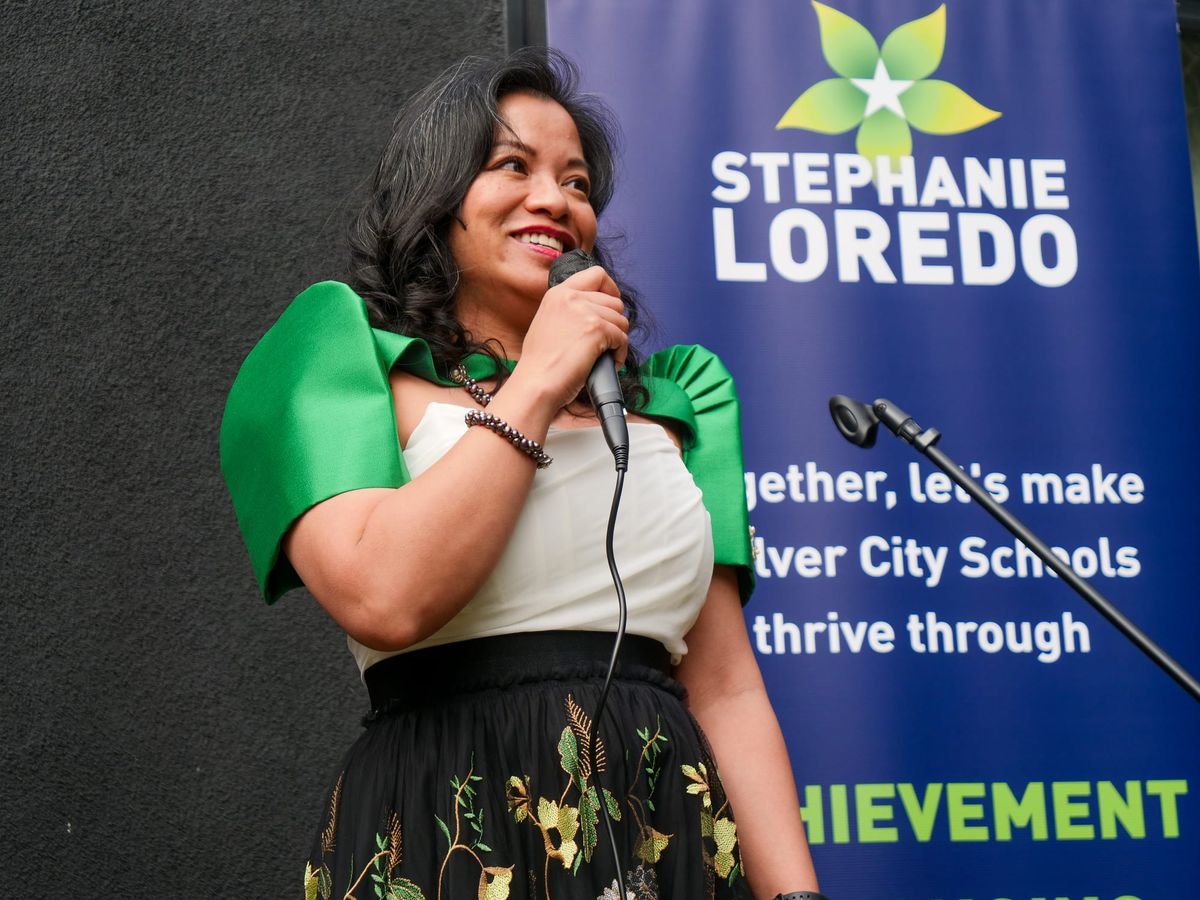
Culver City Unified School District Board of Education Candidate Stephanie Loredo sat down with Culver Crescent Publisher Christian May-Suzuki to discuss her policies and positions for voters ahead of the 2026 General Election
The 2026 Culver Crescent Candidate Series is a key feature of our Voters’ Guide for Culver City residents for the November 3, 2026 General Election. As part of this series, candidates running for public office in Culver City sat down with Culver Crescent Publisher Christian May-Suzuki to share their thoughts and positions on the issues on residents' minds.
An edited transcript of these roughly one-hour interviews appears below. The length of these interviews was intentional, allowing candidates to contextualize their points and positions for residents less familiar with the scope of questions facing Culver City and CCUSD. For those more familiar with Culver City politics, key points and positions are highlighted throughout the transcript.
EDITOR'S NOTE: At the request of the candidate, the headlines of this piece has been altered to more precisely reflect the questions asked in the interview. The subject matters discussed did not deviate from other CCUSD Candidate Series interviews in any way.
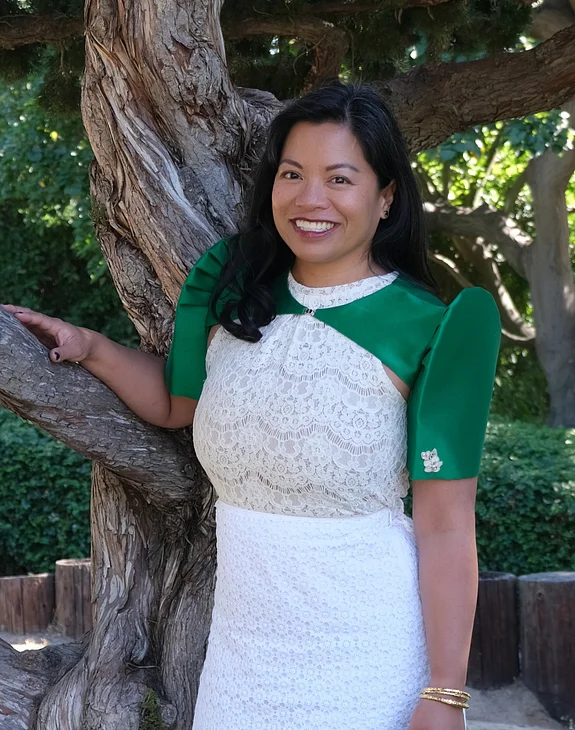
Stephanie Loredo, Governing Board Member at Culver City Unified School District
Achievement, belonging, and community have guided my work for the past four years on the board. Achievement means making sure students have the facilities, support from educators, programs, and the opportunities that they need to succeed. Belonging means creating schools where every student can see themselves reflected and supported. Community means understanding that the school district cannot succeed by working alone.
Biography
Occupation
- Culver City Unified School District Board President
Hometown
- Cherry Hill, NJ
Time Living in Culver City
- 8 years
Why You Came to Culver City
Our family had been on a journey seeking high-quality public school education ever since our children were toddlers in Jersey City. Then came the 2016 election. Our small sleepy town of 6000 locals changed: with the Trump flags came confederate flags. When advocating for more diverse books at the school board level, I was told to “get out” and “go home.” In Culver City we found people that share many similar values for sustainability, public education, and inclusion.
CCUSD Involvement
- Current President of Culver City Unifed School District Board of Education
- Daughters attended CCUSD schools
- Member of City of Culver City/CCUSD Liaison Committee
- Founded CCUSD's Asian American, Native Hawaiian, and Pacific Islander (AANHPI) Owned Business Night Market
- Founded Culver City High School’s Asian American Native Hawaiian Pacific Islander Parent Affinity (APA) organization in 2022
City Involvement
- Served as Vice Chair of the Los Angeles Region of the Filipino American Democratic Caucus of the California Democratic Party (FADC-CDP)
- Vice Chair of Membership and Outreach at FADC
- Member of City of Culver City/CCUSD Liaison Committee
- Founded Culver City Kapwa for families of Filipino/a/x descent living, working, studying, and playing in and around Culver City in 2023
Notable Endorsements (Full List Here):
Culver City
- Culver City Mayor Freddy Puza
- Culver City Vice Mayor Bubba Fish
- Culver City Unified School District Board Vice President Brian Guerrero
- Culver City Unified School District Governing Board Member Triston Ezidore
- Culver City Unified School District Governing Board Member Andrew Lachman
- Culver City Federation of Teachers - AFT Local 1343
- Association of Classified Employees, Culver City
- Culver City Democratic Club
- Our Culver
Los Angeles
- Los Angeles Community College District Board President Sara Hernandez
- Los Angeles Community College District Board Member Kelsey Iino
- Los Angeles City Controller Kenneth Mejia
- Los Angeles City Councilmember Eunisses Hernandez
- Los Angeles City Councilmember Ysabel Jurado
- Los Angeles City Councilmember Hugo Soto-Martinez
- Los Angeles Unified School District Board Vice President Dr. Rocío Rivas
- Los Angeles County Assessor Jeff Prang
- Los Angeles County Supervisor Lindsey Horvath
- LA Community College Faculty Guild - AFT 1521
- LA County Democratic Party
- LA County Young Democrats
- LA County Federation of Labor AFL-CIO
- LA/OC Building Trades Council
- Asian Democrats of Los Angeles County
- Pilipino American Los Angeles Democrats
- Pilipino Action Center
- Westside Young Democrats
California
- California State Senator Lola Smallwood-Cuevas
- California State Assemblymember Mike Fong
- California State Assemblymember Al Muratsuchi
- California Working Families Party
- Equality California
- SEIU-UHW
National
- US Congressmember Judy Chu
- US Congressmember Sydney Kamlager-Dove
- US Congressmember Ted Lieu
- National Union of Healthcare Workers
- National Women's Political Caucus
- LGBTQ+ Victory Fund
- Stonewall Democratic Club
- Stonewall Young Democrats
- Sierra Club
One Thing You Wish More People Knew About You
I love to cook and bake for special occasions. Ube Chiffon, Pandesal, Leche Flan, and Ube Coconut Crinkles are some of my family's most requested treats.
Favorite Thing to Do in Culver City
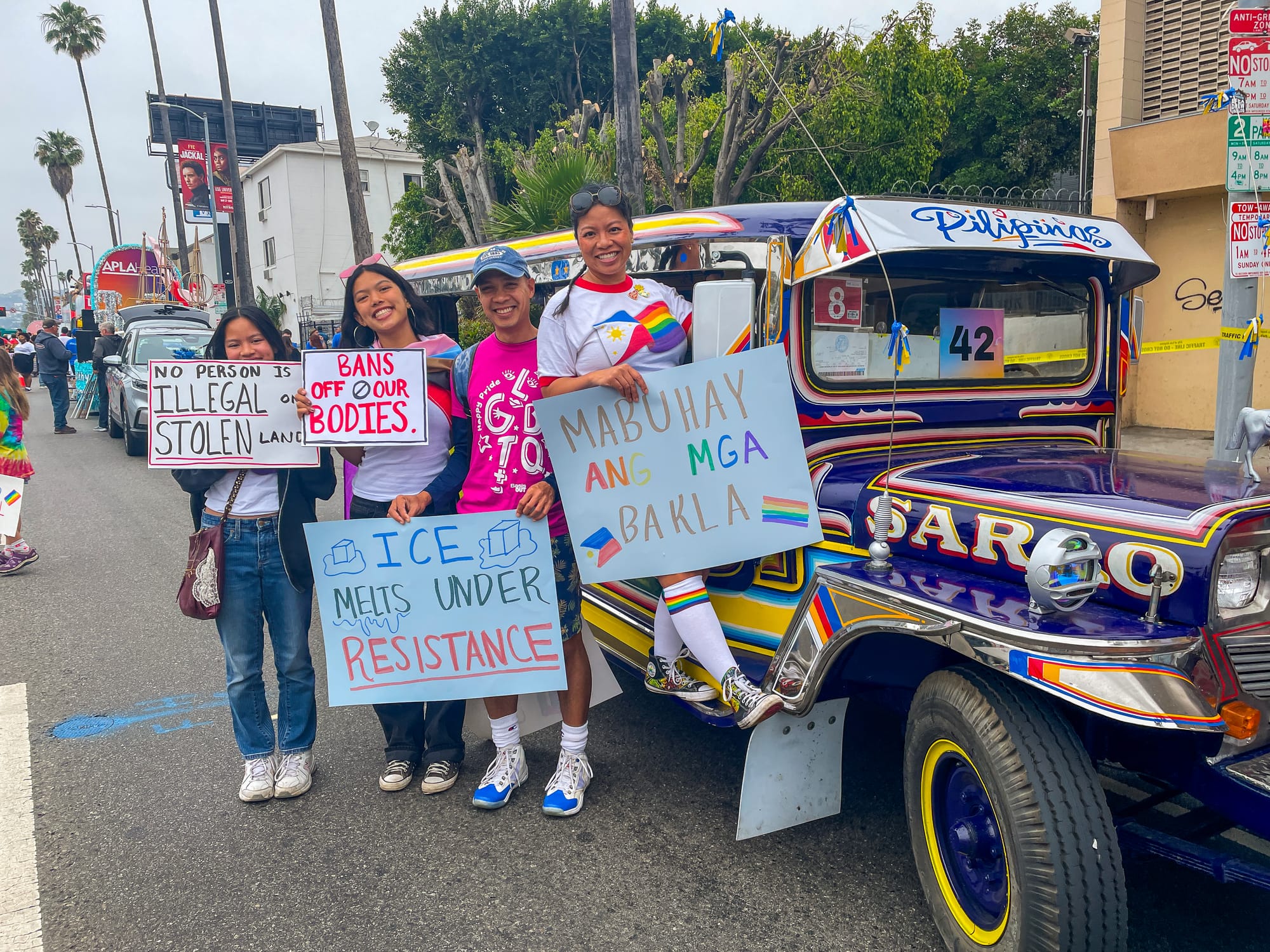
One of my favorite things to do every October is to recognize Filipino American History month by connecting and uplifting the Filipino American community! When I first ran for office in 2022, Filipinos in Culver City would tell me that they did not feel a sense of community in Culver City and perhaps it's because there were not many that lived here. It's important to provide opportunities to build connections so our community feels supported, visible, and valued.
Campaign Website

Opening Statement
My name is Stephanie Loredo, and I am your current Culver City Unified School District Board of Education president, and I'm running for re-election this November. I've raised two children in this community. One is a Culver High grad, and the other one is a senior.
I understand this district not only as a school board member, but as a parent who has spent years participating in the school community, listening to educators and families, and seeing firsthand what works well and where we can keep making progress.
Over the past four years on the board, I've focused on practical governance and bringing people together around the needs of our students and educators. My work has been guided by three priorities: achievement, belonging, and community, and I want to make sure students have academic opportunities and the support they need to succeed.
Every student should feel valued and supported, and we should strengthen the relationships that make our schools and our city stronger. I've helped advance two major measures in 2024: the $358 million Measure E facilities modernization bond to improve aging schools and infrastructure, and the renewal of our flat parcel tax.
I also worked with the Culver City government on a 2025 partnership that provided $2.5 million in a one-time grant to preserve essential student services. I worked hard to build and foster relationships with our labor leaders, city government, and the broader community because lasting progress requires collaboration.
I want to make our schools reflect and celebrate the students who walk through those doors. My work has included expanding culturally affirming traditions, such as the annual Asian American, Native Hawaiian, and Pacific Islander (AANHPI) graduation ceremony and the Lavender Graduation ceremony for LGBTQ+ students.
I have also improved transparency through a fully digital policy manual, participated in the City of Culver City/CCUSD Liaison Committee and engaged residents through public forums.
I've been recognized by leaders and organizations across the region. My current endorsements include Congress members Judy Chu, Sydney Kamlager-Dove, and Ted Lieu; State Senator Lola Smallwood-Cuevas; Assembly Members Mike Fong and Al Muratsuchi; Supervisor Lindsey Horvath; Assessor Jeff Prang; and Culver City Mayor Freddy Puza and Vice Mayor Bubba Fish.
I'm also endorsed by Democratic organizations and labor organizations, including Culver City Democratic Club, Culver City Federation of Teachers, Association of Classified Employees, LA County Democrats, California Working Families Party, Our Culver, and many more.
I'm focused on working collaboratively, governing responsibly, and making sure that Culver City schools continue to provide achievement, belonging, and a strong sense of community for students and families.
Is a Parcel Tax the best option the District has to generate revenue? If not, what other options do you believe it should pursue?
It would be wonderful if we would just fully fund public schools to meet the needs of every student, and we didn’t need these extra ways of generating local revenue. The governor has held back about $3.9 billion in state funding to schools from Prop 98. Right now, there's litigation from California Teachers Association, as well as California School Board Association, for Governor Newsom to release that money, because when we reset the benchmarks, it's not going to help our schools moving forward, even past Newsom's tenure as governor.
A parcel tax is one way that a community can generate a large sum of funding annually. Our current flat parcel tax, Measure O, generates about $2.5 million a year annually and supports efforts for smaller class sizes and salaries for teachers and coaches. It also allows us to free up funds for other things in our operational budget.
Parcel taxes also have exemptions for those who qualify, like our senior citizens, if they do decide that they cannot afford to participate. It's really unfortunate that the governor has been using these tactics to keep the Prop 98 benchmark low, and instead has been using one-time funds or restricted funds that limit our spending and our flexibility during a time of rapidly rising costs and continued unfunded mandates and federal challenges that we have.
It's important for our voters to be aware that the citizens' sliding parcel tax initiative that will be on the ballot, Measure AA, was not written by the district nor in conjunction with the district. Citizens initiatives require a simple majority (50% plus one vote) to pass, and there should not be any conflation between a district initiative and a citizens' initiative. The board and the district had no part in writing this initiative or this effort.
There were some citizens that wanted to be of service to our district, and I thank them for that. Once Measure AA was placed on the ballot through a citizen's petition, the board decided not to pursue its own measure because that would just confuse voters, and it would seem like there's competing measures. When there's competing measures, voters often just don't opt into either one of them because they are competing.
A board-initiated measure would have required a higher threshold at 66.67% of the vote, and the board may still need to initiate and pass its own measure depending on the outcome of Measure AA.
To be clear, Measure AA is not the district's attempt to improve its financial picture. The Measure AA language does not represent the district’s priorities because the district did not write it. If it does pass, we will be grateful to the voters for passing it, and of course to the leadership of the initiative.
But when it does pass, the district and the city will need to create an implementation agreement that will be in compliance with all the legal mandates of the ballot measure, and I anticipate that the district will need to juggle a lot of fund source management in order to maximize the benefit to our students and programs.
In 2024, the board successfully passed two ballot measures: Measure E for facilities modernization, and Measure O, the flat parcel tax. We have openly discussed and implemented other ways to generate revenue, including our partnership with the city for the one-time grant of $2.5 million in 2025.
These other ideas have limited revenue potential compared to a sliding parcel tax. Some of these items have been implemented, or we're making progress on them in ongoing discussions. Some of those are including, but not limited to, increasing enrollment and attendance, paid parking for events, updated facilities fees and rental agreements, and continued collaboration with the Culver City government in other ways.
But those items do not begin to replace the large scale or large volume of revenue that a sliding parcel tax initiative can.
If and when the District's finances allow for it, are there positions in particular that you would prioritize creating or pushing for or reinstating, if if any at all?
First and foremost, the board relies on staff to prioritize recommendations based on program needs and funding source restrictions. In a recent board meeting, we received the unaudited actuals for the 2025-26 budget, and there is more money than expected in there. However, it's restricted funds; the eliminated positions cannot be funded with those restricted funding sources.
We are first prioritizing the Inclusion Master Plan that was presented on August 25, and then again on September 8. The Inclusion Master Plan budget includes several positions for consideration that provide more support for our students with disabilities, which increases our support for the general education classroom because our students with disabilities are, first and foremost, part of the general education student population.
When we provide these supports, this is providing more support for assessments to implement and monitor individualized education plans for our students. This is funded through the state increase in AB 602 funding beginning in this school year 2026-27. These positions include assistant principals, behavior inclusion and intervention support facilitators, program inclusion specialists, bridge teachers, and a lot of additional instructional assistants, including substitute instructional assistants.
In addition to these positions in the Inclusion Master Plan, we have a number of positions that we are preparing for, especially at our Office of Child Development. The last time I checked, we had around 30 openings, and we're currently relying on a third-party contractor in order to bridge this gap for the time being.
They held a successful hiring fair recently on September 11, and I anticipate a number of candidates to continue being hired as we go along, as the process continues, so we will continue to see what our staff recommends and try to add positions as needed going forward.
Is CCUSD adequately equipped to provide mental health support to kids that are struggling with mental health? If not, what exactly might need to be done to to get to that point to maintain an adequate level of care?
Our schools use a multi-tier system of support model (MTSS). We have several different types of counselors and their support for our students, and I think that when our community learned about some possible cuts, they didn't understand the differences between the type of counselors that we had.
We have different kinds of counselors, including general guidance counselors, college and career counselors, family counselors, psychologists, mental health counselors, and other folks and partners, who support our students in and outside of the school. They all contribute to creating an environment where we're supporting our students.
Unlike many districts that rely only on private insurance referrals rather than in-school services, CCUSD does have robust mental health support available, and this also includes school-based counseling as well as the Sandy Siegel Health Center and our partners at Care Solace. I want to continue strengthening access.
Last spring, we made reductions to our mental health counselor positions based on site needs. For instance, at Culver Park, we only had a little more than 40 students at its peak, and they had a full-time mental health counselor. Now, we are sharing because the caseloads may not require them to have a dedicated on-site mental health counselor.
I would have preferred to keep one more position based on caseload. We were able to accommodate this past year, one of the counselors that was supposed to be reduced was able to stay.
I'm open to finding more district partners as well that can expand our mental health services where we can establish zero to low cost memorandums of understanding, like with National Alliance for Mental Illness West LA (NAMI), whose services would be covered completely by the LA County Department of Mental Health.
These are a part of a continuum of support; it doesn't completely replace one whole mental health counselor. The more that we can access this type of funding, these kinds of partners, these kinds of resources, and the more that we can provide a culture of care and belonging at our schools, the more that we may not need higher tier support for our students.
How important is it to promoting Diversity, Equity, Inclusion policies, and making sure that CCUSD schools are a welcoming place for all? Are there particular policies or ideas you might advocate for to ensure that Culver City Schools continue to be a welcoming place for all students?
Belonging is essential to ensuring every student feels valued and supported. Students achieve their best when they feel that they can be accepted for their 100% authentic self.
Since I've joined the board, I've led ways to expand our district's doorways, windows, and mirrors to reflect our students and their peers positively.
Since I've been on the board, we've passed a religious and culturally observant calendar supported by district absence and other policies. In 2023, we passed anti-bullying protections. In 2024, before the change in our federal administration, we resolidified our support for our LGBTQ and immigrant community members with a resolution.
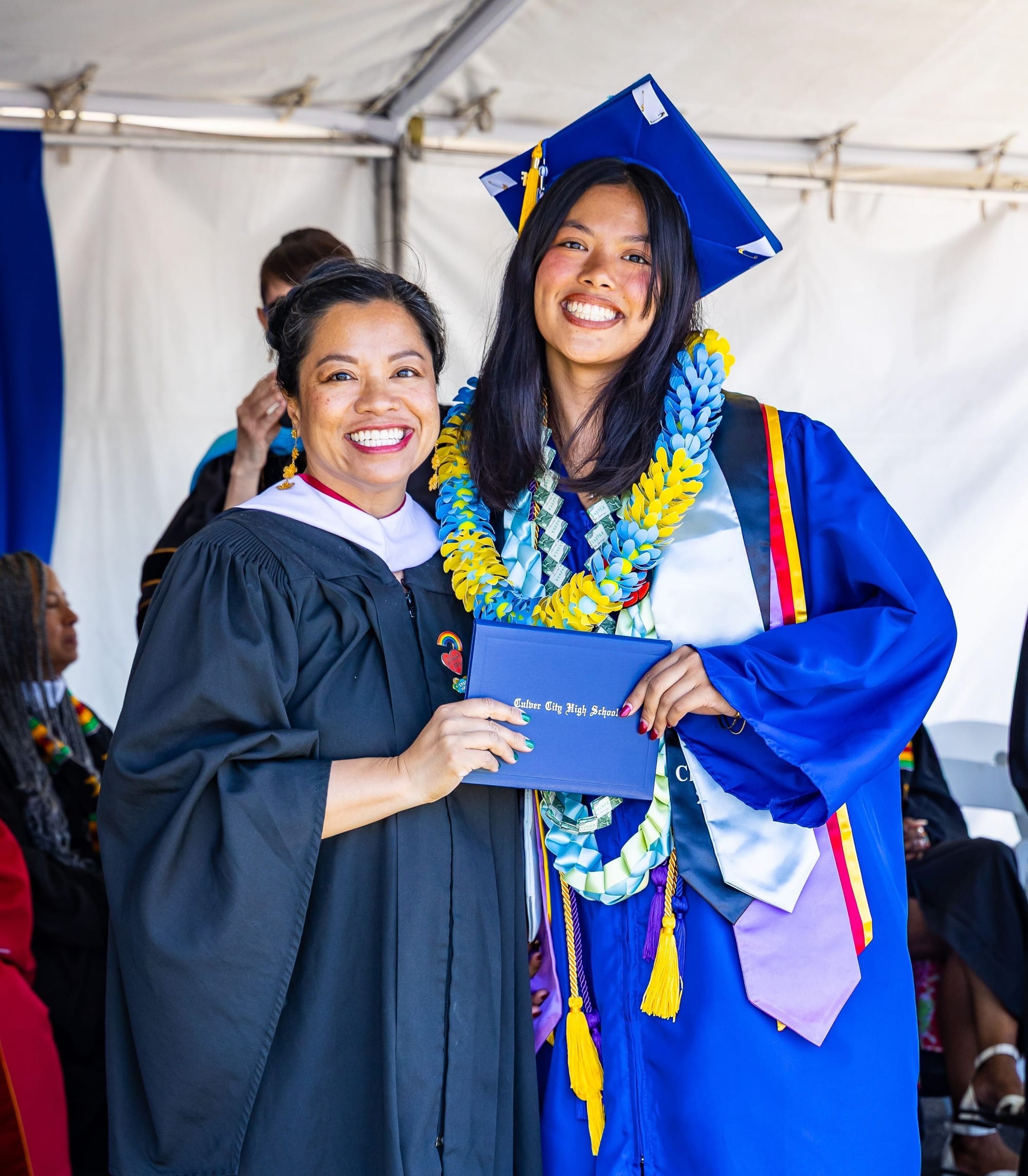
We've also created more space for site celebrations for clubs and affinity groups. We've expanded the number of affinity ceremonies from two. Originally, we had Kente graduation and La Fuerza graduation, and now we have four, including our AANHPI graduation and Lavender graduation.
These are just a few ways that we support belonging to CCUSD. It's really important that we have this culture of care in our schools because our students learn best when they feel they are valued and supported, and without that, they're only surviving and not thriving.
What are your overall thoughts on the attendance picture at CCUSD, and and what are some of the things that could be done to encourage more consistent attendance?
My answer about belonging ties with this, because if our students don't feel valued and they don't feel inspired to go to school, especially in middle and high school, they're not going to show up.
Engaging schools, students seeing educators that represent them and our community, and hiring and retaining folks that can use culturally responsive curriculum are what makes attendance increase. Students should feel a sense of belonging, the culture of care, the feeling that you're not just going to be in class because you're going to get yelled at and you're there because you have a curiosity, you want to learn, and you feel like people actually want you to do well. That's what increases attendance.
September is Attendance Awareness Month, and in August we passed a proclamation in anticipation. CCUSD attendance has nearly returned to levels similar to the pre-COVID area era; it would just take one more percentage point for our students to return to fully pre-COVID levels of attendance.
As a district, we need to do a little bit of a better job of communicating that it's important for students to go to school every day, even if they have a doctor's appointment, and that our revenue is tied to Average Daily Attendance.
I've been working with staff to remove barriers to participation for short-term independent study or STI, so that we can regain that revenue and also provide opportunities for our students to be more engaged with their schools. Some other ideas include implementing Saturday school events or after school opportunities to regain attendance.
Chronic absenteeism is when students experience 10 or more unexcused absences in a year, and attendance challenges may reflect barriers that are outside a student's control, including mental health or family needs, like when a student has to care for a younger sibling who is sick and the parent needs to go to work. There may be some housing instability and disengagement from school may be some challenges.
I advocate for strong student and family support services, engaging learning environments, and partnerships that address these underlying challenges.
What CCUSD facilities are you most excited to see improved, and what would you like to see prioritized moving forward in terms of improving facilities at CCUSD schools?
Our facilities modernization bond, Measure E, was passed in March of 2024, and projects are all underway at every site.
The priorities have been set at each site by an ad hoc facilities advisory committee at each site. I participated in a district-wide standards subcommittee in 2024 and 2025, and we are now moving into this stage where we anticipate having groundbreaking at three of our sites by the end of this calendar year, with the other sites moving on groundbreaking in the coming months.
Some of the things that I'm most excited for are projects that will simply allow us to move our students into 21st century learning environments because, like many other public schools in California, a lot of our public schools were built in the post World War II era.
When CCUSD was first created (1947), we got the money to erect our secondary schools. The furniture might have changed since then, but a lot of the things behind the walls did not. In order for us to have a 21st century education, we must have a 21st century learning environment.
I am excited about all of the work that will come to our schools. I'm not as excited about maybe a little bit of disruption, but I will take the disruption in order to make sure that our students in the far future will be benefiting from all of these wonderful improvements throughout our district.
What would you advocate for to ensure teachers have access to the basic resources, supplies, and support that they need in the workplace?
Our staff and all of our employees deserve a healthy working environment, and they need basic supplies in their bathrooms, such as soap, toilet paper, and clean facilities, in order to make sure that their healthy environment is a good working condition.
We're continually trying to make progress on how we can make our schools a shining place where everyone is proud of the place that they work at, and feel that they're valued. They need to feel that their basic needs are being met so that they can continue to inspire our students and families.
Throughout California though, needs for individual students’ use in the classrooms like tissues and other basic needs are usually met by PTAs and through donations by parents, as well as organizations like Rotary Club, which recently opened their grant for our teachers to apply. They can have up to $200 each for classroom supplies, and I encourage all of our teachers to look for that.
But in the future, when we do have some more money, I would like to find a way that we can meet some more basic needs for all of our school sites in terms of actual classroom supplies.
What are your thoughts on the Honors Level classes in CCUSD's curriculum, and you know the relationship between educators, parents, and school board members in making curriculum decisions?
CCUSD offers a wide variety of rigorous courses, and we continue to expand our offerings based on student interest. The last time I checked, there were at least 33 courses in the Culver City High School catalog that meet the criteria for UC and CSU honors, which is also known as the doorways course catalog.
When you include the new classes introduced this 2026-27 school year, we have AP Business with Personal Finance, AP Psychology, and English Language Arts 10th Grade Honors, complementing the 10th grade ELA college prep course. UC CSU does not consider honors credit for any ELA courses below 10th grade, and we rely on our expert educators to create the courses and connect with students and their families regarding their interests and general feedback.
From there, the staff comes to us to say, “We want to write a new course and expand these opportunities because this is where the interest lies.” That's where the community feedback comes in.
I do want to say that when I am out meeting our community at the doors, one of the things that I do get often is, “I heard that you eliminated all APs and all honors,” and that's just simply not true. In fact, we have recently had our highest ever AP exam participation rate. Not only is the participation at a rate high, but we also have more students that are earning scores high enough to get college credit for it.
The people that are out there that want to believe in misinformation and do not want to look at the data and how well our students are doing and that we have the highest graduation rate ever will never be satisfied if they don't believe in data. I can tell you what is true: we have rigorous coursework. We have plenty of students that are participating in accelerated math; sometimes taught at twice the normal pace or faster.
We are only trying to expand opportunities for our students to succeed, and we are so proud of their achievement so far.
How will you work to advocate support for Career Technical Education, Electives, and the Arts? What is your hope or vision for a new Arts Coordinator Position?
We have Career Technical Education (CTE) starting in middle school, and most of our CTE courses are electives. If we're looking at electives, we're talking about the G category of the UC CSU A through G, while our arts programs are in the F category.
Some coursework overlaps in the F and G, and some overlaps with our required coursework for our diplomas. Our newest offering, AP Business and Personal Finance, is the first in our business pathway, and I hope the state will work with the College Board so that this class will cover the upcoming state graduation requirement or the mandate for personal finance coursework.
I always talk about unfunded mandates from the state, and support or funding they are going to give us if it doesn't align with the current coursework. We already have this curriculum from the College Board that we can implement through our AP Business and Personnel Finance. How great would it be if it was aligned already instead of us having to fund a new mandate and try to write a new course curriculum specifically for this mandate in the future that's not the same as AP Business and Personal Finance?
If a student's course load or schedule is limited, they're going to have to choose one or the other. We don't want that. We want it to be such that we can provide as much flexibility as possible.
Community members have asked about reinstating an Arts Coordinator Position. When we have access to more funding, I look forward to discussing our staff’s recommendation and how to better support our district at any position level. This isn't just about the arts. We should be talking about how we get kids reading at grade level, at third grade and younger, this is about all of our supports.
Maybe it's not an arts coordinator in the future, maybe it's another director. I'm looking forward to seeing what our needs are and what the recommendations are, and will rely on our experts on our staff at the district and at our sites to tell us what they need in order to make sure that we're serving all of our students.
How will you work to ensure that the community as a whole has faith in the relationships that the District forms with with outside contractors moving forward?
The district works with a vast number of service contractors that we cannot hire internally. That might be because we have one-time funds, and in order for us to hire internally, we need to make sure that that source of funding is an ongoing source. Sometimes we have staff members that go on leave, and we can't hire for that position unless there's a resignation.
These are the types of things that put us in a position where we have a need for service for a short time, and these are the reasons why we would use contractors. Our first and foremost priority would be to have internal investment, our own employees who are invested in our students and can provide that community partnership that best services our students and families.
In lieu of that, we do work with a number of contractors. These services are in a variety of departments, including technology or guest lecturers, special education, event related support, or contractors for specific facilities and maintenance issues.
Since I joined the board in 2022, I've worked hard to ensure that the board approves proposals and contracts that have been vetted through our board policy and admin regulation processes for selection, and communicates clear deliverables to the community. That was not always the case in the past before I came on, and unfortunately, I've had to work hard to make sure that that is not our system moving forward.
Since then, we haven't had that issue.
What are your thoughts on mobility projects currently underway in the city and the general mobility picture in CCUSD? What the best way to to open the Tri School Area up for students transporting to and from schools in the easiest, safest, and most timely way possible?
We have a partnership with the Culver City Government called our Safe Routes to School Program, and this supports an approach of safer mobility to and from schools.
We've been encouraging our students to take the three-block challenge by using our free public transportation via our Go Pass initiative, walking and/or rolling at least three blocks from home or from your vehicle, and it's important that we get going on restriping and updates to the CCMS parking lot, which is like the doorway to the community from the Ballona Creek path into the northern part of the city.
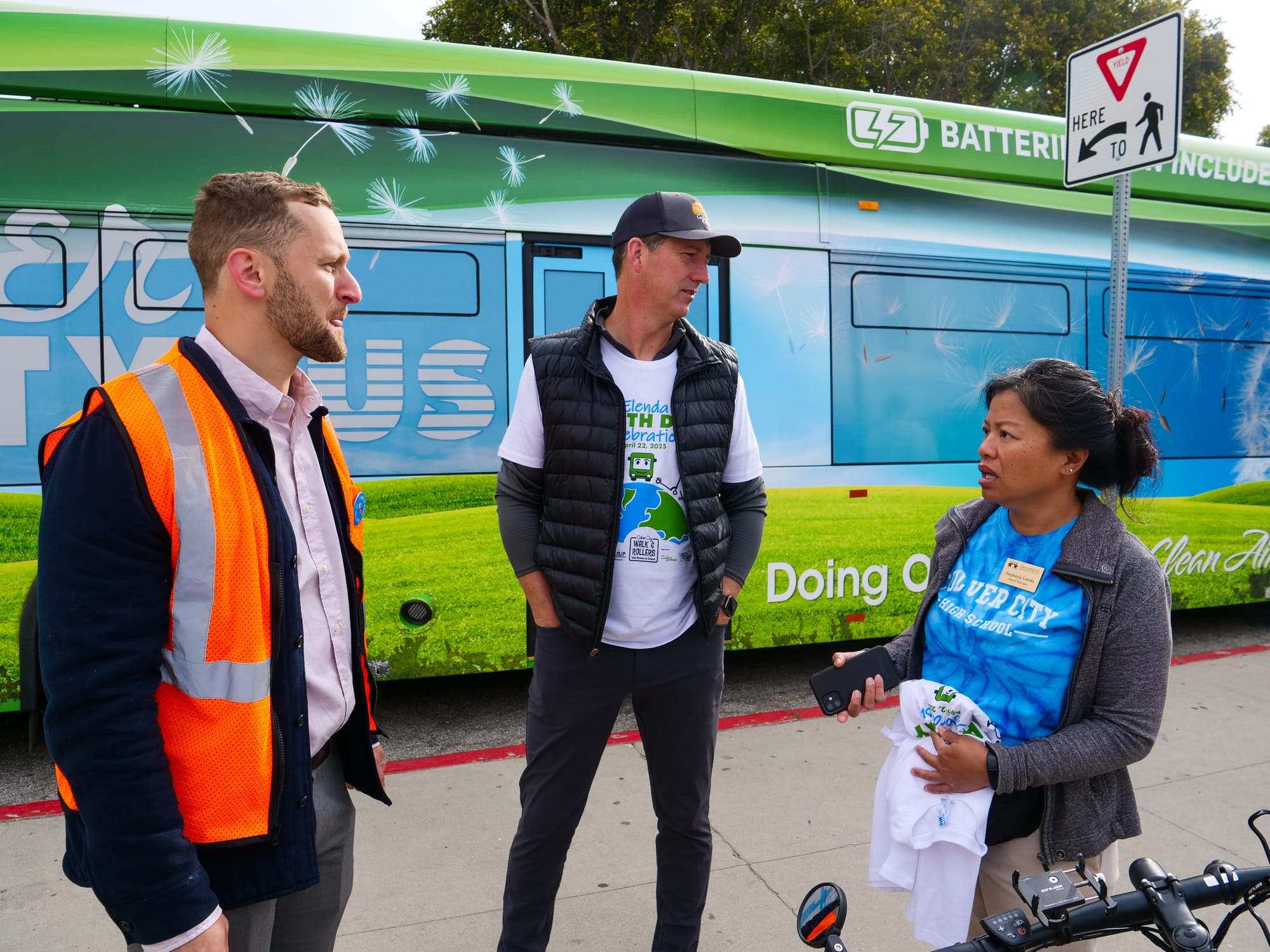
We need to make sure that we have a safe pathway there in our CCMS parking lot for our students to walk and roll away from vehicle traffic. I look forward to continuing to partner with our city government for the health of our entire community, whether it's crossing guards or ways to make sure that our crossings are high visibility. There's a lot of tactics that we can employ in order for our traffic to be calmer in the Elenda complex.
I do support aligning the city’s mobility projects with these same values for our students so they can travel safely and efficiently around Culver City. As a district, we have no jurisdiction on the updates to our streets, and even the crossing guards. We do not have jurisdiction over that.
That is a city jurisdiction, and all we can do is partner with them and tell them that we look forward to having more discussion and feedback with them in order just to make sure that our students and families are safe, and we are all doing our part in the community in order to make sure that we have calm areas around our schools.
Do you feel that there is any sort of issue in attracting and/or retaining kids that live in Culver City to Culver City schools. If so, what can be done to make CCUSD more appealing to new families or families looking to get their kids in schools?
Unlike other districts in California, our enrollment has flattened and is slightly growing, so we're attracting families from both private, charter, and conventional public schools with our breadth of programming and unique culture.
As Culver City continues to develop more housing and more families move in, we will be ready to place our new students. I have spoken to quite a number of new CCUSD families, and they are very happy with their choices.
One Culver City family that approached me before they decided to move their student to CCUSD had a scholarship at a private school. They said to me, "We don't have things like some of the sports that you have, and there's no diversity at our school, and there's no autonomy for student voice.” They were looking for a place for their student to thrive, and to have access to a community where you could write a wonderful success story about her decision to transition to Culver City and use that for maybe her college applications.
She was looking for a different type of environment to thrive in, and I've heard from quite a few students' families that have made this decision, and it's not always easy. Some of them send their kids to Mandarin immersion at a neighboring school district, and they prefer their students not go to Venice for their second year of school. They want them closer to home, and they know that they will have really good success with the activities, athletics, and the arts here with us.
I do believe that CCUSD can do more to attract and retain families. Last year, we did some banners in partnership with the Culver City government along our major streets to advertise for enrollment. We're going to our big employment partners like Sony and Amazon, making sure that those employees there know that they can apply for work-based permits for their students to go to Culver City Schools.
It's really a wonderful thing for you to be able to work in the community that your student is also attending school in. It is an investment in the community, and we can do a better job in communicating the strengths of our public schools and investing and showing our investment in our programs that meet our students' diverse needs, highlight our strong academics, diverse choices of clubs, athletic teams, expanded arts and CTE programs, as well as our college and career counseling.
At the State of the District, we saw our students going to post high school opportunities everywhere, doing amazing things. If we were more intentional about communicating this to the public, increased enrollment will follow.
Do you feel that recent administrative turnover was just an unfortunate storm of coincidences and circumstances, or is there something that needs to be done to ensure that the district can retain high-quality administrative staff?
People move on for the right reasons in their life and their career journey. I'm feeling really good about our team and our future.
Our superintendent, Dr. Jiménez, is the first superintendent for Culver City in at least 10 to 12 years with sitting superintendent experience, and he is using the connections and experience that he has in order to attract talent and partnerships, whether it's filling jobs or having partnerships with outside organizations and people that will continue to make Culver City vibrant.
How do you balance the decisions you make and your vision for CCUSD with the financial realities and responsibilities of running a school district?
The city deserves leadership that can protect the school district's financial future while continuing to build inclusive schools. This is one of the points I think that we do make in the goals that the superintendent shared at the State of the District.
My role as board president necessitates that I synthesize discussion at the dais and move us forward towards consensus, so when board members come to the dais with only their singular project's goals and their own needs in mind, the board as a body will not be able to make progress, and our one employee (because the board has one employee - the superintendent) would be pulled in five different directions.
This board made a decision that fiscal stability is one of our top priorities alongside continuing to build high-achieving schools. The board can only take action as a majority, and we have board members that are committed to our unified purpose and practice good discourse and debate to reach consensus.
That doesn't mean that we will agree all the time. There should be a diversity of opinion in order for us to have the best discourse. The actions the board takes are not about one person's vision. It's about a shared vision of the body and service to our students.
We will continue to make difficult decisions, and hopefully we'll have more revenue in the future, so that we don't have to make as difficult decisions in terms of reductions. Even if funding comes through, we will be making difficult decisions in terms of “how do we effectively spend so that it is sustaining the financial future of our district while making progress on our goals for achievement?”
We can only effectively govern as a board together with Dr. Jimenez. It's not about one of us; it's about all of us, and every action that Dr. Jimenez and his team have taken or will take in the future are all in alignment to progress towards our board goals that were set forth for the public at the State of the District.
If Measure YV passes in November, are there things that need to be done to encourage healthy, informed civic engagement to protect kids from campaign activities pundits are fearful of?
Every so often, the superintendent sends a reminder to employees that campaigning is not allowed on campus. Period. End of story.
Can students look at things from a factual point of view and review choices? Yes, they can, but at no point should an employee or any adult on campus be saying you need to vote for X, Y, and Z. That's against policy, and it’s against the California Education Code. Vote 16 is a club, and it is now an opportunity to strengthen youth civic engagement.
After years of advocacy, working with the high school and Dr. Valverde, the district now offers a seal of civic engagement, beginning with the diplomas for the class of 2027. The seal recognizes students who demonstrate civic knowledge, leadership, and meaningful community impact, reflecting our district's commitment to preparing informed, engaged citizens.
There's five criteria that they must pass in order to receive the seal. They have to be engaged in academic work in a productive way, they have to demonstrate a competent understanding of the state and federal constitution, and they have to participate in civic engagement projects, demonstrate knowledge, skills, and self-reflection of civics, and exhibit character that reflects civic-mindedness.
Offering the seal of civic engagement is one way for us to inspire a lifelong civic engagement with these students. Right now, only 20% of our seniors are 18 and actually eligible to vote. Of that 20%, a very small minority of them are actually registered, and an even smaller minority of those will actually vote in our system.
What the research has shown is that when you can engage earlier and give the opportunity to the folks that are interested early, they will have a lifelong engagement and inspiration with being involved in civic engagement. That's the kind of thing that we want.
We want them to be curious. We want them to research. We want them to be informed voters because informed voters get it right every time. We're not telling them how to vote. We're saying to them, you have the opportunity to research and have the curiosity to find out what aligns with your values.
Here is the chance, and I would love to give them that opportunity.
How do you hope that citizens of Culver City remember you and your time as a school board member?
You might have heard me say this before: the role of a board member is generational. We're building upon the legacy and impacts of past board members. Whether you agree with your predecessors or not, we stand on their shoulders.
The organization will endure much longer than my tenure, and it will seem like such a small piece compared to the entire timeline of CCUSD. There is joy in the friction of this hard work. To me, it's not as important for people to remember my own tenure on the board. It's more important that their trust in the board, their feeling about how their community is being served, and the quality of instruction, the impact of public education on the community, is seen, felt, and valued.
It's important to me that we make progress on our culture of care. It's important that it's a continuous process, and it's not always a straight line, especially in the chaos of world events. This process is to motivate, inspire, and connect with students, families, and educators, so that they feel heard, respected, and supported for success.
I'm proud of what I've accomplished so far. I'm making progress on my purpose, and I'm looking forward to what's ahead.
Closing Statement
Achievement, belonging, and community have guided my work for the past four years on the board.
Achievement means making sure students have the facilities, support from educators, programs, and the opportunities that they need to succeed. Belonging means creating schools where every student can see themselves reflected and supported. Community means understanding that the school district cannot succeed by working alone.
Good governance requires the understanding of the responsibility that comes with managing public resources. Before serving on the board, I had extensive, large-scale fiscal experience, stewarding over $300 million annually in national media buys in my professional career. I'm going to continue using that experience moving forward.
In 2026, because we anticipated deep reductions to our staff, I waived 100% of my board compensation to help preserve CCUSD funds and make sure that those funds were going directly to our priorities. That's a maximum of $14,400 that I could have been stipended, and I did it because I'm putting our students first and I'm putting our employees first.
My work has been recognized by elected officials and organizations throughout the region. I just recently received the endorsement of the LA County Federation of Labor, as well as the LA County Democratic Party and Congress member Ted Lieu just announced his endorsement as well.
Ultimately, my perspective is shaped by both governance and family. Raising two children in this community, I know what these schools mean to families, because I've experienced that journey myself, and I want to help. I want to continue to be accessible to our public and connect, because what we don't want is our students or families to feel alone in their journey. This is a community, and we learn best together.
My focus has been working collaboratively, governing responsibly, and making sure our students are provided with achievement, belonging, and a strong community. With this strategy, we're going to have a durable school district into the far future.



Comments ()