
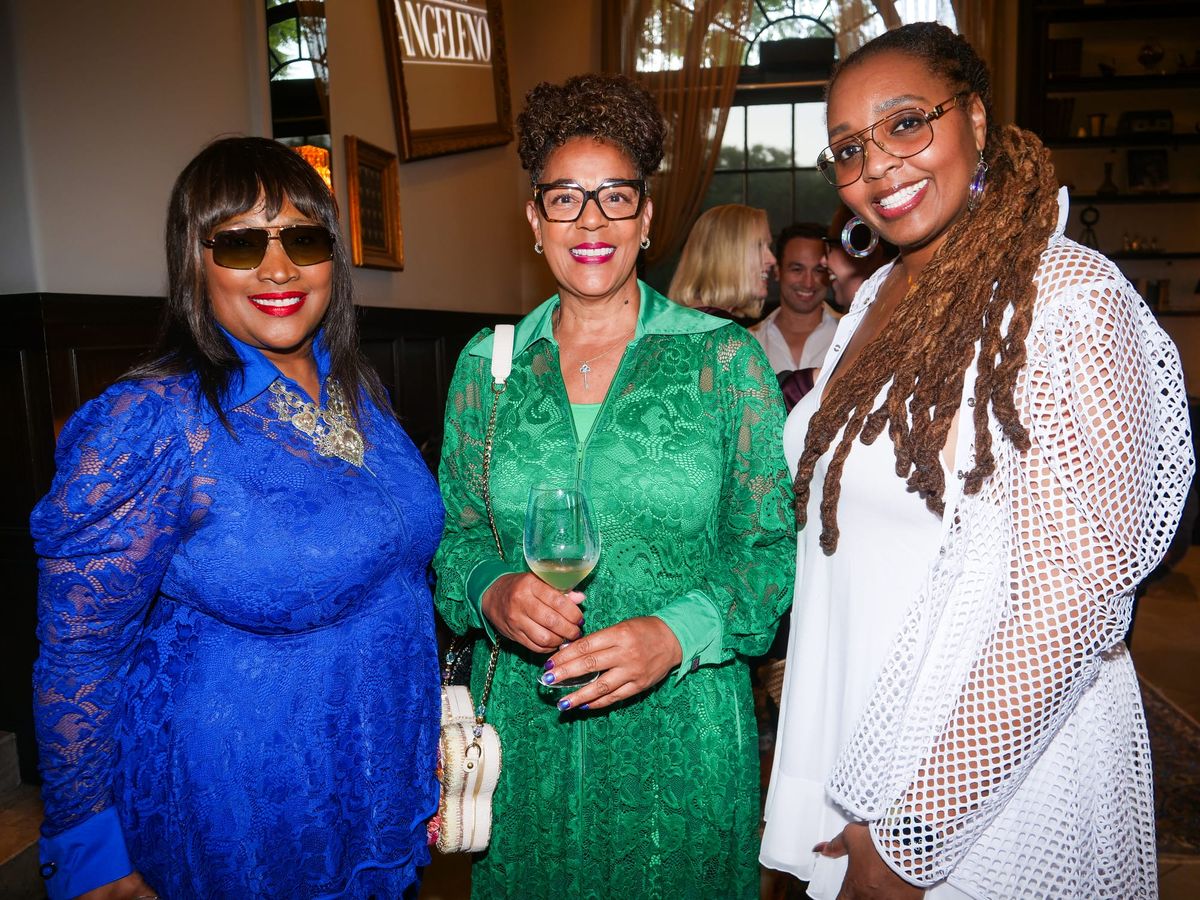
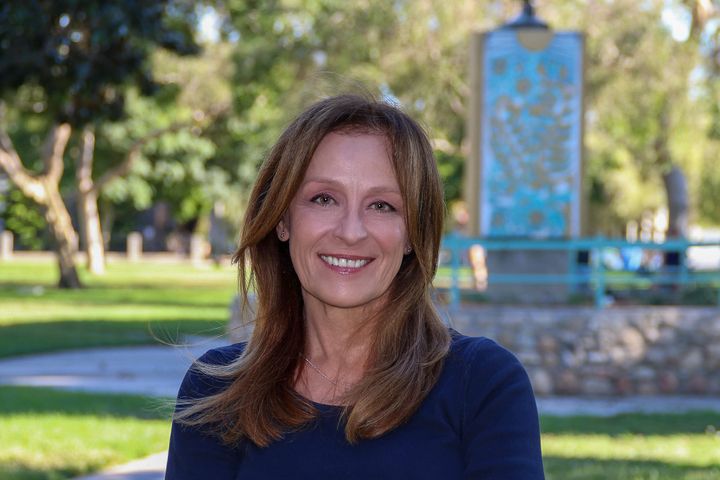
City Council Candidate Kimberley “Kim” Griffin sat down with Culver Crescent Publisher Christian May-Suzuki to discuss her policies and positions for voters ahead of the 2026 General Election
The 2026 Culver Crescent Candidate Series is a key feature of our Voters’ Guide for Culver City residents for the November 3, 2026 General Election. As part of this series, candidates running for public office in Culver City sat down with Culver Crescent Publisher Christian May-Suzuki to share their thoughts and positions on the issues on residents' minds.
An edited transcript of these roughly one-hour interviews appears below. The length of these interviews was intentional, allowing candidates to contextualize their points and positions for residents less familiar with the scope of questions facing Culver City and CCUSD. For those more familiar with Culver City politics, key points and positions are highlighted throughout the transcript.
Kimberley "Kim" Griffin, Community Volunteer
I want people to remember that Kim's not just one of five people sitting up there on that dais. She's my neighbor. She's the same person who goes to the same grocery store or the same car wash I do. I want to be remembered as the neighbor that you could talk to.
Biography
Occupation
- Community Volunteer
Hometown
- Los Angeles, California
Time Living in Culver City
- Almost 10 years
Why You Came to Culver City
I grew up close by and had several friends who lived in Culver City
City Involvement
- Former Police Officer at Culver City Police Department
- Board Member at Culver City Sister City Committee
Other Notable Involvement (Outside Culver City)
- Elected Delegate for California Democratic Party
One Thing You Wish More People Knew About You
I am the second oldest daughter in a family with five girls
Favorite Thing to Do in Culver City
Sampling Culver City's many food establishments
Notable Endorsements (Full List Here)
"Kim understands that leadership is not just about being heard, but about hearing others and turning concerns into actions," - Candance Pilgram-Simmons, Culver City Small Business Owner
Culver City
- Culver City Councilmember Albert Vera
- Culver City Councilmember Dan O’Brien
- Culver City Unified School District Board Member Lindsay Carlson
- Former Culver City Mayor Jim Clarke
- Former Culver City Mayor Michael O'Leary
- Former Culver City Mayor Jeff Cooper
- Former Culver City Mayor Ed Wolkowitz
- Former Culver City Mayor Paul Jacobs
- Former Culver City Mayor Andy Weissman
- Former Culver City Mayor Gořan Eriksson
- Former Culver City Mayor Steve Gourley
- Former CCUSD School Board Member Marla Wolkowitz
- Former CCUSD School Board Member Anne Allaire
- Former CCUSD School Board Member Scott Zeidman
- Culver City Democrats United
- Culver City Chamber of Commerce
Los Angeles
- Los Angeles Mayor Karen Bass
- Los Angeles County Assessor Jeffery Prang
- Inglewood Mayor James T Butts
- Inglewood Councilmember Alex Padilla
- Greater Los Angeles Realtors Association
- Heart of Los Angeles Democratic Club
- BizFedPac
California
- Former California State Senator Steven Bradford
Campaign Website
https://www.griffin4culvercity.com/
Opening Statement
My name is Kimberley Griffin, and I'm running for Culver City Council. I have a number of priorities that I'm focused on.
I want to support small businesses. I want to protect our community. I want to address the affordability issues in Culver City and address homelessness. I want to talk about transportation and mobility.
Each of those topics matters to me, and I think it's also important that I listen to residents, get their feedback, and hear their voice on the things happening in Culver City. Right now, many people don't feel heard, and when they do speak out, no one listens or responds to their concerns.
I want to be the person who sits up there, listens to residents, and makes decisions for the whole community, not just small interest groups or narrow topics that serve only a small part of Culver City.
I want to be that council member for all 40,000 residents.
On Culver City’s Fiscal Position
I understand that it's been said that we have a balanced budget for the first time in three years. In reality, we're mandated by the state to have a balanced budget every year. They balanced the budget by pulling money, basically like a credit card.
I am adamantly not happy with our financial position right now, and that we went forward with the bonds for our two downtown parking structures to help balance the budget, which will burden our residents for the next 30 years.
We got into this position because we gave away $20 million from our reserve fund. As a result, we were in dire straits, so we had to create funding through the Joint Powers Authority (JPA), and we mortgaged two of our parking structures. We pulled that $40 million to put back into the budget, but as a result, we now have to pay interest on that money, which is going to be paying back another $40 million.
In essence, we took a loan from ourselves, and residents have to pay back $80 million over the next 30 years, and I don't think that's a financially sound decision to make our residents pay for. That's a burden that our children are going to have to pay eventually because a lot of us are not going to be here in 30 years.
Financially, I don't think that was a sound decision. I don't agree that we're financially sound or fiscally responsible as a city right now.
Right now, there are proposals to buy Amazon Animation Studios for $100 million. There's a feasibility study underway, and I kind of get that, but not completely because that money could be spent somewhere else.
I don't think that our city should be in the position of being landlords to property development, because that's not our wheelhouse. Our responsibility is to govern City Hall in a way that best addresses our residents' needs.
Trying to go outside the box and do something on a different level isn't our responsibility, and I don't think that's a good idea right now.
If we had a bumper crop of money and we were trying to find something to invest in, it’s fine. I've been canvassing, and I've been navigating over these sidewalks like a ski slope, so we still have to make sure that our sidewalks are paved and safe.
We should invest that $100 million into our infrastructure, not into a purchase. We still don't know what that purchase is for, so I have an issue with that.
On Priorities for Improving Culver City
Right now, we need to make sure our ship is running and sailing smoothly with our employees. If they're not in a position to do their job, or we don’t have enough staff who can do their job, our ship is going to sink.
First and foremost, my number one priority is making sure our house is in order: we have to make sure we have the staffing, morale is good and high, and people want to come to work, be here, and be as productive as they can be.
That translates to everywhere else within the city, because we do have infrastructure issues. Our sidewalks, our lighting, our alleyways all need to be addressed.
We can't do that if we don't have the right people in place, so my number one priority is to get that in line and make sure everybody is comfortable in their positions within the city.
On Working with Residents
It matters that we listen. Yesterday, I heard someone say that some people feel these things are being done to them, not for them.
We have to be the ear to all of the residents because if you bring them along for the ride, if people feel their feedback is received and taken into account and considered, if it was a decision that's made that's not 100% in support of what their feelings are, then I think that they will be willing to adjust or concede a little to take a little on the other end.
If we work together as a collective, talk to each other, and communicate, “why this is not effective for me” and “why it is detrimental to me,” then I think people will understand. Then you can respond to their concerns based on how they feel.
Everybody has a perspective, and we have to listen to every perspective if we're going to get it right. We shouldn't just be right; we should do it right, too.
If we listen to everybody, I think we'll have the opportunity to do it right.
On Better Overland, Sepulveda Connects, and the Mobility Approach
I am not in favor of the Better Overland Project as currently proposed because the infrastructure will negatively affect residents, businesses along that strip, and people with mobility issues or mothers with small children.
Our seniors can't navigate that space and will be displaced as a result. Mothers with small children have to negotiate or navigate with a stroller and car seats, and other people with different mobility issues are going to have a problem.
Parking will be available for residents in that area, but I don't think it'll be safe because it'll be similar to the configuration on Venice Boulevard. There have been some reports of accidents related to drivers not seeing bicyclists in those protected bike lanes when they're turning into a private driveway. That's my concern.
I've had conversations with bicyclists, seniors, and residents who live along that corridor because I want to get their perspective. There are ways that we can create bicycle infrastructure that is amenable to everyone.
Some of the bicyclists I talk to don't like the protected bike lane because now it's a dual hazard — the parked car to their left and then the curb lane to their right — and you have no control over what's coming in each direction.
They would prefer a green-painted, designated bicycle lane adjacent to a parked car at the curb, so I would like to see that infrastructure. There are people who have small children, and they're concerned with them riding on that major boulevard outside a protected lane.
We can try to create that infrastructure not on an arterial street but on a connector street and improve the Ballona Creek Bike Path so they have access that way.
We can talk with our traffic engineers to find the best solution that everyone is happy with. If everybody leaves the table a little bit mad, then we did it the right way because everybody now has input in what's going to happen with that infrastructure.
I want the seniors to be a little upset because they may not have access to their preferred side street, but bicyclists do. The mother thinks, “OK, I have to walk a little further to get to the entrance of my building,” but it's safer for her to walk that route.
I want everyone to have a vested interest, but I don't want anyone displaced to the point where it's inaccessible to them.
On Jubilo Village and Building Affordable Housing
If I were on council at the time, I would not have voted in favor of the Jubilo Village funding. That's a $20 million giveaway from our emergency funds. It's in the emergency funds for a reason, so I don't think that it was a good idea.
Former city manager John Nachbar and city staff confirmed my position; they presented to city council and advised against moving forward with that $20 million giveaway.
We have people in place to look into issues and do deep dives on the financial side to determine whether we should invest, and if the city manager and city staff say not to spend that level of money, it should go to the voters. If we're going to give $20 million of your money away, then you should be the one to say yay or nay.
I'm not opposed to affordable housing. We definitely need it so people who live here can stay, and people who want to live here can move in, like the children who grew up here and can't afford to live in Culver City. I want them to have the opportunity to move back to the community where they grew up, but there's a way to do it.
Some housing developments in the pipeline asked for much less funding, $2 to $3 million. That kind of giveaway is the norm, not the $20 million level for 100% affordable housing.
I would like to see like a public-private partnership, or grant money, or some kind of outside funding, but that kind of giveaway where we don't have a vested interest in that property, I don't think is a good idea or the best way to spend taxpayer dollars.
On SB79, Single Family Neighborhoods, and Balancing Density
First and foremost, I'm not really excited that the state has mandated all California cities to come up with the number of units in the Regional Housing Needs Assessment.
Our numbers, in my viewpoint, have been elevated to double what they originally were proposed by the state are a result of past council members, and that's putting an extra burden on us to fill those numbers.
We're doing a good job of filling those numbers. I understand the concerns of residents that are in the R1 area, the single-family areas, because their American dream is to save their money and buy the home they want to age in. I don't think it is fair to burden them with development in that area.
We can create affordable housing — which is much needed in our area — along the commercial corridors. That way, we're not flooding certain neighborhoods with development that doesn't really fit into the space. I've done some canvassing in the R2 and R3 areas, and I've seen duplexes and triplexes that nicely complement the community.
I would like to see more development for homeownership, such as townhomes or condos, to give people an incentive to pursue it. I'm still frustrated with SB 79 because what's good in Merced and San Francisco doesn't necessarily mean that's good in Culver City.
I know many cities right now have pending lawsuits against the state because of this. I don't know how that's going to pan out, but in the meantime, we can develop the commercial corridors and put housing there to meet our RHNA numbers.
It should also be shared across areas; it shouldn't go in one specific community like Fox Hills. We can do it along the corridors. If we do it all the way down Washington Boulevard, Sepulveda Boulevard, or Jefferson Boulevard, everybody is doing their part to contribute to those housing numbers.
On the Direction of Unhoused Services
Spending $16 million a year on homeless services in a city our size is not sustainable. A big problem is that we haven't received our city's funding allocation from the county, so I want to make sure that happens.
I have a relationship with some county leaders who can help get our allocation sent back to Culver City from Measure H, which county and Culver City residents voted yes on. We're putting that money into the pot, but we've received only a minimal amount, I believe a little over $400,000, while we've put in millions of dollars.
Pulling that money back into the city, I think it's going to be our best answer to address the unhoused issue that we have right now. I'm very happy with our Mobile Crisis Team (MCT), their response, and how they go out. I think they are instrumental in reducing homelessness in our community because of the contact they make and the services they offer.
A lot of times, people accept the help, so they're doing a phenomenal job. I would like to see the funding we receive from the county used to keep them in place at least seven days a week, hopefully 24 hours a day. That takes the burden off the police department because when the MCT is not available, only police and fire can respond.
The whole reason we created the Mobile Crisis Team was to prevent law enforcement from having to engage with unhoused people, so I would like to see that funding come around for the Mobile Crisis Team.
On Park and Public Space Improvements
It's important that we have parks that are accessible and welcoming to people who want to go there. If a park is trashed, full of graffiti, and the benches aren't maintained or serviced, no one's going to go. If no one goes, what's the point in having that park?
It is important that we have care for our parks. My perspective is to get feedback from the Parks and Recreation and Community Services Department director, as well as people who have boots on the ground, to understand what we need to prioritize first.
Moving forward, I think that the best way to handle it is to get that feedback, because they know better than I do what should come first. The Parks Plan is a big order with a big number attached, so I want to make sure we're doing it right, and as I said before, it's not just about being right; it's about doing it right.
I'd definitely start by having that conversation with the PRCS Director, then with the people implementing the infrastructure in those parks and who get the funding needed for implementation. I would like to see a public-private partnership, maybe with Amazon Studios.
It's something they would want to invest in as part of the community, and that kind of investment would benefit the community, similar to what they did in the city of Los Angeles and Palisades.
I wouldn't be opposed to having a conversation with Sony, Amazon, Google, or our other big heavy hitters in the city to see if they want to invest that kind of money in beautification, so their employees and staff can reap the benefits of investing in our parks.
On the Introduction and Use of New Technology
I was a sworn police officer with the City of Culver City for 17 years, so I have a different perspective on the Culver City Police Department and law enforcement. I know the police department has changed for the better over the past 30 years by leaps and bounds; for example, CCPD was the first agency to adopt a very structured and restrictive use of information from Flock Automated License Plate Reader Cameras (ALPR).
They have a Chief's Advisory Panel that went to concerned residents. There's a very broad spectrum of people that are on the Chief's Advisory Panel, including attorneys, people of color, and different demographics and groups, and people gave their feedback and their concerns on that specific technology and how it might negatively affect the community, and they structured their policy to be the most comprehensive and restrictive, and set the goals of use or non-use across LA County.
Other agencies use it as an example and have drafted policies based on what Culver City did, including LAPD, which didn't have a policy in place at all. They weren't regulating how Flock would use that information, and that was a big issue.
Well, Culver City has drawn a line in the sand and said we keep our information in-house. You are not allowed to share it outside of Culver City, and we, as Culver City and our police department, don't share it with other agencies.
I think taking those steps and regulating control of that technology protects our residents and the people that technology might be used against.
I think AI is a big problem because we're seeing technology go rogue in some cases. We have to put safeguards in place, and legislation is very important.
It's a big issue with our film industry. We are the Heart of Screenland, and we have a lot of studios here, and I'm sure they have concerns about how production will move forward in the future.
It's important that we put things in place to protect ourselves, our information, and the fabric of society and humanity. I mean, if we want to dig deep, a former Anthropic and OpenAI researcher was saying AI is going to lead to humanity’s demise within the next two years. That was something I hadn’t considered before he said it, and I thought, "Well, if that's true, then we need to do what we need to do to make sure we’re protected.”
We have a great IT team for the city of Culver City. Getting their feedback and their input on what the best strategies are and what the best things to implement are to make sure the city and the residents are protected is the right direction to go in, because they are the experts. That's their wheelhouse.
I definitely want to pick their brain to understand their perspective, then move forward with legislative decisions aligned with their recommendations.
On City Council Meetings and their Structure
To start, we need to avoid stacking the agenda. There are some things that have to come back because there's a timeline in which they need to be addressed, so they can't be pushed. But there are other things that are wants and dreams, or special projects we can do, that we should wait on because the pressing items should come first.
It's important that we get that feedback from the community. Reducing the time from 90 seconds to 60 seconds is a big cut. I've done a lot of talks and interviews, and I prep for 90 seconds, but when you cut it to 60 seconds, you either lose your train of thought because you're trying to get everything in, or you can't give your feedback as concisely as possible.
It's important not to run meetings until 1 a.m. or 2 a.m. because you lose all support or participation from people who have small children or have to work the next day, including city staff. I don't think it's a good idea for city staff to have a meeting run that late.
I don't think it should go past 11 o'clock, but because of that, I think it's important to put the most pressing agenda items first, and the other ancillary stuff can wait and be on a special session, maybe earlier in the day.
On the City’s Readiness for the 2028 Olympics
We're not prepared. I think we still have a lot of work to do to prepare for such a large event.
We got a taste of it when we had FIFA here, and it wasn't bad. It went smoothly, but given the level of traffic the Olympics will bring to the Los Angeles and Culver City areas, I think we need to do much more.
We need to definitely talk and have conversations with every department head, the police chief, and the fire chief about what their needs are going to be, because their service burden is going to be elevated to a higher level with the unprecedented number of people in the city.
That's going to be another thing that we have to address: the influx of people and the spaces that they're going to occupy. Will we have that infrastructure ready if we need to block off streets, move, divert traffic, or adjust in any way? There's a lot more work to be done. I don't think we're at the point that we are ready for it yet, so we should have been trying to get there yesterday.
If I'm elected, I want to hit this on day one. We need to address it, and we should coordinate with the City of Los Angeles. 80% of Culver City is surrounded by the City of Los Angeles, with a small portion in unincorporated county land, so we should coordinate with Los Angeles and LA County to see what we can put in place that we can share or that benefits both of us.
On A Potential Lobbyist Registry and Similar Election-related Policy
I 100% agree with the lobbyist registry one of my fellow candidates brought up. It's an important thing that we should have had in place for a long time. She has been pushing this for the last six years, and it hasn't happened yet, but I definitely support looking into it and moving forward.
We need to know who is making the decisions or influencing either city hall or city council on topics and issues that come before us as a city body. We recently implemented a Fraud, Waste, and Abuse (FWA) reporting system within the city, monitored by an outside entity, and I think that's a good idea.
People feel that if it's someone from outside, they're more likely to provide factual information, which helps with transparency and openness about what we're doing, staying above board, and spending taxpayer dollars wisely.
On the Importance of Making Culver City a Welcoming and Inclusive Place
I’m happy that people in certain groups or demographics have a seat at the table, because you can't make an informed decision about what is best for everyone in a community if you don't have the faces in that community that are different from yours.
It is definitely important to have that, especially in a city like Culver City.
Right now, our police department is one of the most diverse in LA County, and our city staff has a level of diversity we don't normally see. We have a Black city manager, CFO, and assistant city manager who bring that diversity. That perspective is great because without it, you are more likely to make mistakes in your decisions.
I know why “DEI” is a bad word and a bad phrase, because people think of that as “Someone's who is less qualified is coming into that position.” I don't see it that way, because as a matter of fact, I was hired by the Culver City Police Department as the first African American female because our Chief of Police saw we didn't have that demographic in place, so he actively had them recruit or look outside to find people that fit that category, and I did exceptionally well.
I was very effective in my job at the police department, and I wasn't there because I was less than and just fit a category or helped them check the box. If you check the box and you're still qualified to do the job, you should be given the opportunity to do it. Just because somebody checks more boxes, we shouldn’t see them as more unqualified or underqualified
I think we should still have a diversity, inclusion, and equity mindset when we do our hiring in the city.
On Vote 16 and How to Support Healthy Civic Engagement
I do not support Vote 16 because I think it puts a lot of pressure on kids. I was an active 16-, 17-year-old; I was in student government, and I did a sit-in to create a national holiday for one of our political leaders back then. I was one of those ones who was doing the boots-on-the-ground work and was civically minded and prepared to move forward.
I had a lot of classmates who weren't even close to being on that page, so I don't think it would have been a good idea for them to vote.
If there are students who really want to be politically involved, maybe they can create a youth committee or commission that can actively give a voice to those 16- and 17-year-olds and be a bridge between the city council and the youth, similar to the Equity and Human Relations Advisory Committee that we have, but just specifically for those active youth members.
I don't feel every 16- and 17-year-old right now is prepared to make a decision that, voting-wise, relates to big issues in the city — such as something related to Jubilo Village or property taxes.
If they don't have that wherewithal or knowledge, how will they make an informed decision? Will they be influenced by their parents? Will they be influenced by their teachers or classmates? Will they have the wherewithal to do their due diligence and learn?
There are classes and other requirements you have to meet if you want to drive before you're 18. Maybe we create that kind of structure where you have to take a political science class or a civic class for a year to make sure that you are an informed and active participant in the civic system, and being able to vote and cast your vote because some of the decisions that they're going to be voting on, if they can vote, are related to property taxes, and they don't pay property taxes.
Right now, a 16- or 17-year-old can't sign a legal contract, so how is that going to pan out? I see so many holes and glitches, so that's why I don't support it. I want 16- and 17-year-olds to be active in the civic decisions being made around them, but I don’t think voting is the answer.
On the Importance of Her Relationship with Small Businesses
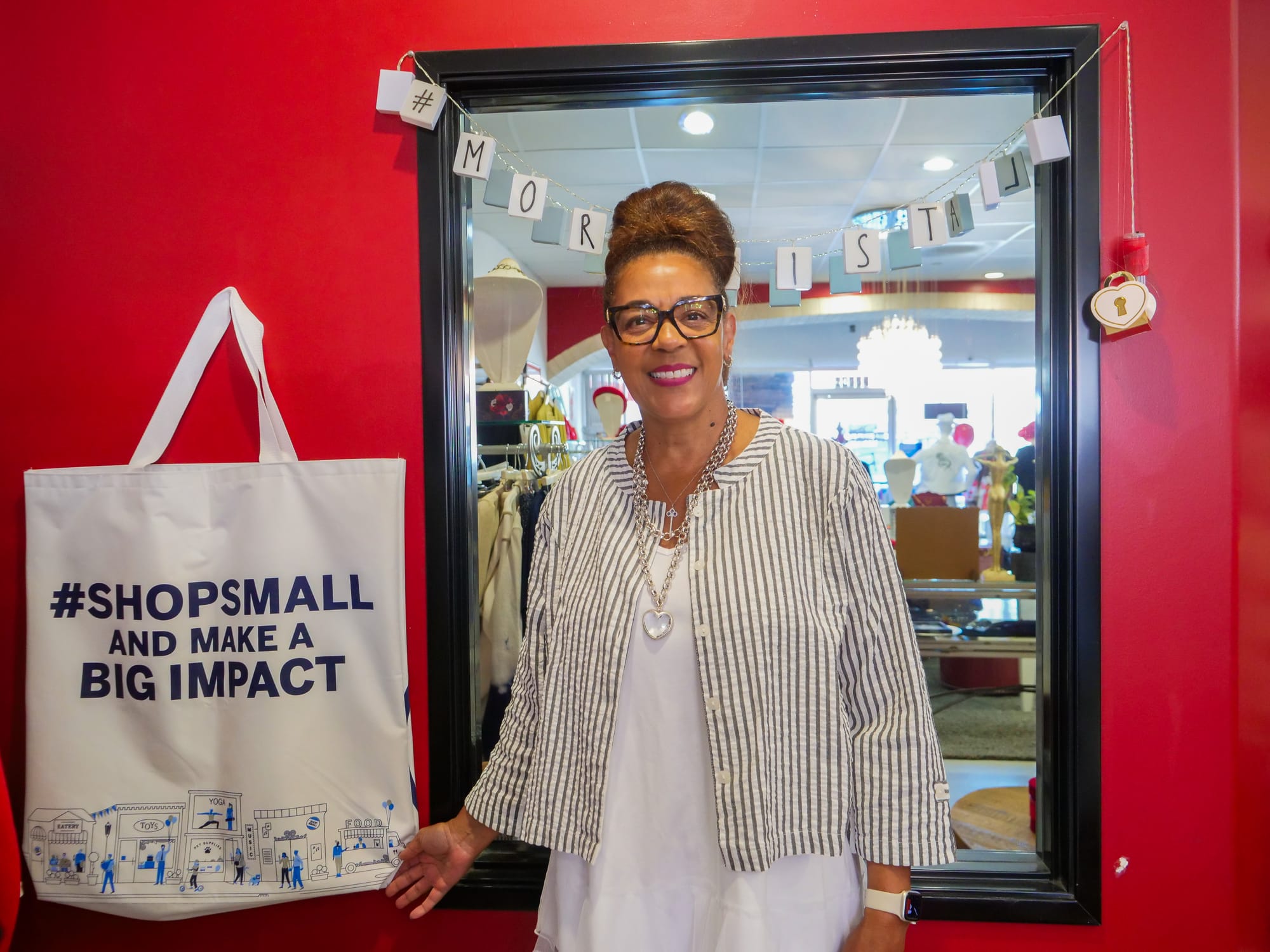
70% of our city's revenue comes from businesses, and yes, we have the big heavy hitters: Sony, Amazon, Apple, and Google. They're all here, and they're contributing to our lifestyle and our revenue for the city, but small businesses are, to me, the backbone of our community.
They are places we can go, spend time, and build relationships. They employ residents who live in the city. They serve the people who live here. If we want that small, walkable community where we can go from one place to another without driving long distances, we need to support small businesses.
It's a passion for me because I want to make sure that they succeed and they survive. Some of them are still trying to dig out of the pandemic, and that was six years ago. If we have the resources or the wherewithal to assist them to make sure that they can do better and succeed, I think that's our responsibility because some of these businesses have invested time and money and energy in the city.
They've been here for 5, 10, 15, 30, or even 50 years, so I want to make sure that they continue that legacy. I don't want them to relocate or shut down altogether because of decisions we make on transportation and mobility issues.
I want to make sure we have conversations and that they're at the table to tell us how it's going to affect them, positively, not at all, or negatively.
We have to get everyone's position, and not just go to two or three businesses. That's not a realistic gauge of how we should support our small businesses. We need to give them a seat at the table and let them tell us how it's going to affect them, and that's how we make decisions and move forward. If the reaction to Sepulveda Connects is overwhelmingly that it's going to be negative, then we can figure out a different way to do it.
For example, with the Better Overland project, we can do a flex lane similar to what's on Wilshire Boulevard,, with the bus lane only during rush hour, and it won't affect those businesses because there's no parking in front of them from 4 to 6 p.m. anyway.
If we're doing this to try to create this infrastructure for the Olympics, we can, for example, only implement it two weeks before and two weeks after. Businesses can say, “We'll take this hit right now because we know it's for a certain period of time, and we see the light at the end of the tunnel.”
But completely eliminating their access means they won't have customers, and without customers, they either go out of business or move outside the city, and I want to prevent that.
On Concerns about her Relationship with Councilmember Albert Vera
I understand their concern or curiosity about whether it will be a conflict of interest or an issue, and we thought it could be a problem. To start from the beginning, Albert Vera and I have been dating for several years. We've known each other for 33 years, but have only been in a dating relationship for around 14 of those years.
When I decided to run for city council, we knew there could be a problem, so we reached out to the city attorney and the Fair Political Practices Commission (FPPC) to ask whether serving on the City Council together would create a conflict of interest. The FPPC asked several questions, including whether we were legally married, lived in the same household, and whether I had any financial interests in any of his holdings.
The answer to all of those questions is no, and the FPPC pointed to a situation in the Midwest, where a married couple was on council together. For them, the only restriction was that they had to be a de facto Brown Act (EN: A California law which prohibits a majority on a council from discussing matters outside of meetings) pairing.
They knew those two people were in the same household day in and day out and would talk about issues that came up at their council meetings, so under the Brown Act they were considered together on everything.
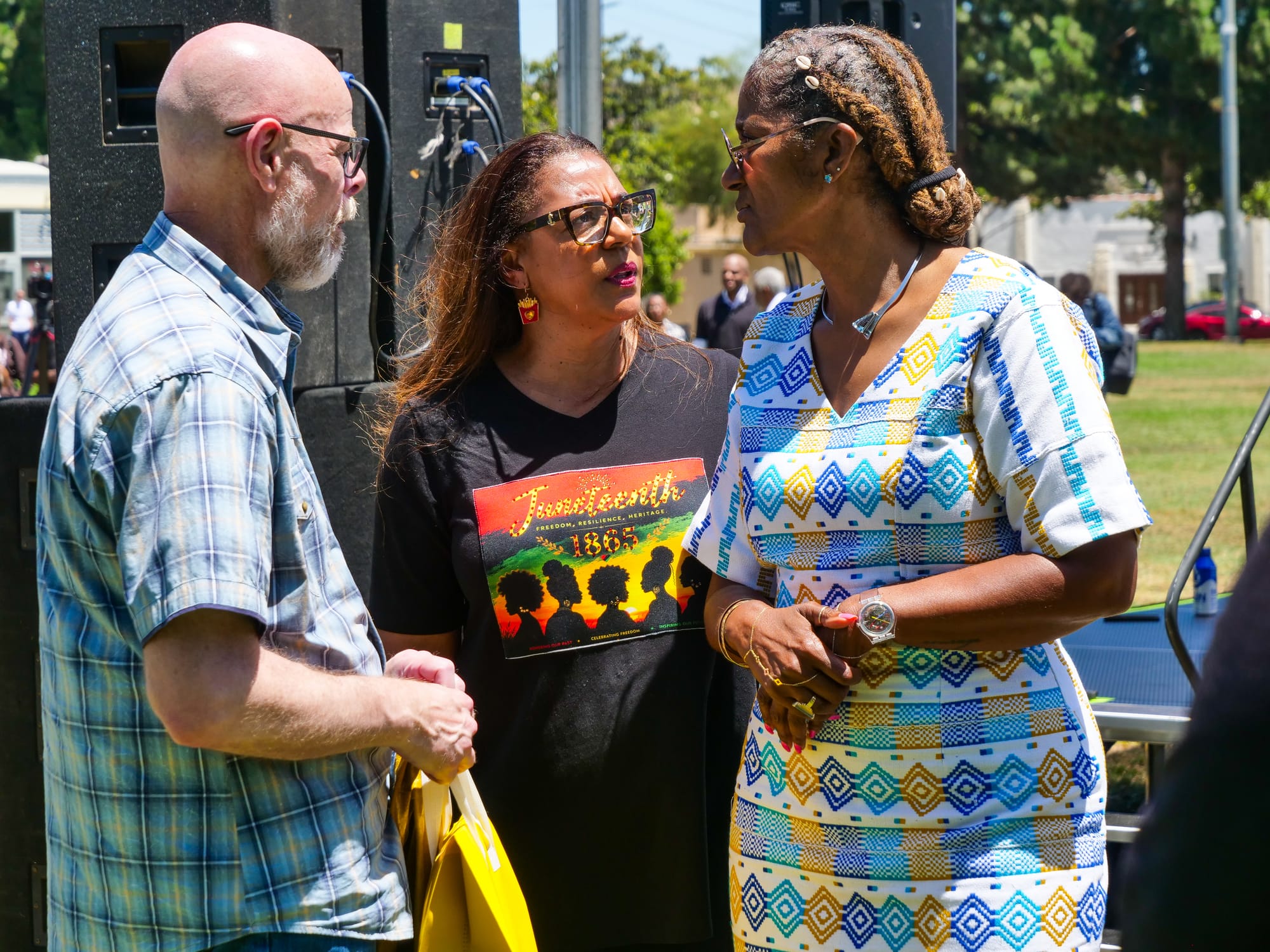
There probably will be some things that Albert and I want to be Brown Act together. I will be very cautious about how I approach something, and I will look at it before deciding whether I want to bring him in as my Brown Act partner, or if it's someone else I'm going to have that conversation with because it relates to us in a different way.
If it's an issue related to women and girls, I'll talk with Jeannine or Yasmine, and I will make sure I don't violate any rules or regulations about sharing information with Albert.
As two adults, I think it would be easier for us to avoid indiscretions, discrepancies, or conflicts in our conversations. There will be times when we agree on a lot, which is already similar to council members who are up there currently. They always vote the same, but they aren't in a relationship, yet they still share the same viewpoint away from the dais.
Albert and I will have the same viewpoint on some things. There will be some things where I have a different viewpoint, and I will probably vote differently than him. I will not be voting with him 100% of the time because we have differences of opinion right now. I know it's going to be important, but transparency and openness will be there.
If anything could be a conflict, I'm going to consult with the city attorney to make sure it's up front, and then we can have that discussion openly so everybody is comfortable with us being there at the same time.
On How She Would Like Her Tenure to be Remembered
I want to be remembered as not being in this as a stepping stone to something else. I love Culver City. I'm your neighbor. I'm not a politician, so I want residents to remember me as the one who was looking at tomatoes at the grocery store and who they could have a conversation with.
I want to be that I'm the neighbor that you can come to and talk to and share your concerns or share your accolades, or explain that you are undecided on an issue or don't know how to move forward with something.
I want people to remember they can talk with Kim at any time, because she's not just one of five people sitting up there on that dais. She's my neighbor. She's the same person who goes to the same grocery store or the same car wash I do.
I want to be remembered as the neighbor that you could talk to.
Closing Statement
As I mentioned before, I want to be that person that people can come to. I definitely have a heart of service. I started my career in Culver City as a police officer, there to protect and serve. I also do a lot of volunteer work. I'm on the board of directors for the Culver City Sister City Committee.
I'm also an avid supporter of Habitat for Humanity, so I love giving back to the community and helping people to realize that you can be a good person, be politically involved, and support your community all at the same time.
I want to serve my community in a different way now, by being on City Council. I would definitely love your support. I'm actively involved with my family, and I want to inspire them to know that being part of your community helps everybody move forward.
I want to be the person who reaches out and brings people forward to do what they need to do, be the best they can be, and succeed, whether as a resident, a visitor, or a worker in Culver City.
My focus up there is to represent all 40,000 residents in Culver City and move us forward in the right direction to be fiscally sound, to be responsible with our resources, to make our quality of life better for everybody, based on our infrastructure, our services that are provided, and just making it a place where everyone wants to be.

Comments ()