
City Council places staggered TOT increase on 2026 ballot
After originally considering raising the Transient Occupancy Tax by 2%, the city council approved a measure that would implement a pair of 1% TOT increases over the next two years


Culver City voters will decide this November whether or not to increase the city’s tax on its visitors.
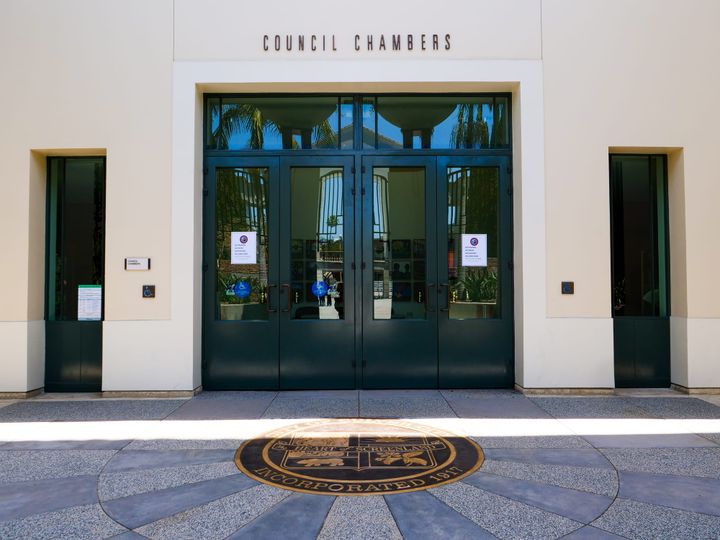
A proposed measure approved for the 2026 ballot at Monday night’s City Council meeting would increase the Transient Occupancy Tax (TOT) charged in Culver City from 14% to 15% until March 1, 2028, then to 16% until modified or ended by additional voter-approved actions. The original motion presented at Monday night’s city council meeting was to raise the TOT to 16% immediately, but discussions with hotel operators led City Manager Odis Jones to propose spreading the increase over two years at that meeting.
The Transient Occupancy Tax is charged to guests staying in hotels and homestays through services like Airbnb who stay in the city for 30 days or less, and serves as a relatively stable revenue source in a city where many of its sources of money — like sales tax and real property transfer tax — are tied to economic activity levels.
Tourism is expected to balloon in the Los Angeles area during the 2028 Olympics, and Culver City will serve as the Olympic headquarters for New Zealand and other countries. The city hopes to capture some of the additional revenue that will flow into the area with the unprecedented number of visitors from one of the world’s biggest events, and the bump to 16% comes just months before the Games are set to begin.
“The City has already begun to expend additional general fund dollars in preparation for this event and anticipates that the impacts on the City and governmental services will be significant,” Monday night’s staff report read.
As with many items in the city, there was a sentiment among many community members — particularly those in the hotel business — that city staff did not do enough outreach before recommending this increase. When the city council first discussed this item at its previous meeting on July 13, owners of hotels in Culver City — including the Culver Hotel and PaliHotel Culver City — came to speak against the potential tax increase and noted they had not received advance notice of it, when asked by councilmember Albert Vera.
“I didn't get reached out to until after this was already on the agenda,” Culver Hotel General Manager Danielle Goller told Vera at the July 13 meeting.
Outreach became a focus of Monday night’s conversation, with meeting City Manager Jones explaining he discussed the potential bump in TOT with Culver Hotel ownership in January. Councilmember Yasmine-Imani McMorrin implored Jones to share the city’s outreach strategy Monday night, as part of an ongoing effort to quell concerns about the city's perceived lack of effort and desire to engage with concerned community members on this and other items.
“Outreach never means [reaching] 100% of the people, at least in my interpretation,” McMorrin said. “I just want to make sure that…we're operating off of the same understanding of what the words that we're utilizing mean.”
Jones said Monday night that, in addition to discussions held before July, he met with some of the hotel operators in the city following the July 13 meeting to consider options to soften the blow, and that the suggestion to stagger the increase over two years came from those discussions. Goller, who also spoke Monday night, said that a delayed increase was fair to allow for the investment that neighboring jurisdictions have already made and to build up Culver City’s Tourism Bureau, the details of which are still being discussed.
“Culver City will appear…above Beverly Hills, Santa Monica, West Hollywood and L.A. without comparable investment that tells visitors why they should come here,” Goller said Monday night.
Results of a survey with 421 responses from likely Culver City voters show that the full 2% increase has a strong chance to pass. The portion of respondents who said the city was “heading in the right direction” was 14 points higher than a similar survey conducted by consultant FM3 Research in March 2025, and the measure received more than the requisite simple majority of support. 52% of respondents said they would vote yes, with another 6% undecided but leaning towards a yes vote.
Among the major concerns for respondents about that future is affordability amid inflation and continuously rising housing costs. While the tentative title of the measure — the Culver City Community Safety And Public Services Measure — implies a specific focus for the money, money from a general tax increase like the TOT must not be restricted to specific uses.
Like other TOT revenue, any money from an increase from this proposed measure will be included as part of the city’s General Fund revenue stream.
A lack of direction for that money was the sticking point Vera cited as the reason for his disapproval of the increase on Monday. He hoped to allocate some of the increase in funding back to the hotels by investing in the soon-to-be-created Tourism Business Improvement District, but the required designation as a special tax and the required 66% voter approval for such a tax to pass did not appeal to the other members on the dais.
Mayor Freddy Puza pointed out that the expansion of tourism is a key part of Culver City's future and noted that one of his priorities as mayor has been to lay the foundation by launching a dedicated Tourism website. Vice Mayor Bubba Fish argued that it was on the council to affirm the dedication to turning Culver City into a tourist destination by dedicating funding to the initiative and supporting the hotels that make it possible.
“There’s so much [here] that would make [Culver City] an attractive place and really put those tourism dollars to work,” Fish said.
“A strong tourism strategy brings visitors, supports local businesses, generates tax revenue, and creates jobs,” Puza said. “I remain committed to working in this area with our tourism bureau, with our local businesses, and regional partners to continue to build Culver City's reputation as a premier destination.”
The motion passed 3-1, with Vera dissenting and Councilmember Dan O’Brien abstaining due to a potential conflict of interest based on his employment with the Culver City Chamber of Commerce.


Comments ()